Old Sewing Machine Disposal in Dubai
Dispose of an old sewing machine in Dubai: identify its type, secure the needle and pedal, preserve accessories, and prepare cabinet-mounted models safely.
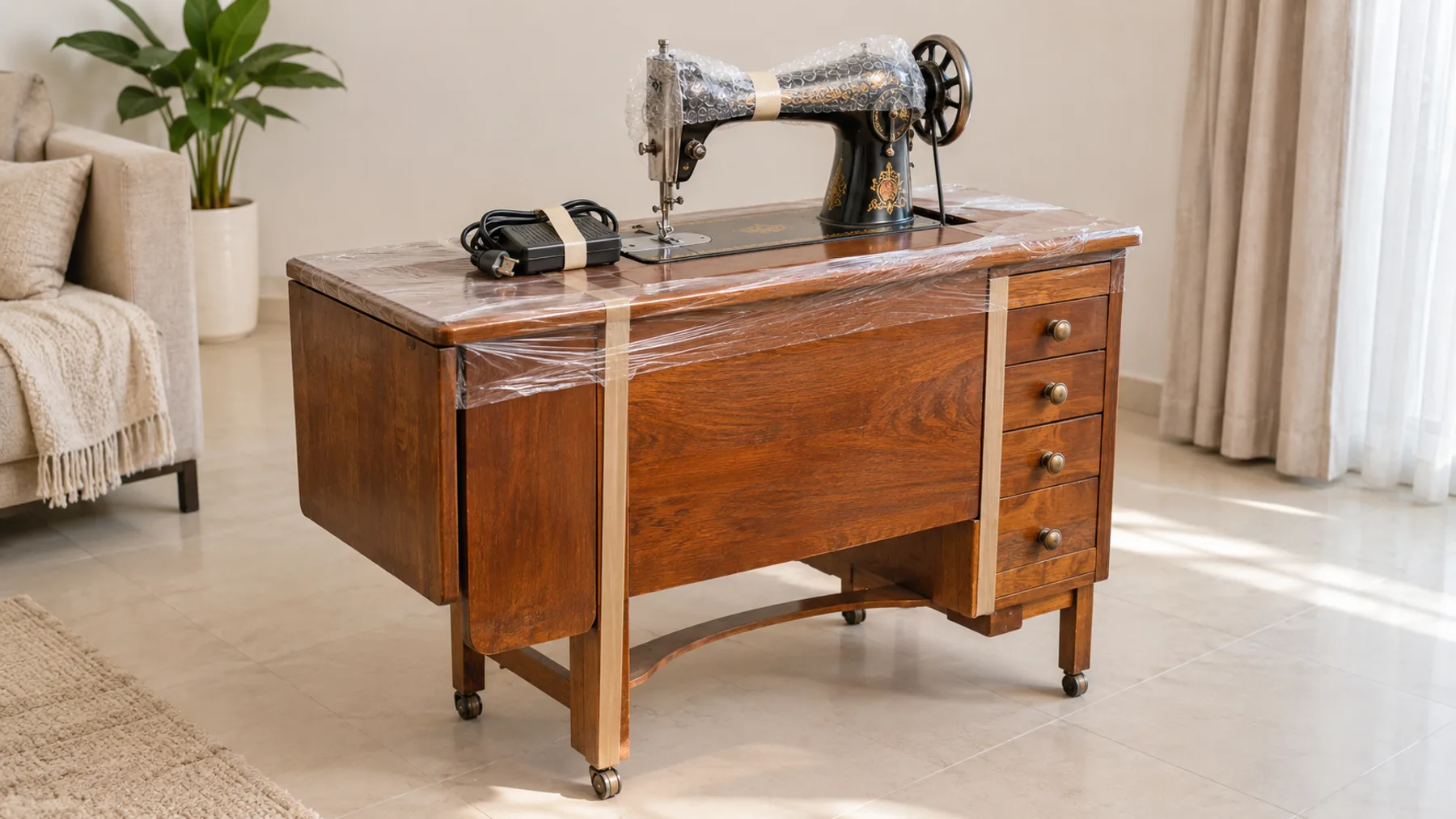
Old sewing machine disposal in Dubai starts by identifying what is leaving: a portable electric machine, a cabinet-mounted model, a treadle machine, or an industrial head and table. Secure the needle area, unplug electric models, contain the foot control and accessories, and photograph the mounting before moving anything.
Do not lift a machine by its carrying handle alone
An old plastic handle, folding cover, or cabinet lid may not support the machine's full weight. Support the base and keep the head closed or locked in its normal transport position.
Which type of sewing machine is being removed?
The machine type decides whether the load belongs mainly with electronics disposal, furniture, or a combination of both. Send a full photo and a view underneath or inside the cabinet rather than describing every model as a small appliance.
| Sewing machine type | Main handling issue | Preparation before pickup |
|---|---|---|
| Portable mechanical | Dense metal inside a compact case | Secure needle and presser foot; close the case |
| Computerised portable | Screen and circuit board | Unplug; keep pedal, adaptor, and accessories together |
| Cabinet-mounted electric | Hinged head and heavy timber cabinet | Photograph open and folded positions; secure the lid |
| Treadle machine | Cast-iron frame and moving pedal | Tie the wheel and treadle without loading the belt |
| Overlocker or serger | Several thread paths and exposed loopers | Remove cones; close covers; protect the cutting area |
| Industrial machine | Separate motor, table, stand, and thread mast | Declare power connection, dimensions, and access |
A domestic portable machine can hide substantial metal weight under a plastic shell. A treadle base can also be awkward on stairs because the cast frame is heavier at the sides while the tabletop projects beyond it.
How do you prepare the needle, pedal, and accessories?
Unplug the machine and use its normal controls to lower the needle into the plate. If the manual calls for removing the needle for transport, place it in a rigid container rather than a soft bag. Lower the presser foot and close any bobbin, looper, or free-arm cover.
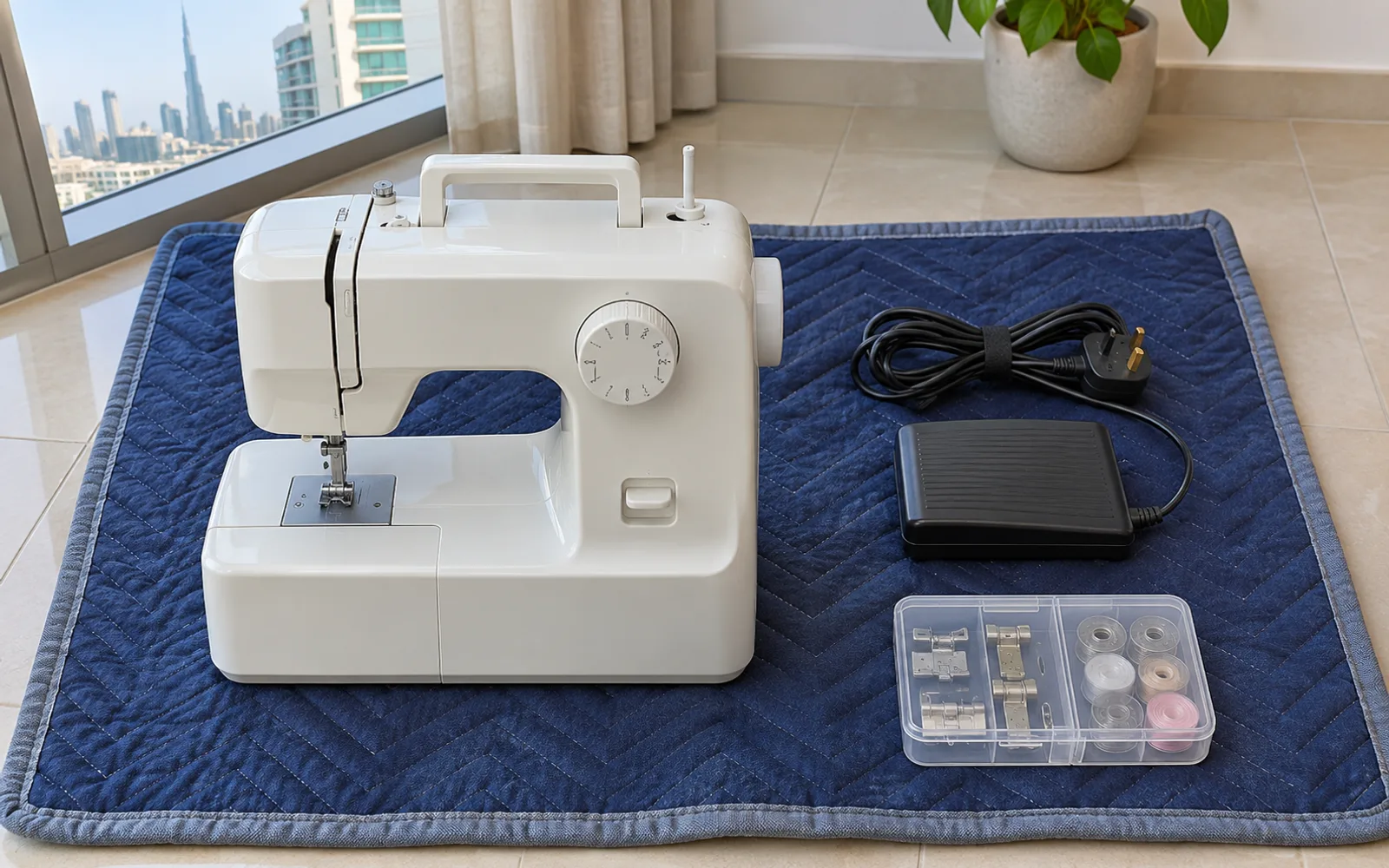
Coil the lead loosely and keep the foot pedal beside the machine rather than inside an open throat space. Put bobbins, presser feet, spool caps, screwdrivers, embroidery hoops, and the extension table into one labelled box. The complete set has a better chance of reuse and prevents small metal parts from scratching the machine during loading.
Oil bottles, cleaning fluids, loose pins, rotary blades, and fabric scissors are not accessories to hide in the cabinet. Remove them and sort sharp or liquid items separately before collection.
Should the machine stay in its cabinet?
Leave a cabinet-mounted machine assembled unless the release method is known and the exit route requires separation. Folding the head into the cabinet may create the safest carry, but only when the hinges, support platform, and lid still work correctly. Forcing a seized release can drop a heavy machine head onto the cabinet edge.
Photograph the cabinet width, castors, legs, and the point where the machine mounts. Our furniture removal service in Dubai can plan the timber cabinet as furniture while the powered machine remains declared as electrical equipment. Fixed shelving, altered joinery, and hardwired connections must be dealt with before the item becomes a loose collection piece.
Can an old sewing machine be reused?
A machine that turns freely, forms a stitch, and has its original pedal and lead may be worth repairing or passing on. State faults honestly. A perished cable, burning smell, cracked plug, seized handwheel, missing control, or damaged table changes the route and should appear in the booking photos.
Do not run an unknown machine to prove that it works when the plug or cable is damaged. Record the model plate without publishing personal ownership labels, then let a repairer or recipient decide whether testing is appropriate.
How do you book sewing machine removal in Dubai?
Send photos of the front, power lead, pedal, cabinet or case, and the route to the service lift or villa gate. Include the machine type, whether the handwheel moves, whether a cabinet folds, and whether stairs are involved.
Keep the accessory box beside the machine and clear thread, fabric, and sharp tools from the carrying route. A prepared domestic machine can join a furniture or small-electrical pickup once the crew knows the machine's construction and access conditions.
Frequently asked questions
Lower the needle into the plate or remove it using the machine's normal instructions, then place a removed needle in a rigid labelled container. Do not leave an exposed needle where it can catch a hand or moving blanket.
It depends on the cabinet, hinges, total weight, and exit route. Photograph the machine both raised and folded away. Do not force the machine head out of unfamiliar hinges; disclose the mounting style so the carry can be planned.
Keep the foot pedal, power lead, bobbins, presser feet, case, extension table, manual, and model-specific tools together. A complete machine is easier to test, repair, sell, or pass on than a machine separated from its controls.
Not automatically. Industrial heads, cast tables, separate motors, thread stands, and fixed power connections need photos and a weight and access assessment. Any hardwired supply must be made safe before a removal crew arrives.
Related articles
Vacuum Cleaner Disposal in Dubai
Dispose of old vacuum cleaners in Dubai: empty dust and water, remove batteries, secure cables and hoses, contain attachments, and book electrical collection.
Desk Removal & Disposal in Dubai
Prepare a home office, L-shaped, glass, or standing desk for removal in Dubai with checks for cables, desk motors, glass tops, drawers, and building access.
Massage Chair Removal & Disposal in Dubai
Plan massage chair removal in Dubai with practical checks for power, moving position, weight, doorways, lifts, damaged mechanisms, and collection.