Old Bathtub & Sanitary Ware Removal in Dubai
Who removes an old bathtub, toilet or basin in Dubai, why fitted sanitary ware counts as construction debris, and which bathroom items a junk pickup takes.
Who removes an old bathtub in Dubai?
An old bathtub in Dubai is removed by the renovation contractor or plumber who takes it out, not by a junk collection. A fitted bathtub, toilet, basin or shower tray is part of the building: it is connected to the drainage, sealed to the wall and usually set into tiling. Once it comes out, it counts as construction debris, and Junk Removals Dubai does not carry out bathroom strip-outs or transport that material.
What a household collection does cover is everything in the bathroom that was never part of the structure. Freestanding bathroom furniture, a bathtub that was delivered but never fitted, and the packaging from the new suite can go as a one-time bulk trash pickup, or as part of a wider junk removal booking when the rest of the home is being cleared too.
Which bathroom items go where?
The test is whether removing the item required altering the building. Material and size do not decide it.
| Item | Was it part of the building? | Who handles it |
|---|---|---|
| Fitted bathtub, removed | Yes | Renovation contractor or debris carrier |
| Toilet, bidet, basin, pedestal, removed | Yes | Renovation contractor or debris carrier |
| Shower tray, screen, fixed vanity unit, removed | Yes | Renovation contractor or debris carrier |
| Tiles, grout, adhesive, removed pipework | Yes | Renovation contractor or debris carrier |
| Bathtub, basin or toilet delivered but never fitted | No | Bulk trash pickup |
| Freestanding cabinet or shelving unit | No | Junk removal |
| Laundry basket, stool, freestanding towel rail | No | Junk removal |
| Old bath mats, shower curtains, towels | No | Junk removal |
| Cartons, film and foam from the new suite | No | Junk removal, kept separate from rubble |
The full reasoning behind this split, including why fitted joinery lands on the debris side, is set out in our guide to construction debris versus junk in Dubai. A bathroom is where that line is easiest to see, because almost every large item in the room is plumbed in.
Why is removed sanitary ware treated as debris?
A bathtub or toilet comes out carrying parts of the building with it. Sealant, tile adhesive, grout, mortar and short lengths of pipe stay attached, and the item often breaks during removal, especially a vitreous china toilet or a tiled-in tub. The load is dense, sharp and dusty, and it needs a vehicle and a disposal route set up for construction and demolition material rather than for household goods.
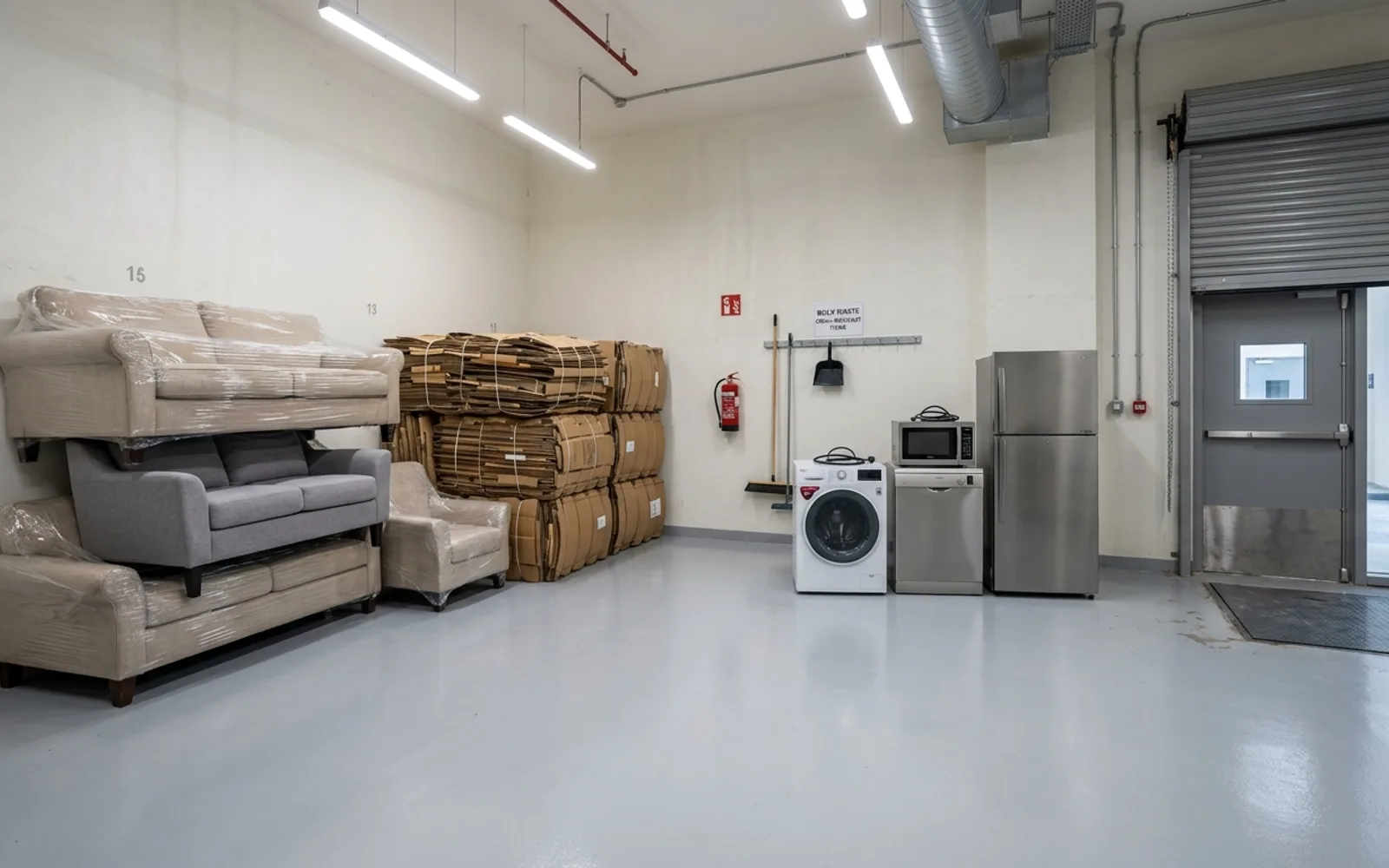
That is also why the order of work matters. A bathroom renovation produces two separate piles: rubble and removed fittings on one side, and packaging, protection and freestanding contents on the other. When the two are kept apart, the second pile is a short household collection. When cartons end up under tile fragments and cement dust, nobody separates them again and the whole heap is handled as debris.
What should you settle before the bathroom work starts?
Most problems with old sanitary ware come from nobody agreeing who removes it. Ask these questions before signing a renovation quote:
- Does the quote include removing the old bathtub, toilet, basin and tiles from the property, or only taking them off the wall?
- Is the contractor bringing a debris carrier, or expecting the household to arrange one?
- How will a heavy cast iron tub be taken out, and which route through the home and building will it use?
- Does building management need a work permit or a service-lift booking for the removal day?
- Where will the rubble be staged until it leaves, and for how long?
For tenants, one step comes before all of these. Bathroom fittings belong to the property, so read the tenancy contract and get the landlord's written approval before anything is replaced. The contract and building management decide who pays for the work and who arranges the removal; a collection booking does not.
Keep the packaging pile clean
Flatten the cartons from the new bath, basin and toilet as soon as each one is unpacked, and store them away from the work area. Clean packaging is ordinary waste and a quick collection. Packaging dusted with grout and tile fragments is not.
The spare fitting in the store room
A common leftover after a Dubai bathroom renovation is the fitting that was never used: a bathtub in the wrong size, a basin from a cancelled order or a spare toilet bought as a backup. These items were never part of the building, so they are household goods and can be collected as bulky items. Keep them in their original packaging if possible, note the dimensions, and check whether the supplier accepts returns before booking a pickup.
When the renovation is finished and the contractor's debris has gone, photograph the freestanding items, the unused fittings and the flattened packaging together and send them to request a quote. Our guide to water heater disposal in Dubai covers the one plumbed bathroom appliance that does leave as a collection, once a plumber has disconnected and drained it. For metal items such as old shelving, rails and brackets cleared at the same time, see our guide to scrap metal and old fixtures removal in Dubai.
Frequently asked questions
The renovation contractor or plumber who takes the bathtub out should also arrange for it to leave the property. A fitted bathtub is disconnected from drainage, cut free of sealant and tiling and removed with the wall or floor finish, so it leaves as construction debris.
Yes. A toilet, basin, bidet or shower tray that was fitted to the building counts as construction debris once it is removed, even when it comes out whole. Junk Removals Dubai does not carry out bathroom strip-outs or transport construction and demolition material.
Yes. A bathtub, basin or toilet that was delivered but never fitted was not part of the building, so it is a bulky household item. Keep it in its packaging or protect the edges, and include its dimensions when you ask for a quote.
Freestanding cabinets and shelving, laundry baskets, stools, freestanding towel rails, old bath mats and shower curtains, plus the cardboard, film and foam packaging from new fittings. Keep these apart from tile, grout and removed sanitary ware so they stay a household load.
Weight decides how the contractor plans the removal. A cast iron bathtub is far heavier than a steel or acrylic one and may need to be broken or carried by a larger team, which should be settled in the renovation quote before work starts.
Read the tenancy contract and get written approval from the landlord first. Bathroom fittings belong to the property, and the contract and building management decide who may replace them, who pays and who arranges the removal of the old ones.
Related articles
Scrap Metal & Old Fixtures Removal in Dubai
Which metal items and loose fixtures a Dubai collection takes, which stay with the building or need a specialist, and how to prepare heavy, sharp metal.

Old BBQ & Outdoor Furniture Removal in Dubai
What decides an outdoor furniture removal quote in Dubai: sun-damaged sets, parasol bases, loungers and barbecues, and why the gas cylinder stays behind.

Broken Patio & Planter Removal in Dubai
How to clear old pots and planters in Dubai: emptying soil, bagging broken ceramic, heavy concrete planters, and where cracked patio paving falls outside.