Event & Exhibition Cleanup in Dubai
Coordinate event and exhibition cleanup in Dubai. Manage trade show teardowns, booth dismantling, rental asset returns, and venue handover requirements.
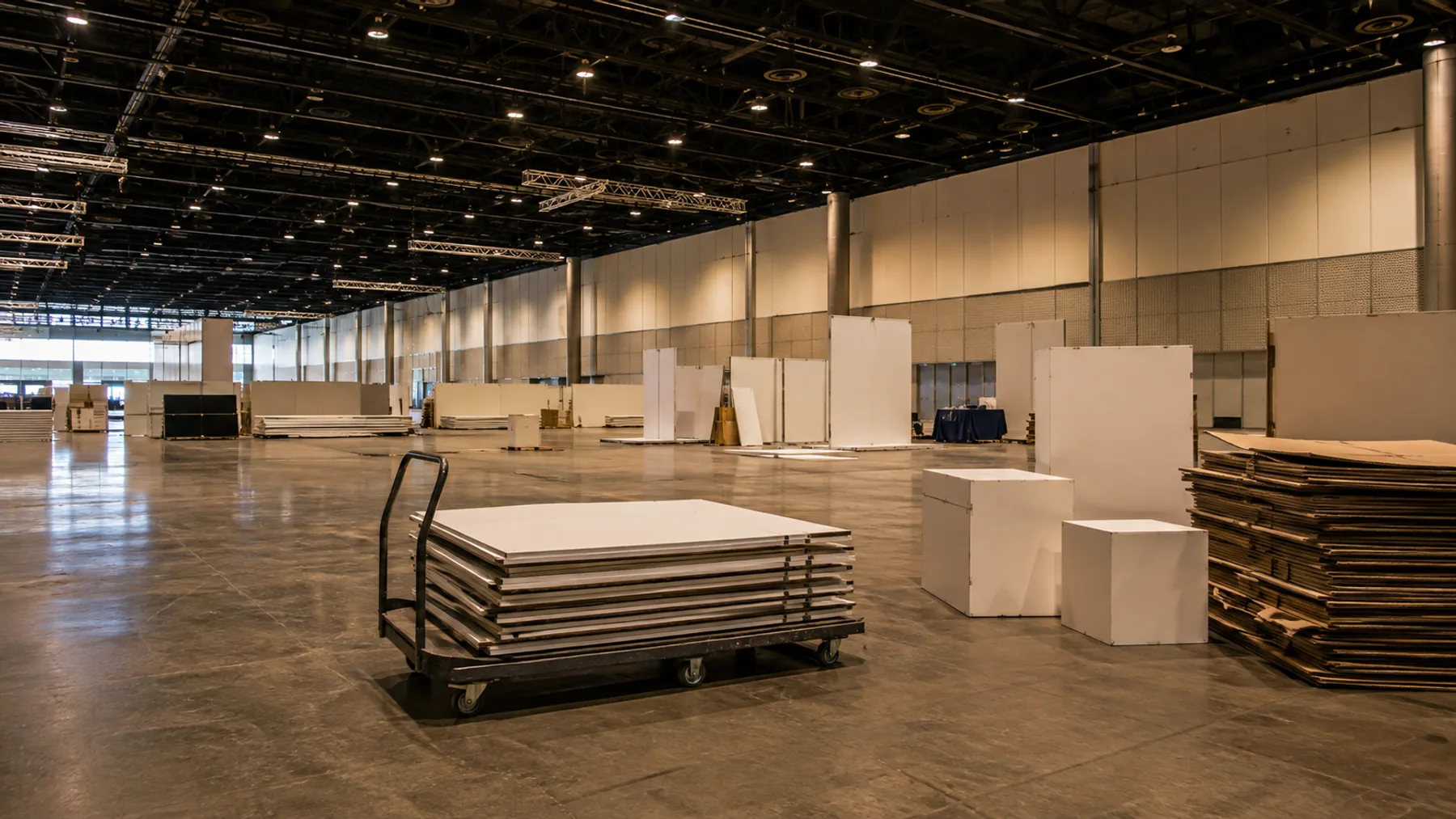
Managing event and exhibition cleanup in Dubai requires coordination under demanding operational deadlines. Major international conventions, industry trade expos, corporate product launches, and gala banquets hosted at Dubai World Trade Centre (DWTC), Expo City Dubai, Madinat Jumeirah, and luxury hotel ballrooms operate under strict venue handover schedules. The moment an exhibition closes, halls transform into congested construction and dismantling environments where exhibitors must extract hired technology, pack reusable displays, and clear bulky rubbish before venue penalty deadlines expire.
Our specialized Bulk Trash Pickup service provides commercial event organizers, exhibition stand contractors, and international corporate exhibitors with rapid-response bulk waste hauling. For comprehensive venue hall clearances requiring mixed non-hazardous material sorting and timber debris extraction, our team deploys Waste Removal Dubai resources to ensure prompt, certified disposal that meets venue management standards.
The Exhibition Teardown Rush: Working Against Venue Handover Deadlines
Exhibition organizers in Dubai enforce strict teardown timetables. Major trade exhibitions at DWTC or Expo City typically grant exhibitors a narrow breakdown window ranging from six to twenty-four hours to dismantle multi-story custom booths, remove thousands of square meters of temporary carpeting, and clear every trace of waste.
Failure to complete booth clearance before the official tenancy handover deadline triggers substantial financial penalties from venue operations. In addition, venues may charge premium emergency cleanup surcharges if discarded exhibition materials are abandoned inside the exhibition hall.
| Venue Teardown Phase | Critical Operational Tasks | Primary Risk Factors to Mitigate |
|---|---|---|
| Phase 1: Show Closure & Asset Packing (Hours 0-3) | Pack AV equipment, secure product merchandise, collect rental flight cases | Accidental disposal of hired technology or valuable client inventory |
| Phase 2: Structural Booth Dismantling (Hours 3-8) | Detach branded MDF panels, unbolt metal trussing, dismantle display counters | Blocked hall access aisles and structural safety hazards during dismantling |
| Phase 3: Flooring & Tape Extraction (Hours 8-12) | Strip single-use carpet rolls, scrape double-sided tape residue from floor | Floor damage claims or penalties from venue housekeeping inspection teams |
| Phase 4: Bulk Waste Hauling & Handover (Hours 12-16) | Load bulky timber, cardboard, and bagged waste onto transport trucks | Vehicle marshalling yard bottlenecks and missing security gate passes |
Organizers must separate high-value rental equipment from discarded materials before authorizing bulk removal teams to begin loading.
Strict Asset Segregation: Discards Versus Reusable Rental Property
The primary logistical risk during chaotic exhibition teardowns is accidental disposal of rented or reusable assets. Exhibition stands combine custom single-use decorative elements with high-value hired infrastructure.
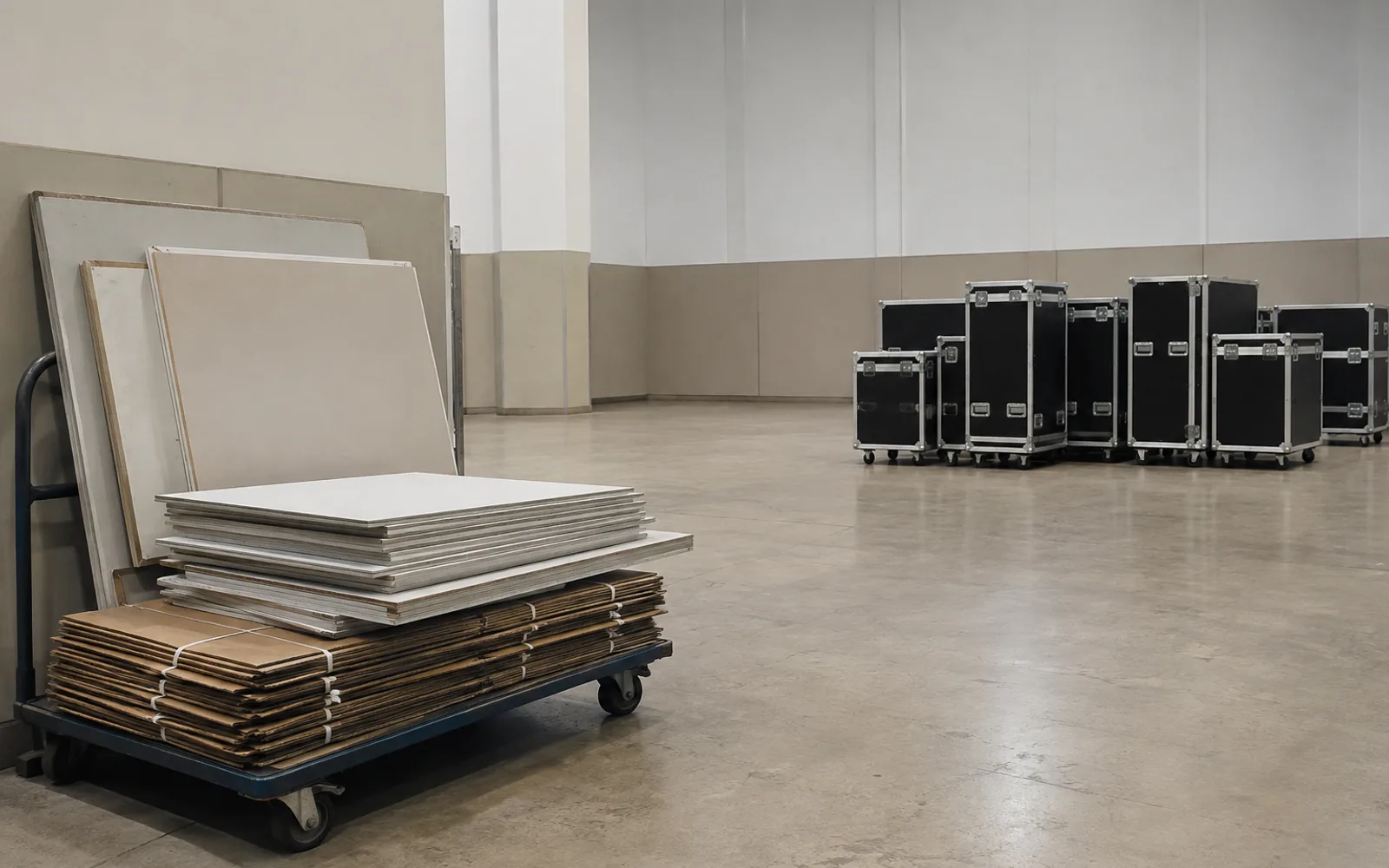
To protect rental items and streamline waste clearance, establish distinct staging zones within your booth footprint:
- Zone A: Retained and Hired Equipment: Group all heavy-duty black equipment flight cases, hired AV displays, modular aluminium frames, rented lounge furniture, and promotional banners in a secured section clearly cordoned off with high-visibility hazard tape.
- Zone B: Approved Discard Materials: Stage broken timber panels, single-use branded MDF backdrops, cut acrylic lettering, flattened cardboard shipping crates, and packaging bubble wrap in a separate collection corridor ready for truck loading.
- Zone C: Floor Waste and Fasteners: Collect loose screws, steel brackets, cable ties, and discarded plastic film into heavy-duty rubble sacks to prevent pedestrian trips and puncture damage to vehicle tires.
A designated exhibitor project manager must conduct a final verification walkthrough with our clearance supervisor before loading begins to confirm that every item placed on the truck is approved for permanent disposal.
Managing Venue Marshalling Yards, Permits, and Vehicle Passes
Operating waste collection vehicles at premier Dubai exhibition venues requires strict adherence to venue logistics systems. Venues do not permit unscheduled commercial vehicles to drive directly to exhibition hall loading bays.
At Dubai World Trade Centre, logistics operations coordinate through dedicated vehicle marshalling yards off Al Khail Road or Za'abeel Hall staging zones. Key venue compliance requirements include:
- Event Contractor Badging: Clearance crew personnel must present valid Emirates IDs and wear high-visibility safety vests, steel-toed boots, and hard hats to access the hall floor during breakdown hours.
- Vehicle Marshalling Yard Entry Passes: Hauling trucks must register through venue logistics portals to obtain specific gate passes and entry time-slots.
- Housekeeping Services Separation: Exhibition venues distinguish between bulk waste extraction and venue floor sweeping. While our team hauls bulky booth debris, custom displays, and palletized waste, venue facility teams handle final machine scrubbing. For example, DWTC exhibition housekeeping services manage detailed floor sanitation and hall turnover protocols.
Failing to register commercial vehicles in advance results in transport trucks being held at outer security checkpoints, resulting in missed breakdown deadlines and administrative delays.
Carpet Tile Stripping, Subfloor Removal, and Floor Protection Handover
One of the most labor-intensive phases of trade show cleanup is floor restoration. Exhibition venues impose strict penalties if booths leave adhesive residue, screw holes, or tape marks on hall floors.
Our specialized teardown crews follow a disciplined sequence to ensure pristine floor handover:
- Surface Carpet Stripping: Single-use needle-felt exhibition carpets are sliced into manageable two-meter rolls, bundled with heavy strapping tape, and loaded directly into waste transport bins.
- Double-Sided Tape Scraping: Industrial floor scrapers with non-marring blades remove high-tack cloth adhesive tapes without scratching underlying epoxy or polished concrete venue surfaces.
- Timber Platform Dismantling: Raised flooring systems, modular chipboard subfloors, and ramped edging profiles are disassembled, with screws and fasteners collected in magnetic trays.
- Final Hall Floor Sweeping: Debris, wood splinters, and zip ties are swept and bagged, preparing the booth footprint for official venue housekeeping sign-off.
Coordinating Overnight Shifts and Multi-Contractor Handover
Exhibition teardown windows frequently operate through overnight hours to clear exhibition halls before dawn. Working through the night presents specific logistical challenges that require proactive site management:
- Illumination and Power Isolation: Hall management often dims primary exhibition lighting to secondary work lights during breakdown. Teams must deploy battery-powered task floodlights when operating power tools or inspecting floor surfaces for stray fasteners.
- Aisle Clearance and Safety Corridors: Forklifts, electric scissor lifts, and pallet jacks move continuously through main hall aisles. Staging timber offcuts or packing cartons within designated red emergency aisles triggers immediate venue safety violation fines.
- Concurrent Contractor Sequencing: Structural de-riggers, audiovisual engineers, and graphic installers must complete their respective strip-outs before our waste collection team loads bulk debris. Staging the removal phase after specialized trades have departed ensures that valuable tools and testing equipment are never caught in bulk disposal piles.
Responsible Recycling and Material Recovery for Exhibition Waste
Exhibition stands generate substantial volumes of recyclable materials, including clean pine framing lumber, structural plywood, extruded aluminium profiles, and heavy corrugated shipping cartons. Dumping mixed exhibition waste into uncontrolled landfills contradicts Dubai Municipality sustainability guidelines and corporate sustainability goals.
Our event waste removal protocols prioritize material diversion at every stage:
- Cardboard and Paper Recycling: Clean shipping cartons, display boxes, and printed promotional brochures are separated, compressed, and transferred to authorized paper recycling plants.
- Scrap Metal Recovery: Damaged aluminium extrusion frames, steel bracket plates, and metal display plinths are sorted for scrap metal smelting.
- Timber Processing: Clean untreated booth framing timber and wooden packaging pallets are redirected to industrial wood processing plants for conversion into composite chipboard and agricultural mulch.
- Residual Bulk Disposal: Non-recyclable composite boards, vinyl vehicle wrap graphics, and heavily soiled exhibition carpets are disposed of in full compliance with municipal waste regulations.
For medical clinics and healthcare practices managing administrative or waiting room renovations, our specialized guide to clinic furniture removal in Dubai details safe disposal protocols that maintain strict separation from medical waste streams.
Businesses managing ongoing commercial waste requirements or corporate facility upgrades can explore our overview of recurring commercial junk removal contracts in Dubai to establish predictable pickup schedules across all operational branches.
For smaller-scale residential celebrations and private venue gatherings, review our practical guide to post-party rubbish removal in Dubai.
To schedule dependable event or exhibition waste removal for your upcoming Dubai trade show teardown, contact our event logistics team on WhatsApp. Provide your venue name, hall location, booth dimensions, and planned teardown schedule for an immediate quotation.
Frequently asked questions
The exhibitor or another authorised owner representative should approve disposal before loading. A stand builder, rental supplier or sponsor may own items that remain after the event. An item being left in the hall is not evidence that it belongs in the junk collection.
Contact the removal provider and venue coordinator as soon as the delay is known. Confirm a revised accessible loading window and any change to the booking. A driver waiting outside does not extend the venue's breakdown period or give permission to load.
Rental returns need a separate arrangement with the supplier or transport provider. Keep hired cases, furniture and reusable equipment away from the approved discard zone. Our event junk collection concerns unwanted items accepted for removal, not return logistics.
Venues enforce strict tenancy handover cut-offs, often requiring complete hall clearance within six to twelve hours of show closure. Teardown crews must stage, dismantle, and extract discarded materials rapidly to avoid substantial venue penalty charges.
Single-use exhibition carpet rolls and adhesive double-sided floor tapes must be stripped completely from concrete exhibition floors. Recyclable carpet tiles are stacked onto pallets, while contaminated floor coverings are bundled into heavy-duty disposal bags.
Removal trucks entering Dubai World Trade Centre, Expo City, or Madinat Jumeirah require pre-registered venue driver security passes, vehicle registration copies, and scheduled marshalled loading dock entry time-slots.
Related articles
Cafe & Coffee Shop Clearance in Dubai
Plan cafe clearance in Dubai with an ownership inventory, separate appliance preparation and a confirmed loading route for unwanted furniture and equipment.

Clinic & Medical Office Furniture Removal in Dubai
Plan clinic furniture removal in Dubai with an approved inventory, empty storage units, clear access, and complete separation from medical waste.
Recurring Commercial Junk Removal Contracts in Dubai
Compare recurring commercial junk removal contracts in Dubai. Review pickup frequencies, service level agreements, bin rotation, and waste manifests.