How Do You Handle Recyclables During Junk Pickup?
Recyclables in a Dubai junk pickup are kept identifiable, separated from contamination, and routed by material, condition, and handling requirements.
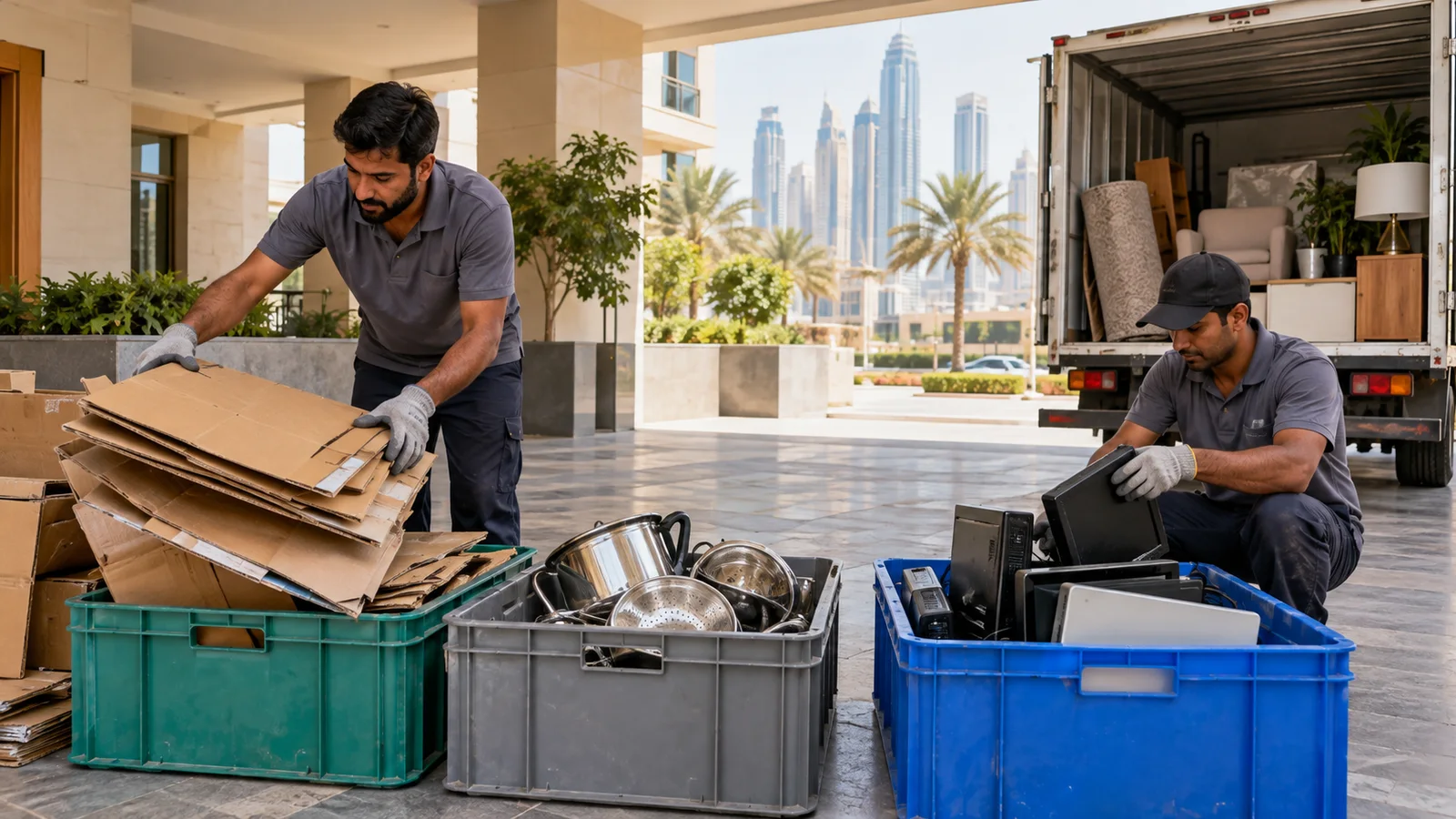
Recyclables in a Dubai junk pickup are kept visible, protected from contamination, and separated where material or handling routes differ. Clean cardboard, metal, electronics, and reusable goods should not be buried under wet bags or mixed into an unidentified pile.
Our Waste Removal Dubai process directs reusable items toward donation, recyclable material toward authorised processing, and the remainder toward licensed disposal. That is a routing process, not a promise that every collected object can be recycled.
What happens to recyclables during pickup?
The first decisions happen while the load is being checked and carried. The crew needs to see what the item is, whether it is dry and intact, and whether it has a special handling requirement. Materials that share a destination can then be grouped without contaminating one another.
| Material group | What protects its recovery route | What can prevent recovery |
|---|---|---|
| Cardboard and paper | Dry, flattened, and separate from food or liquid | Water, oil, food residue, and mixed rubbish |
| Metal items | Visible as metal and free from sealed contents | Attached mixed material that cannot be separated safely |
| Reusable furniture | Complete, stable, and in usable condition | Broken structure, damp upholstery, or missing essential parts |
| Electronics | Kept dry and separate, with batteries disclosed | Breakage, leaking batteries, or concealment in general bags |
| Glass components | Removed or identified so edges can be protected | Shattering inside a mixed load |
The on-site goal is to preserve options. Flattened dry cardboard still has an identifiable route. Cardboard used to absorb water beneath a leaking appliance has lost that advantage before the vehicle moves.
Should everything be sorted before the crew arrives?
No. Residents do not need to build a complete recycling station inside an apartment. A few clear groups are enough: obvious cardboard, electronics, reusable goods, ordinary tied bags, and anything uncertain or restricted.
The guide to sorting junk before pickup in Dubai covers household preparation in detail. During collection, the crew continues that work by loading unlike materials in a way that keeps them identifiable and protects fragile or reusable pieces.
Use these steps before arrival:
- Keep cardboard and paper dry and away from liquids.
- Put electronics and loose batteries in a separate visible group.
- Mark any complete item you believe may still be reusable.
- Disclose paint, chemicals, cylinders, broken glass, or unknown liquids instead of hiding them in bags.
- Leave enough space for the crew to move bulky items without walking across the sorted groups.
How are electronics handled differently?
Electronics stay separate because a television, printer, computer, or bundle of cables is not ordinary mixed household waste. Screens can break, batteries can be concealed inside devices, and data-bearing equipment remains the owner's responsibility until it is prepared for handover.
Use Electronics Disposal for old televisions, monitors, computers, and e-waste that needs a distinct collection route. Remove personal data, accounts, passwords, and any asset labels before pickup. Tell the team about loose or swollen batteries when booking rather than placing them inside a closed box.
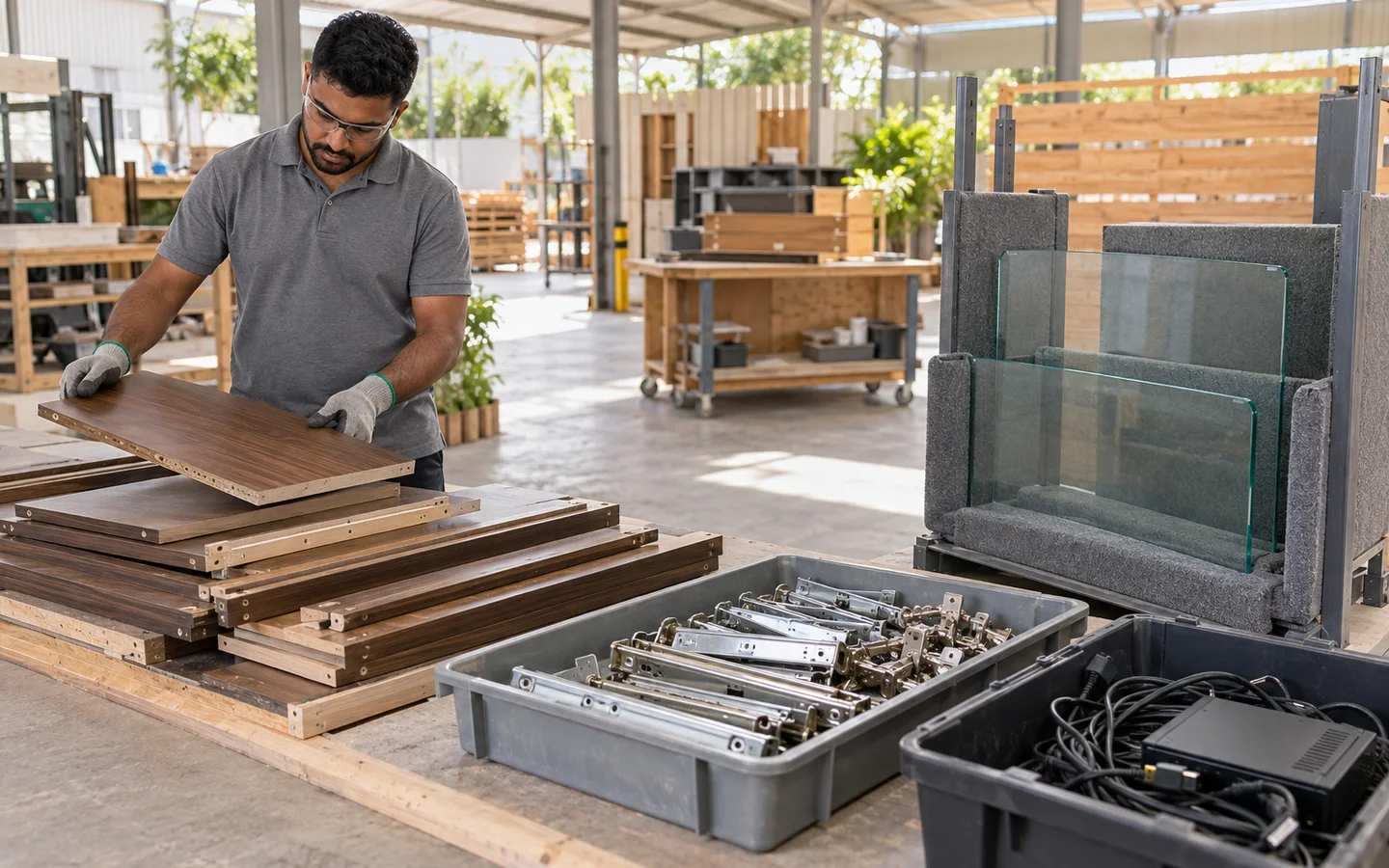
Can furniture be recycled as one object?
Furniture is often a mixed construction rather than one recyclable material. A cabinet may contain laminated board, metal hinges, glass, plastic trim, and adhesive. A sofa can combine timber, foam, fabric, springs, staples, and bonded layers.
Keeping an item intact helps the crew assess whether reuse is possible before it is reduced to materials. If reuse is not suitable, recoverable components depend on condition, contamination, and whether separation is practical. The article on how we sort reusable, recyclable, and landfill items owns the full condition-and-material decision; this guide focuses on protecting those options during pickup.
Recyclable does not mean guaranteed to be recycled
A material can have a theoretical recycling route and still be unsuitable after contamination, breakage, or bonding to other materials. Honest handling keeps viable material separate and uses licensed disposal for the remainder.
What should never be mixed into recyclable groups?
Keep liquids, paint, chemicals, food residue, sharp objects, gas cylinders, and unknown substances out of cardboard, metal, and electronics groups. A concealed container can leak across otherwise clean material and create a handling risk for the crew.
Broken glass needs to be identified and contained so nobody treats the bag as soft household waste. Damp mattresses or upholstered furniture should also be disclosed because moisture can transfer to paper, cardboard, and timber board during loading.
How does this differ from routine waste collection?
Routine collection handles everyday rubbish placed in the property's approved bins. A booked junk pickup starts with an agreed inventory and can preserve separate material groups while the items move from the property to the vehicle.
The comparison between junk removal and waste collection in Dubai explains which option fits a bulky or mixed load. The distinction matters because leaving recyclable furniture or electronics beside a communal bin does not create a planned recovery route.
To book a mixed pickup, send wide photos of the whole load and close photos of electronics, metal, cardboard, glass, and uncertain items. Clear images let the team plan the collection while each material is still identifiable.
Frequently asked questions
The crew keeps obvious clean cardboard, metal, electronics, reusable goods, and residual waste identifiable where the load allows. Wet, contaminated, sharp, or uncertain material remains apart from clean recovery groups.
Not necessarily. Furniture can combine timber board, fabric, foam, glass, metal, adhesives, and fasteners. Recoverable parts depend on whether the materials can be separated safely and remain free from contamination.
Yes, the categories can be collected in one planned pickup, but electronics should remain a distinct visible group. Screens, circuits, cables, batteries, and stored data require different handling from cardboard and metal.
Wet or contaminated cardboard may no longer be suitable for the intended recovery route. Keep cardboard dry, flatten it where practical, and do not pack it beneath leaking appliances or damp soft furnishings.
Related articles
Do I Need to Sort My Junk Before Pickup in Dubai?
You do not need to sort ordinary junk before pickup in Dubai, but separating electronics, liquids, sharp items, and reusable goods prevents delays.
Junk Removal FAQs: Everything Dubai Residents Ask
Short, direct answers to the questions Dubai households ask most about junk removal: what is collected, how pricing works, booking, access and where items go.

Do Junk Removal Companies Work Weekends in Dubai?
Weekend junk removal in Dubai depends on crew availability and your building's weekend access rules. Here is what to confirm before booking a Saturday pickup.