How We Sort Reusable, Recyclable & Landfill Items
See how junk is sorted in Dubai by condition, material, contamination and data risk before items follow reuse, authorised recycling or licensed disposal routes.

How is junk sorted in Dubai?
Junk is sorted by looking at four things: condition, material, contamination and special handling needs. Junk Removals Dubai directs suitable reusable items toward donation, recyclable material toward authorised processing and the remainder toward licensed disposal. Electronics remain distinct because batteries, screens, circuits and stored data create different decisions from ordinary household junk.
A collection booked through waste removal in Dubai can contain several routes in one vehicle. Devices should be identified through the electronics disposal service rather than hidden inside bags or mixed furniture.
The first decision is reuse, not material
A wooden table is not automatically timber waste. If it is complete, clean, stable and suitable for another user, keeping it intact may preserve a reuse option. The same table with a broken frame, missing hardware or serious contamination needs a different assessment.
Reuse is never guaranteed by appearance alone. Recipient acceptance, condition and practical handling still matter. Sorting should describe an honest possibility, not turn “donation” into a label applied to every collected item.
Four checks determine the route
| Check | Question | Effect on the route |
|---|---|---|
| Condition | Is the item complete, stable and usable? | May preserve reuse or move the item to material assessment |
| Material | Can useful components be identified and separated? | May allow authorised processing for suitable material |
| Contamination | Is it wet, mouldy, pest-affected or mixed with residue? | Can remove reuse and recycling options |
| Special handling | Does it contain electronics, batteries, glass or data storage? | Keeps it out of an ordinary mixed-junk route |
The route can change during inspection. A cabinet that looks complete in a front photo may have water-damaged board at the back. A bag described as cables may also contain loose batteries. Clear booking photos reduce these surprises, but sorting still depends on the item as found.
Recyclable material must remain identifiable
Cardboard, metal and some separated components are easier to assess when they are dry, visible and not bonded to unrelated material. A sofa, mattress or laminated cabinet may contain several material types held together with adhesives, staples, foam and fabric. One recyclable component does not make the whole object recyclable.
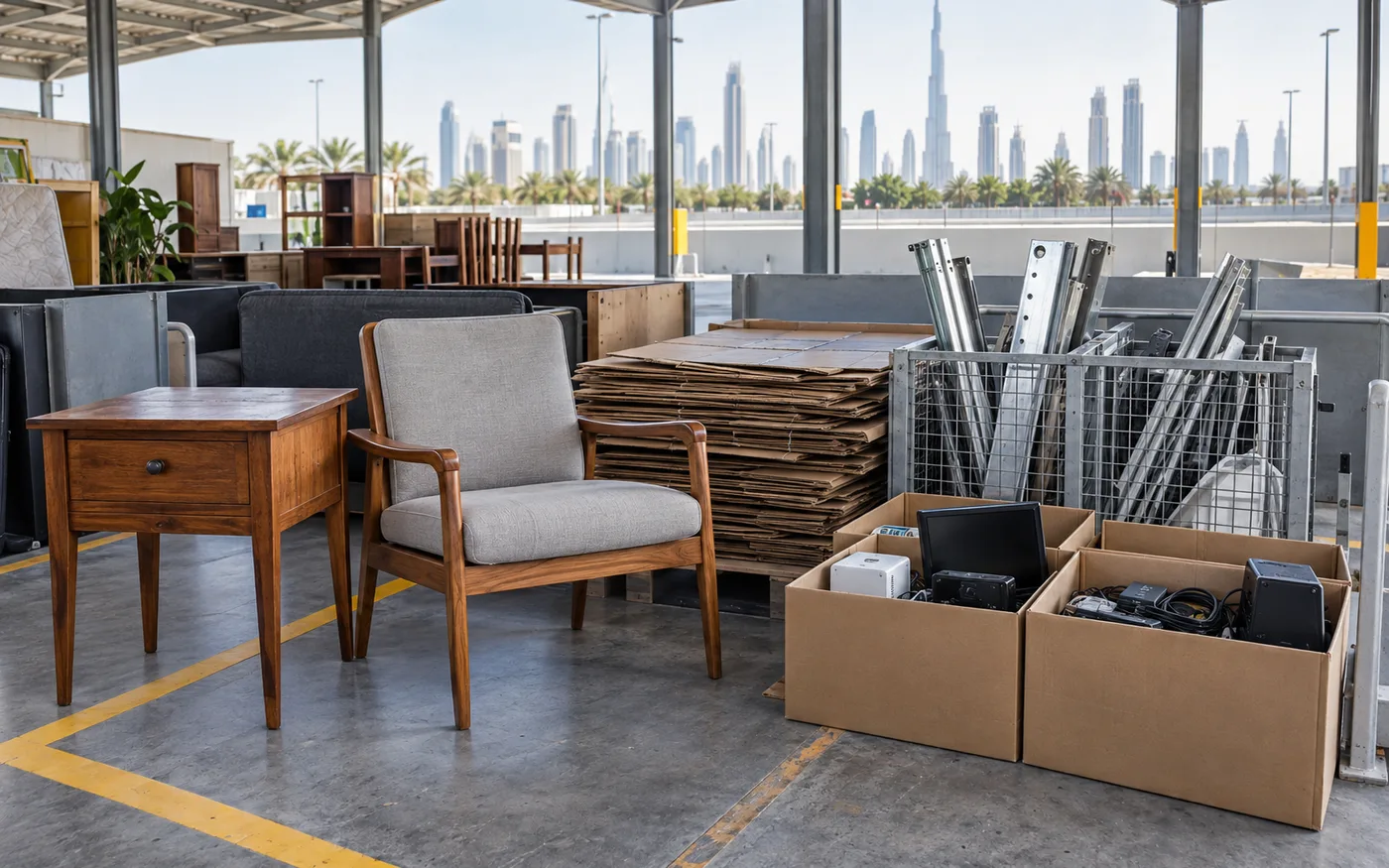
Loading matters as well. Clean cardboard pressed against damp fabric can lose a recovery option. A complete chair crushed under broken panels can lose a reuse option. Keeping groups identifiable protects both the object and the information needed for the next decision.
Electronics form a separate sorting stream
Phones, laptops, monitors, printers and small appliances should remain visible. They can contain circuit boards, screens, batteries and data-bearing storage. Customers should back up and remove personal data before collection because a standard junk pickup does not include data wiping or a destruction certificate.
Remove accessible loose batteries only when it is safe to do so, then contain them so the terminals cannot contact other metal. Do not dismantle sealed equipment or break screens to separate materials. Describe the device and its condition instead.
Sorting is not a recycling guarantee
The responsible route includes licensed disposal when condition, contamination or mixed construction leaves no viable reuse or recovery option. No universal recovery percentage can be promised for a mixed household load.
Landfill or residual disposal is the honest final route
Some material cannot be directed to reuse or authorised recycling. Broken composite furniture, contaminated soft furnishings and inseparable mixed material may need licensed disposal. Calling that material recyclable would not improve the outcome; it would hide the limit that sorting is meant to identify.
The broader responsible disposal process follows the load from quote through final routing. This guide has a narrower role: it explains the decision made for each item or material group. The earlier guide on where junk goes after collection provides more context on downstream routes without claiming that every collected object is recovered.
What customers can do before collection
Keep possible reuse items dry, complete and separate from rubbish. Place loose screws or fittings in a labelled bag attached to the item. Flatten only clean, dry cardboard. Keep electronics visible, disclose batteries, and never mix unknown liquids or chemicals into the load.
When helping an older relative or another household make decisions, create clear keep, reuse and remove groups before the crew arrives. Our guide to assisted clearances for older residents covers that decision process in detail. The key sorting rule is simple: preserve the item's condition and describe it honestly so the most suitable available route remains open.
Frequently asked questions
Suitable complete items may be directed toward donation, recoverable material toward authorised processing, electronics toward their distinct route, and material without a viable reuse or recovery option toward licensed disposal.
No. Cleanliness is only one factor. Completeness, condition, stability, demand and recipient acceptance also matter, so reuse remains a possible route rather than a promise.
Furniture can combine timber board, foam, fabric, glass, metal fittings and adhesives. When those parts cannot be separated safely or practically, the recyclable content of one component does not make the complete item recyclable.
Damp, mould, food residue, pests, chemicals or unknown substances can remove reuse and material-recovery options. Contamination should be disclosed before collection so handling and scope can be assessed.
No. Electronics stay identifiable because batteries, screens, circuit boards and data-bearing storage need a distinct assessment. Customers should remove personal data before collection.
Yes. Keep reusable items dry and complete, contain loose fittings, separate visible electronics and batteries, avoid mixing clean cardboard with wet waste, and describe damage honestly in the booking photos.
Related articles
Our Responsible Disposal Process, Step by Step
How Junk Removals Dubai separates reusable items, recyclable material, electronics and residual waste without making unsupported recycling promises.
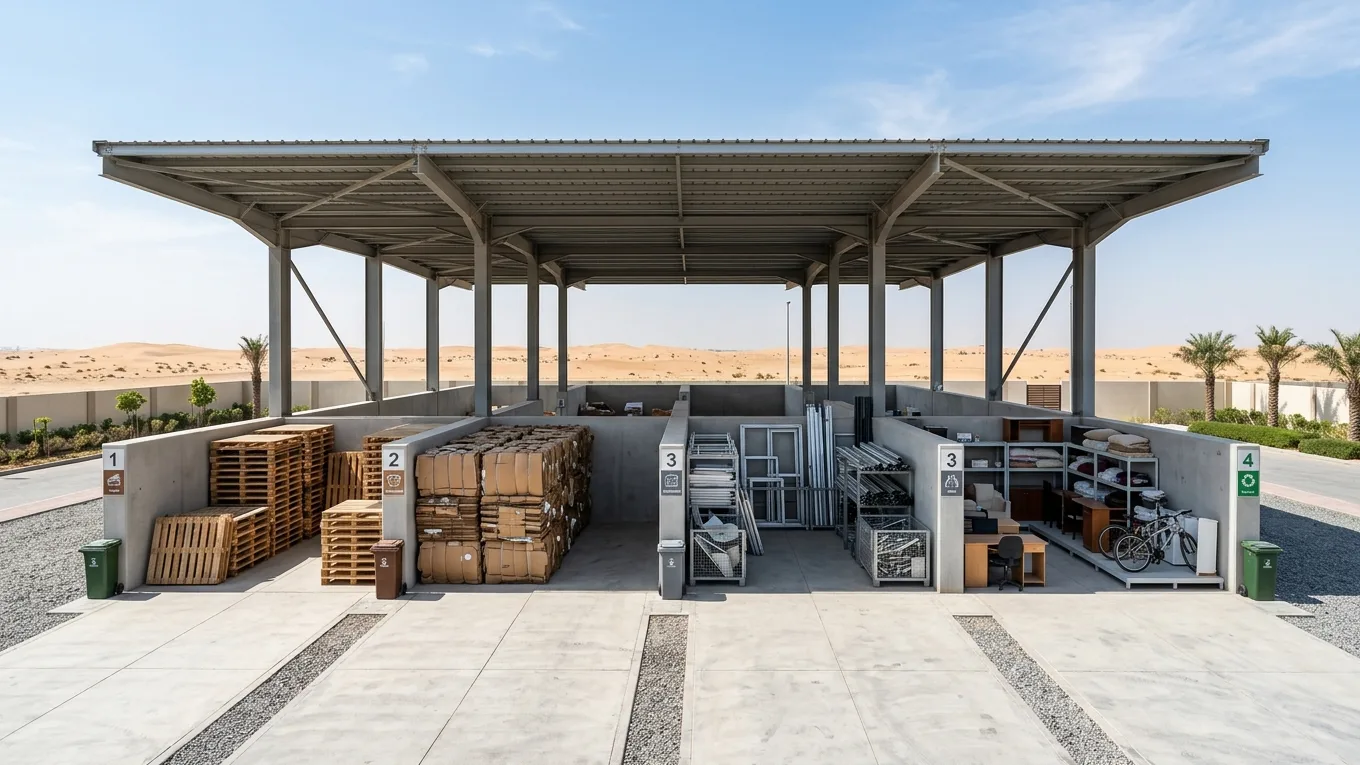
Our Eco Commitment: Diverting Junk From Landfill in Dubai
How Junk Removals Dubai reduces landfill waste: practical sorting, local donation routing, material recycling streams, and honest environmental limits.
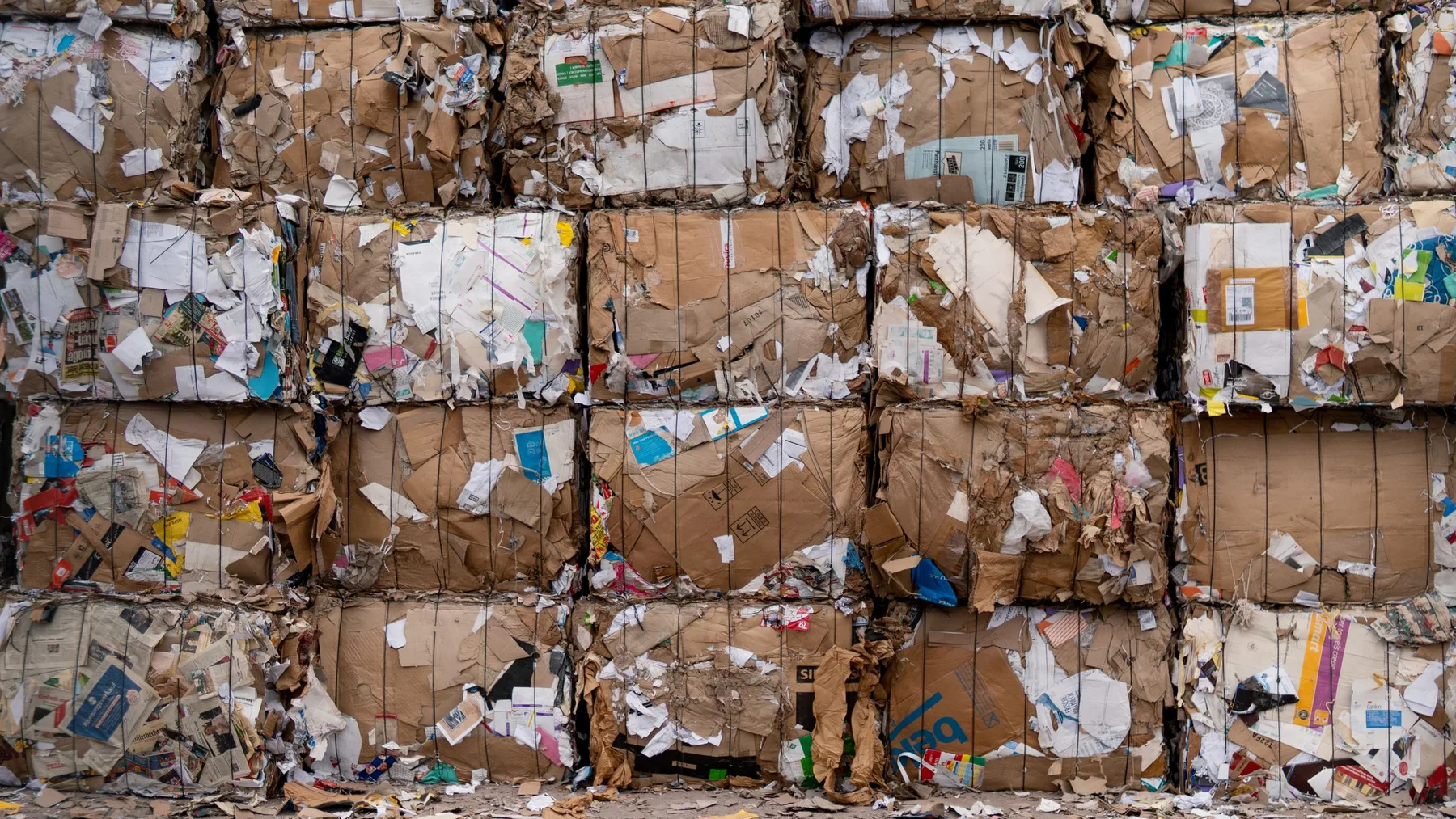
What Happens After We Haul Your Junk Away
After junk is hauled away in Dubai, the load is checked, kept separated, sorted and routed. Here is what happens at each stage and what you can still ask for.