Conference & Boardroom Table Removal in Dubai
Clear a conference or boardroom table from a Dubai office: top material, modules, cable boxes, AV equipment, ownership sign-off, and loading-bay access checks.
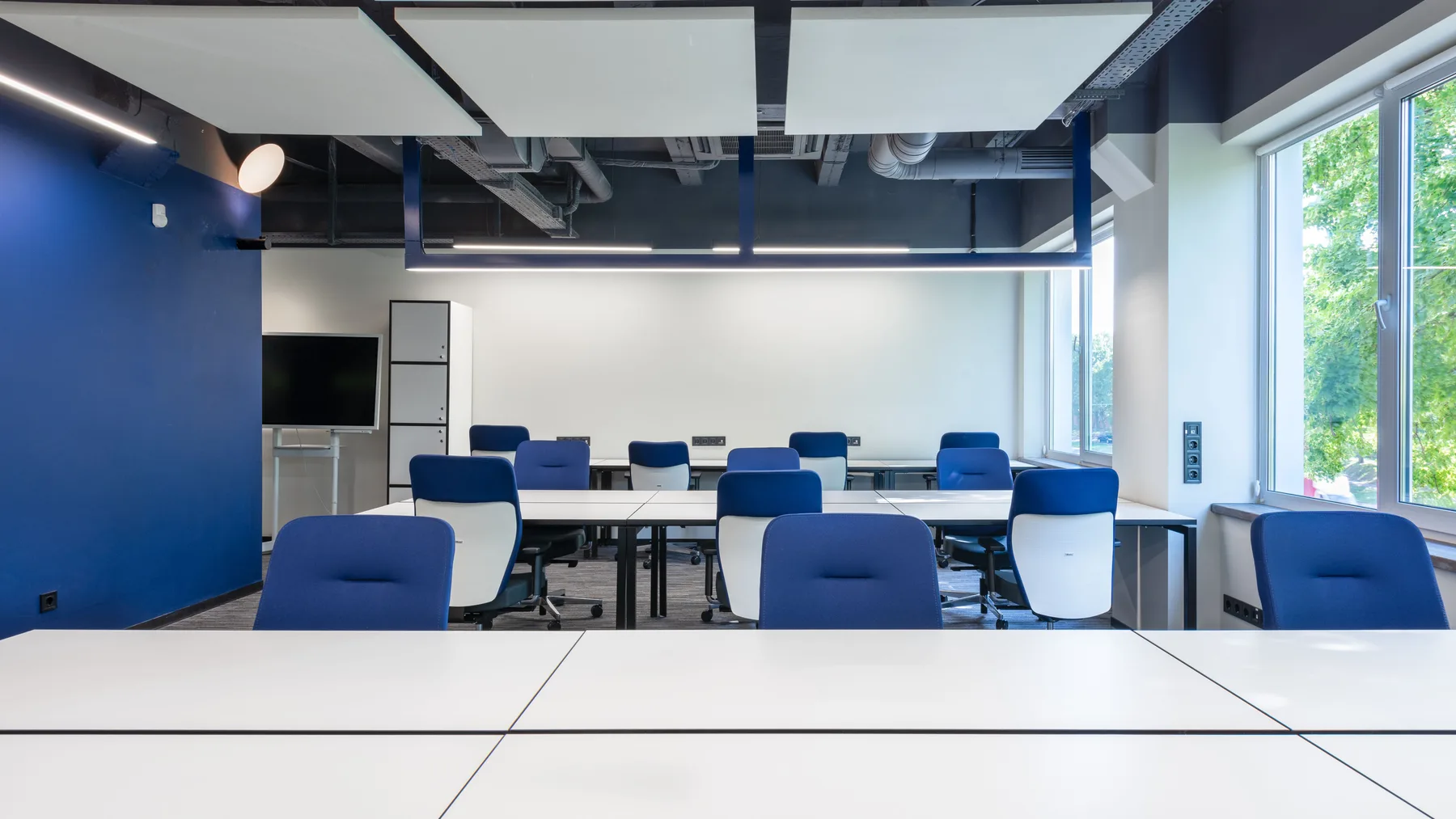
Conference table removal in Dubai depends on how the table is built, who owns it, and what is wired into it. A modular training table separates into light sections. A solid veneer or stone-topped boardroom table needs a crew sized for its weight and a route that fits its longest part. Unplug the cable boxes, confirm ownership, and book the building's lift or loading bay before the crew arrives.
Photograph the underside
The top of a boardroom table shows its size and finish. The underside shows the joins, pedestal bolts, cable trays, and power modules, which decide how the table comes apart and how many people the job needs.
What details are needed to quote a conference table removal?
Send a full photo of the table, a photo of the underside at one join, and a view of the route to the lift or loading bay. Include the overall length and width, the top material, the number of sections or pedestals, and whether power or data boxes are built in.
The booking should state:
- the table type: modular training tables, a single boardroom top, a boat-shaped or oval table, or a glass or stone top;
- how many sections, legs, pedestals, or modesty panels it has;
- any built-in power modules, cable spines, or under-table trays;
- the chairs, credenzas, screens, or conferencing kit leaving with it;
- who owns the furniture and who has approved its removal;
- the floor, service lift, loading-bay rules, and permitted working hours.
The table, chairs, and credenzas are booked through furniture removal in Dubai. Screens, conferencing units, speakers, and cabling leaving at the same time should be listed for electronics disposal.
How does the table type change the removal plan?
| Table type | Typical construction | Detail that changes the plan |
|---|---|---|
| Modular training tables | Separate tops on steel frames, often linked | Quick to separate; many identical units to count |
| Single-top boardroom table | One long veneer or laminate top on pedestals | Top length against lift and corridor size |
| Multi-section boardroom table | Two or more tops joined with bolts or plates | Join hardware hidden under the top |
| Stone or marble top | Heavy slab on a steel or timber base | Weight, edge chips, carried on edge only |
| Glass-topped table | Toughened glass on a frame | Glass leaves separately with corner protection |
| Table with built-in power and data | Flip-up or recessed modules with cable spine | Hardwired boxes must be disconnected first |
A stone top is the one that most often surprises facilities teams. The slab may have been craned or carried in before the partitions went up. Photograph it from the end so its thickness shows, and expect a larger crew.
Should the table be dismantled before the crew arrives?
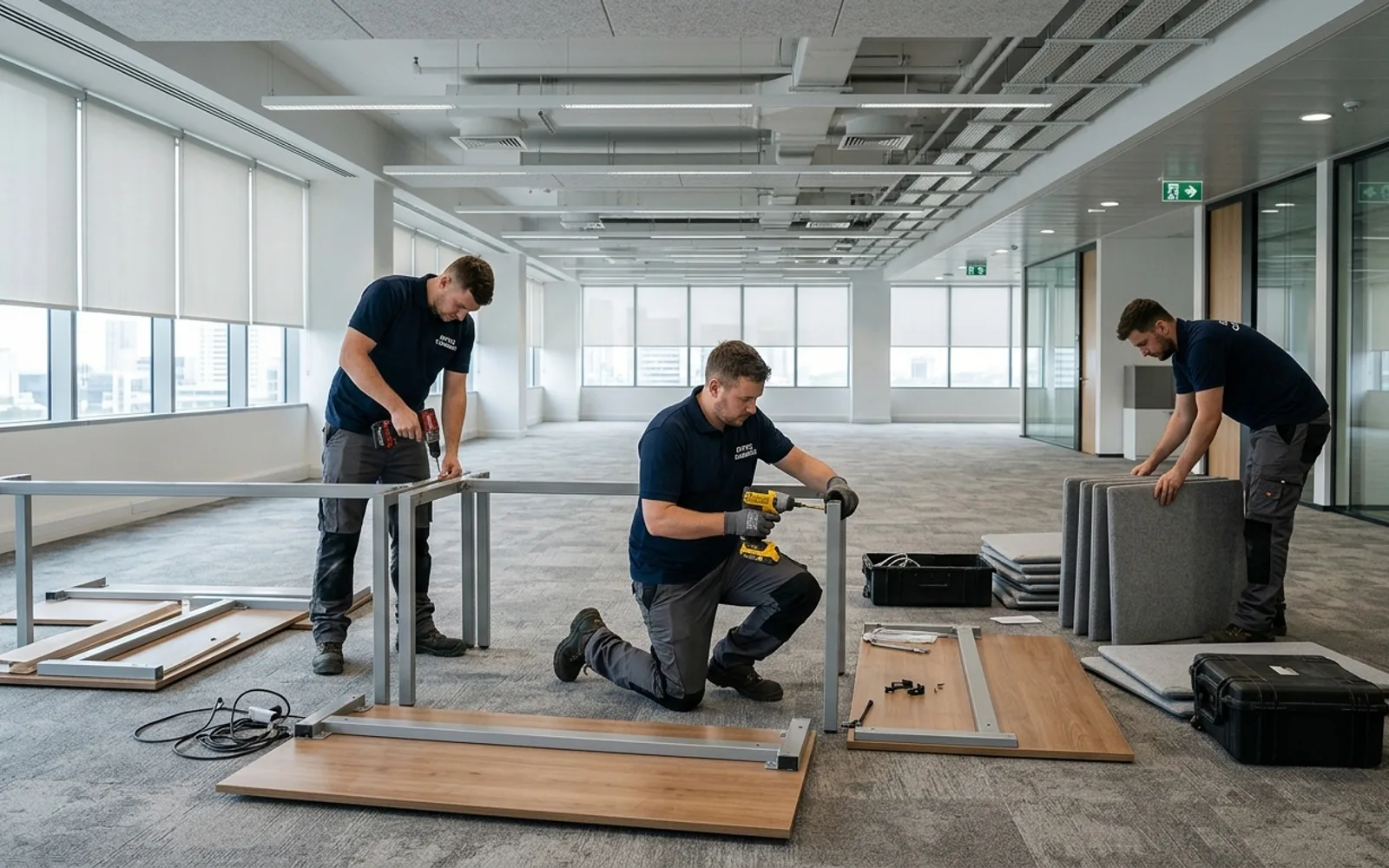
No, unless your own facilities team already planned it. The crew separates bolted tops from frames on site, keeps hardware bagged, and stacks tops on edge with padding. What the business should do in advance is unplug every module, clear the tabletop, empty any credenza drawers, and remove personal items from the room.
Do not attempt to lift a stone or glass top off its base to check the fixings. Photograph the joins instead. The desk removal guide covers smaller single desks, and the office chair disposal guide covers the meeting chairs that usually leave with the table.
Is one meeting room different from a full office clearance?
Yes. A single conference room is a short, contained job: one table, its chairs, a screen, and one route out. A whole floor brings workstation runs, partitions, archives, and a building work permit timetable. The office furniture disposal guide for Dubai businesses covers that larger process.
Many commercial towers in Business Bay, DIFC, and JLT restrict heavy removals to booked loading-bay slots or after-hours windows. Building management sets those rules, so ask them for the slot and any insurance or method-statement paperwork before confirming a collection date.
Can a good conference table be reused?
A solid table with a clean top, sound joins, and no water rings or delamination often suits another office. Chipped laminate, swollen board edges, or a cracked glass top usually mean disposal. Photos of the surface and the edges settle that before collection. Junk Removals Dubai does not refinish, repair, or reinstall tables.
Send the table type, dimensions, top material, sections, power modules, ownership sign-off, floor, and Dubai building through WhatsApp for an assessment and quote.
Frequently asked questions
Sometimes, if it can stand on its long edge inside the car. Measure the tabletop length, the lift's internal diagonal height, and the corridor turns. A top longer than the lift can take must separate at its joins or leave by a route that building management approves.
The party that owns it. Tables bought by the tenant need the tenant's sign-off. Tables supplied with a fitted or serviced office may belong to the landlord or operator, so confirm in writing before booking collection.
Plug-in power modules and loose cable spines leave with the table once unplugged. Boxes wired into a floor outlet or the building's power must be disconnected by an electrician or the fit-out contractor before the crew arrives.
Yes, listed as electronics alongside the table. Sign out of every account, reset the conferencing unit, and remove or wipe any storage first. Clearing data from company devices stays with the business, not the removal crew.
Related articles
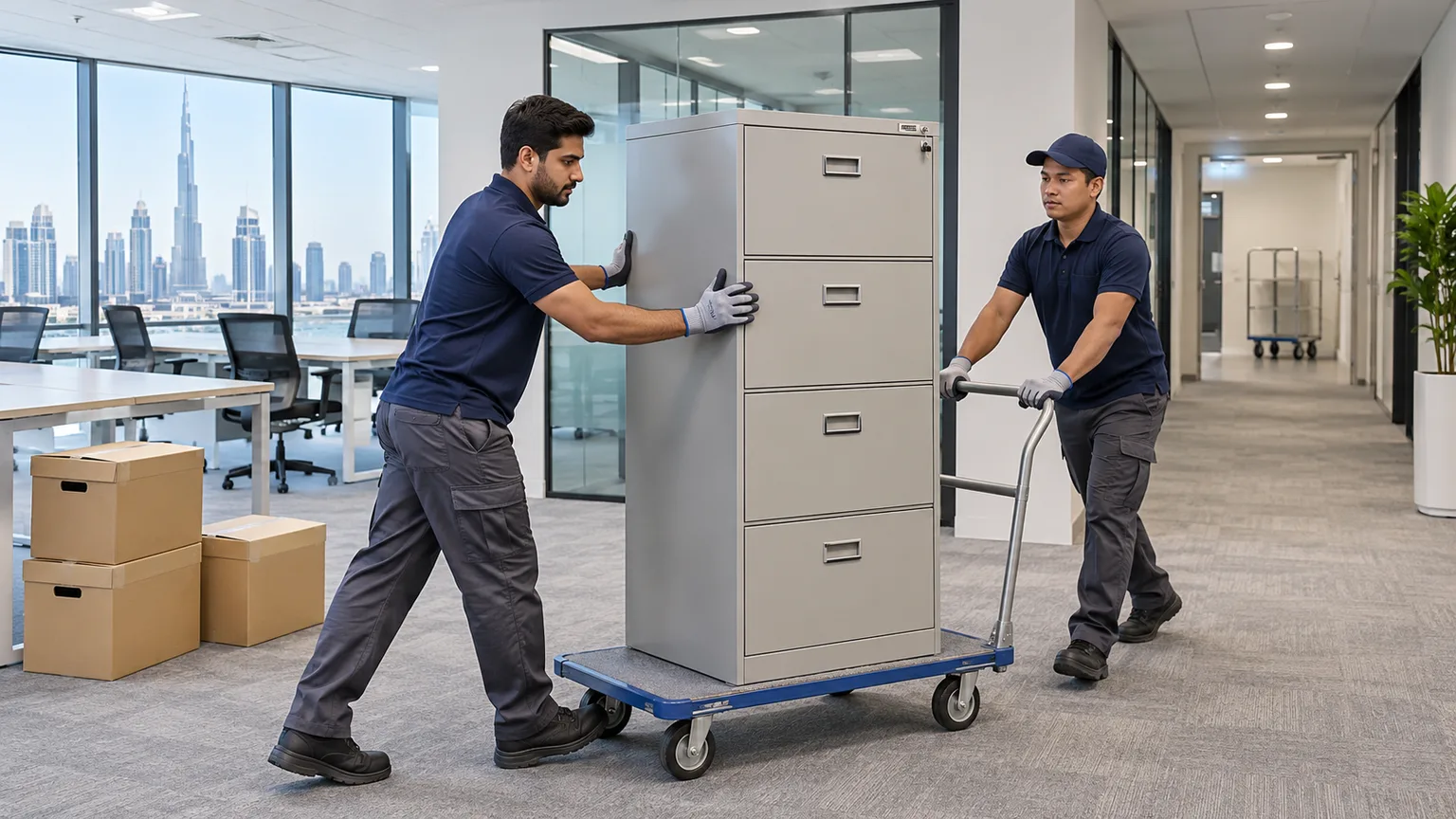
Filing Cabinet & Office Storage Removal in Dubai
Plan filing cabinet removal in Dubai with document, drawer, key, weight, service-lift, loading, and multi-cabinet office clearance checks.
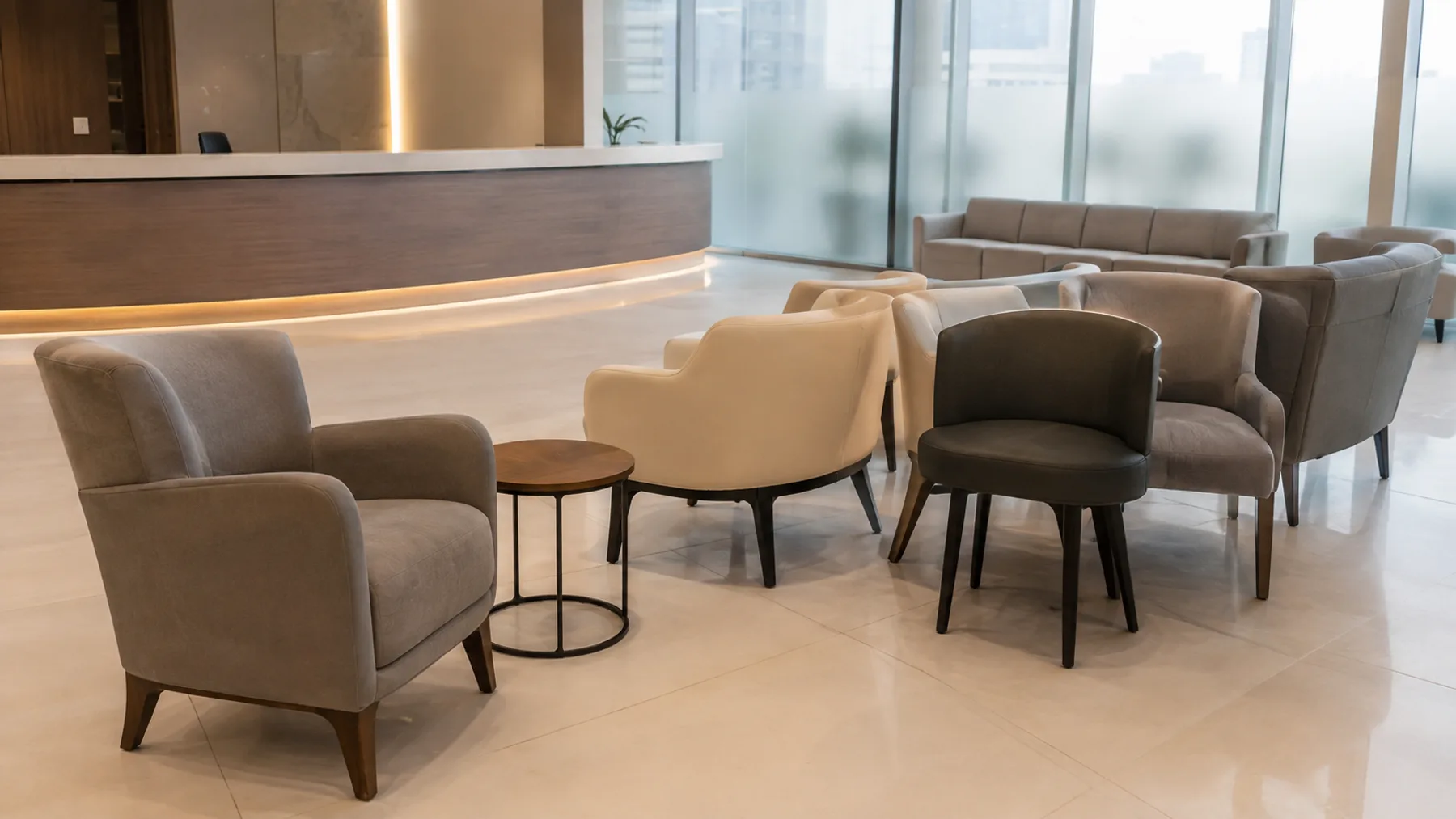
Clinic & Medical Office Furniture Removal in Dubai
Plan clinic furniture removal in Dubai with an approved inventory, empty storage units, clear access, and complete separation from medical waste.
Commercial Display Chiller Removal in Dubai
Prepare a display chiller for Dubai removal by clearing stock, confirming ownership, drying the cabinet, securing shelves, and checking utility connections.