Office Furniture Disposal for Dubai Businesses: Clearance Guide
Strategic guide to office furniture disposal in Dubai. Learn corporate asset decommissioning, workstation removal, ESG reporting, and lease handovers.
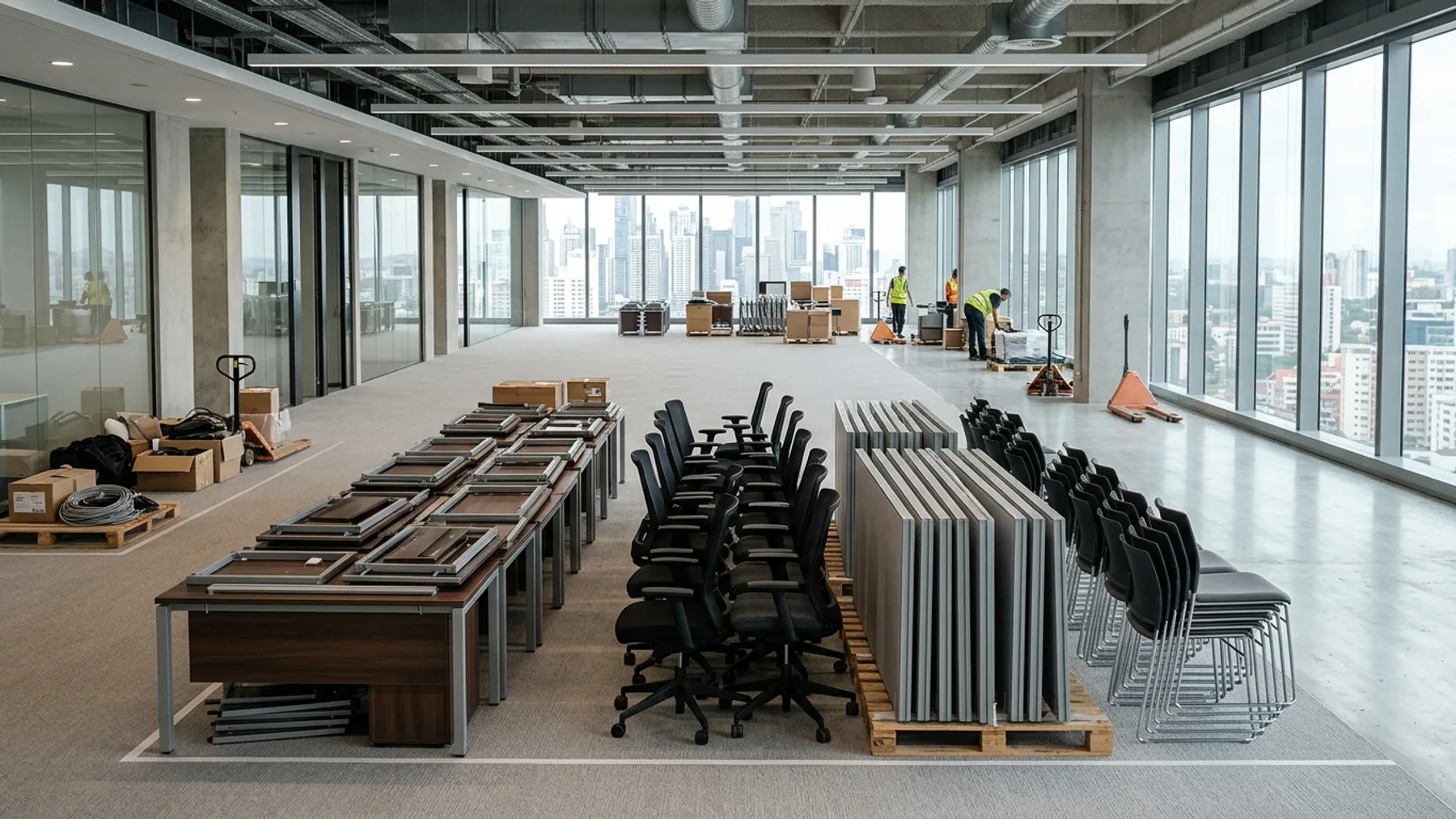
The corporate commercial landscape in Dubai represents one of the most dynamic business ecosystems in the Middle East. Global multinational corporations, financial institutions, technology leaders, and regional enterprises in DIFC, Downtown Dubai, Business Bay, Dubai Internet City, and Jumeirah Lakes Towers (JLT) constantly adapt their office layouts. Shifting toward hybrid work models, scaling workforces, upgrading to agile collaboration pods, or relocating corporate headquarters triggers the need for large-scale office furniture disposal.
Managing corporate office furniture disposal in Dubai is far more complex than discarding home furniture. Enterprises must navigate commercial lease handover conditions, stringent building management rules, technical disassemblies of powered benching systems, and rigorous corporate environmental social governance (ESG) reporting standards.
Enterprise Clearance vs Residential Disposal
This guide specifically addresses large enterprise B2B multi-floor clearances, corporate asset disposition, and building management compliance. If you are an individual resident or managing a small private home office, refer to our companion guide on how to dispose of office furniture in Dubai for local residential donation options.
Distinct Demands of Corporate Office Decommissioning
Commercial clearances in prominent Dubai business towers present unique operational constraints that require specialized commercial hauling teams:
1. Building Management NOCs and Security Protocol
Premium office towers (such as ICD Brookfield Place, Emirates Towers, and Al Fattan Currency House) do not allow contractors onto freight elevators without extensive paperwork. Clearance partners must provide valid trade licenses, public liability insurance policies, third-party workmen compensation certificates, and staff identity documentation days ahead of mobilization. Submitting comprehensive method statements and risk assessments (RAMS) ensures zero delays on mobilization morning.
2. Strict After-Hours Hauling Windows
Commercial office towers operate strict policies against moving furniture through passenger lobbies or running freight elevators during business hours. All disassembly, corridor staging, elevator transport, and basement dock loading must occur between 6:00 PM and 6:00 AM on weekdays or during full-day weekend shifts. This schedule prevents conflict with executive elevator usage and prevents corridor congestion.
3. Integrated Power and Data Disconnections
Modern modular workstations, height-adjustable standing desks, and executive conference tables incorporate integrated electrical trunking, under-desk power tracks, and Ethernet patch cables. Dismantling teams must safely disconnect these systems without compromising building sub-circuits or leaving live conductors exposed. Qualified technicians de-energize floor boxes and coil peripheral wiring before taking screwdrivers to metal framing.
4. Freight Elevator Dimension and Floor Protection Protocols
Freight elevators have strict weight capacities and dimensional limits. Large boardroom tables and acoustic privacy telephone booths must be meticulously flat-packed before transport. Building management teams inspect lift interiors and lobby marble before and after work; protective floor masonite boards and wall foam padding are mandatory.
| Corporate Furniture Category | Primary Items Included | Deconstruction Method | Sustainable Disposition Channel |
|---|---|---|---|
| Modular Workstations | 4-pod and 6-pod benching, privacy screens, cable trays | Disassemble steel legs, detach modesty panels, bundle tops | Steel frames to metal recycling; melamine tops to wood reprocessing |
| Executive & Boardroom | Conference tables, leather executive chairs, credenzas | Unbolt sectional tabletops, wrap premium finishes | Secondary business resale or donation to educational charities |
| Task & Ergonomic Seating | Mesh chairs, drafting stools, visitor tub chairs | Separate gas-lift cylinders from nylon bases and seat foam | Scrap metal recovery from bases; plastic and foam recycling |
| Acoustic & Privacy Pods | Phone booths, meeting pods, soundproof dividers | Unclip modular glass panels, extract ventilation motors | Glass recycling, structural aluminum recovery, fabric sorting |
| Storage & Filing Units | Metal lateral filing cabinets, tambour units, lockers | Empty interior shelves, lock drawers, verify zero contents | High-grade sheet steel scrap processing at regional mills |
Environmental Responsibility & Corporate ESG Compliance
Modern enterprises in Dubai operate under strict corporate sustainability governance. Companies aligning with UAE Net Zero 2050 and international ESG standards cannot allow hundreds of serviceable desks and ergonomic chairs to end up in municipal landfills.
Circular Reuse and Donation Channels
Serviceable corporate furniture in good structural condition should first be evaluated for secondary use. High-grade ergonomic task chairs, modular conference tables, and executive credenzas can be liquidated through commercial liquidators or donated to local schools, non-profit institutions, and startup business incubators across the UAE. Establishing charitable donation manifests provides verified tax deduction records and community outreach impact scores.
Material Segregation for Certified Recycling
When furniture reaches the end of its functional lifecycle, commercial disposal teams execute mechanical material separation on site:
- Ferrous and Non-Ferrous Metals: Steel desk frames, aluminum screen frames, and metal drawer pedestals are sorted by alloy grade and delivered to certified industrial metal recycling facilities.
- Engineered Melamine Wood (MFC): Pressed particleboard tabletops with plastic edge banding are diverted to industrial timber processing plants.
- Plastics and Polyurethane Foams: Chair bases, casters, and molded cushion foams are channeled to specialized polymer reprocessing plants.
IT Asset Disposition (ITAD) and Data Security Integration
Commercial office clearances frequently intersect with surplus IT infrastructure. Discarding server racks, monitor arms, desk power distribution units (PDUs), and data cabling demands heightened security protocols:
Cable Stripping and Copper Reclamation
Under-floor power wiring and high-category data cables (Cat6/Cat6A) left behind during office vacating must be removed to restore floor plenums to base building condition. Professional teams bundle extracted data copper for certified metal recovery.
Storage Media Audits
Drawer units and executive credenzas are physically inspected by clearance supervisors. Discovered hard drives, flash drives, or magnetic backup tapes are cataloged, segregated in tamper-evident containers, and handed over to certified IT destruction partners or corporate compliance officers.
Acoustic Pod and Modular Phone Booth Disassembly
Modern agile office spaces feature standalone acoustic meeting pods and single-user telephone booths. Decommissioning these complex structures requires specialized technical procedures:
- Power Isolation: Disconnect external power supplies feeding internal LED lights, exhaust fans, and electrical sockets.
- Glass Panel Demounting: Acoustic glass panels must be removed with suction glass-lifters and wrapped in padded moving blankets to prevent edge chipping.
- Internal Fabric and Acoustic Foam Stripping: Sound-absorbing felt baffles and acoustic insulation panels are unclipped and packed separately.
- Structural Frame Teardown: Aluminum structural extrusions are disassembled and bundled, preserving components for resale or high-purity aluminum scrap recycling.
Fixed Asset Register (FAR) Reconciliation
Enterprise financial controllers require clear documentation when removing capital equipment from company balance sheets:
- Barcode Asset Scanning: Clearance supervisors scan asset tags on workstations, executive chairs, and credenzas to compile an accurate reconciliation report against the corporate fixed asset register.
- Depreciation and Write-Off Verification: Documenting whether an item was liquidated, donated, or scrapped provides external auditors with supporting evidence for corporate asset write-offs.
- Formal Certificate of Destruction: For branded or proprietary corporate furniture, contractors issue certificates confirming that items were dismantled beyond recognition and channeled into raw material recycling.
Full-Facility Industrial Decommissioning
For companies clearing combined office and logistics infrastructure, consult our operational breakdown of warehouse racking and pallet removal in Dubai and our strategic advice on office junk removal across commercial hubs.
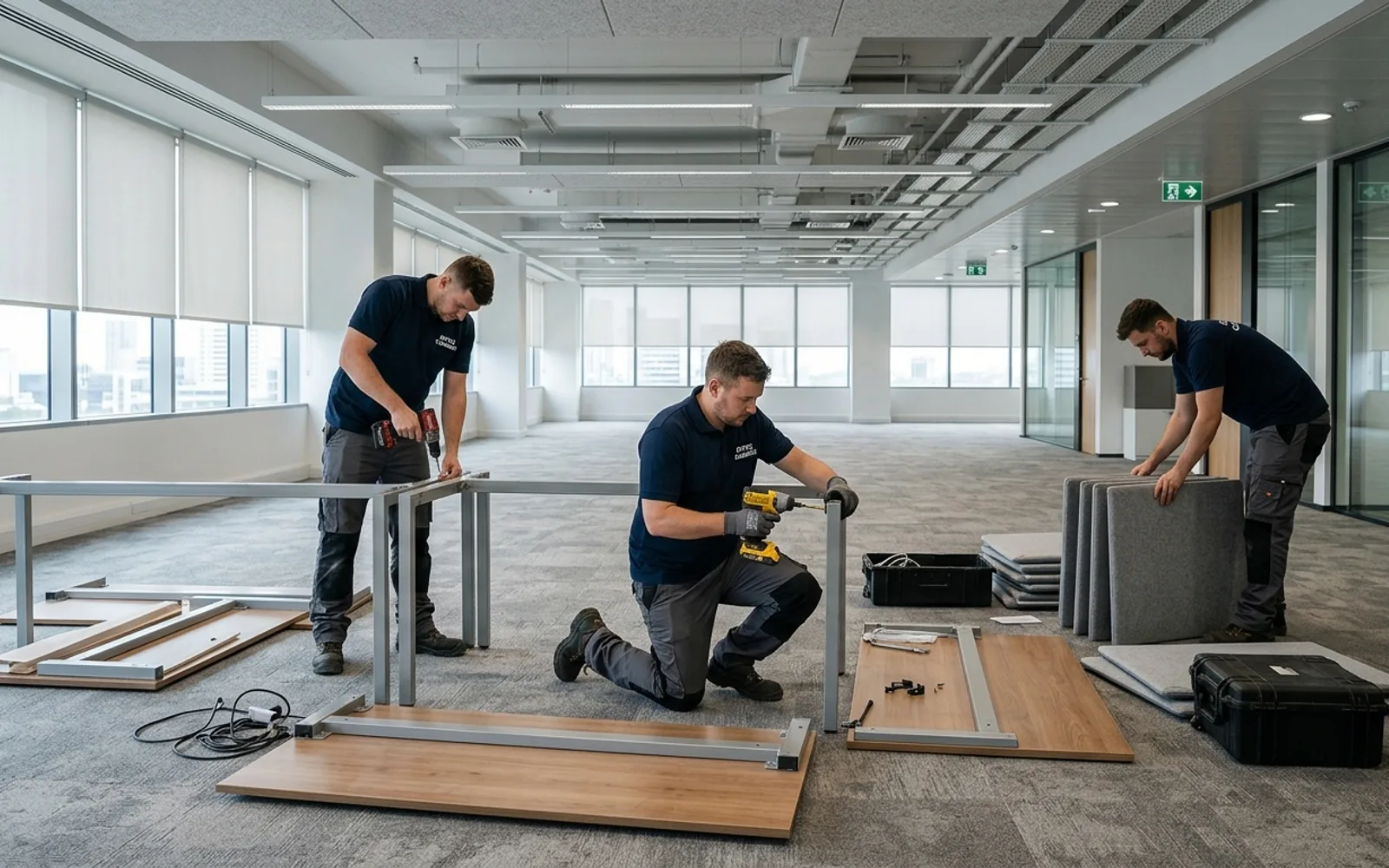
Professional Corporate Office Clearance Workflow
A successful enterprise clearance requires structured coordination between the tenant, the facility management team, and the commercial clearance partner:
How to
How to Conduct an Enterprise Office Furniture Clearance in Dubai
- 1
Asset Inventory and Space Audit
Conduct a comprehensive floor walk-through with department heads to tag assets for liquidation, internal transfer, charitable donation, or mechanical recycling.
- 2
Building Management Coordination and Permits
Submit contractor documentation, security deposits, and method statements to the commercial tower management team to secure loading dock and freight lift access.
- 3
Common Area Floor and Elevator Protection
Install protective correx sheeting, heavy carpet runners, and elevator wall blankets from office entrance doors to the basement loading dock.
- 4
Power Isolation and Mechanical Teardown
Disconnect under-desk electrical distribution blocks, unbolt modular workstation pods, disassemble large conference tables, and flat-pack acoustic divider panels.
- 5
Off-Peak Freight Transfer and Loading
Transfer flat-packed furniture down dedicated freight elevators during reserved night windows, packing commercial haulage trucks systematically to maximize volume.
- 6
Reinstatement Inspection and ESG Certification
Vacuum cleared office carpeting, clean freight elevators, inspect common areas with building security, and issue certified waste diversion manifests for corporate records.
Preparing for Commercial Lease Handover
When vacating commercial premises in Dubai, commercial lease agreements typically stipulate returning the unit in broom-clean shell-and-core or Cat-A condition. Missing handover deadlines triggers costly rent penalties and forfeiture of substantial security deposits.
- Verify Asset Ownership: Confirm with corporate legal and finance teams whether any leased office furniture or financed modular pods require return to specific leasing companies before general clearance.
- Audit All Drawer Units for Confidential Data: Ensure internal IT and human resources teams conduct a physical sweep of all mobile pedestals and filing cabinets to retrieve sensitive employee documents or data storage devices.
- Inspect Floor Cable Penetrations: Removing desks often reveals floor cable grommets and core holes. Coordinate with electrical contractors to ensure all under-floor connections comply with building standards.
- Partner with Experienced Commercial Handlers: Engaging specialized furniture removal specialists in Dubai and warehouse junk removal teams ensures rapid project execution, complete regulatory adherence, and full lease security deposit recovery.
Frequently asked questions
Corporate disposal handles high-volume commercial assets including multi-pod benching, acoustic booths, executive desks, and IT cabinetry. It requires commercial building management approvals, dedicated freight lift bookings, and ESG diversion certificates.
Commercial towers require an approved contractor fit-out/clearance NOC from building management, security gate passes with staff visa and Emirates ID copies, and a refundable common-area security deposit.
Yes. Professional crews unbolt aluminum privacy trims, unclip acoustic fabric panels, and separate pressed wood worktops. Metal frames are routed to scrap steel recyclers, while clean fabric and composite woods are directed to industrial processing.
Licensed commercial clearance contractors inspect all pedestal drawers, credenzas, and storage vaults. Any discovered data storage media or documents are placed in secure bins for certified document shredding.
Most prime office towers mandate that bulk furniture hauling take place between 6:00 PM and 6:00 AM on weekdays or over weekends. Clearance crews coordinate dedicated freight elevator lockouts to remove items efficiently without tenant interference.
Commercial asset disposal partners issue certified waste diversion manifests detailing total tonnage collected, percentage diverted to secondary markets or recycling, and landfill avoidance metrics for annual corporate ESG filings.
Related articles
Cafe & Coffee Shop Clearance in Dubai
Plan cafe clearance in Dubai with an ownership inventory, separate appliance preparation and a confirmed loading route for unwanted furniture and equipment.
Clinic & Medical Office Furniture Removal in Dubai
Plan clinic furniture removal in Dubai with an approved inventory, empty storage units, clear access, and complete separation from medical waste.

Recurring Commercial Junk Removal Contracts in Dubai
Compare recurring commercial junk removal contracts in Dubai. Review pickup frequencies, service level agreements, bin rotation, and waste manifests.