Kitchenware & Crockery Disposal in Dubai
Clear old pots, pans, plates, glasses, and cutlery in Dubai: sort reusable sets from broken pieces, pack heavy crockery safely, and know what stays out of the load.
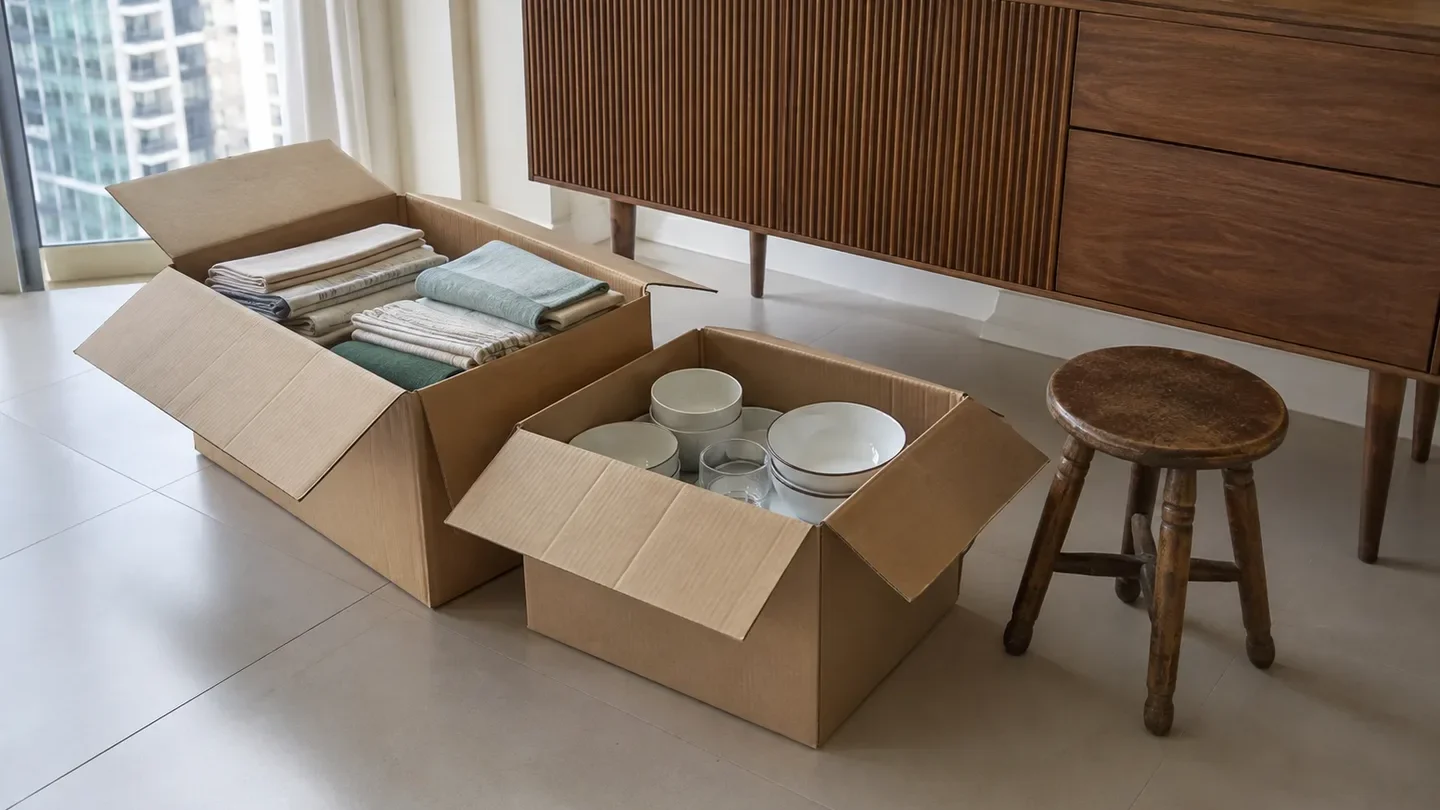
Kitchenware disposal in Dubai is a sorting and packing job before it is a collection job. Separate complete, clean sets that someone else can use from broken, chipped, or worn pieces. Pack crockery and glass in small, double-taped boxes, wrap every blade, and keep pots and pans in their own carton. A crew then takes the boxes as one listed load.
Count boxes, not pieces
A quote for kitchenware is built on the number and size of boxes, not on how many plates are inside. Pack first, then send a photo of the stacked boxes with any loose large items such as stockpots or trays.
What counts as kitchenware for a junk collection?
Kitchenware covers the non-electrical items that fill kitchen cupboards and drawers: pots, pans, woks, bakeware, roasting trays, plates, bowls, mugs, glasses, cutlery, serving dishes, utensils, chopping boards, and plastic storage containers. These leave together as boxed household items through junk removal in Dubai.
Kettles, toasters, blenders, rice cookers, and microwaves are small electrical appliances, not kitchenware. List them separately for appliance disposal in Dubai, because they follow a different recycling route. The microwave and small appliance guide covers how to prepare them.
How should kitchenware be sorted before pickup?
Sort into four groups before anything goes in a box:
| Group | What goes in it | How to pack it |
|---|---|---|
| Reusable sets | Complete, clean, unchipped crockery, glasses, and cookware | Wrapped, boxed, and labelled as reusable |
| Metal cookware | Worn pans, pots, trays, cutlery, and utensils | One sturdy box; lids nested inside pans |
| Broken crockery and glass | Chipped, cracked, or shattered plates, mugs, and glasses | Small sealed box marked as broken glass or ceramic |
| Plastic and mixed | Storage tubs, cracked boards, worn plastic utensils | Bag or box; lids matched or discarded |
A reusable group only works when the items are complete and clean. A dinner set missing half its plates, or pans with peeling non-stick coating, belongs in the disposal groups. The keep, donate, or junk guide helps when a full kitchen is being decided at once before a move.
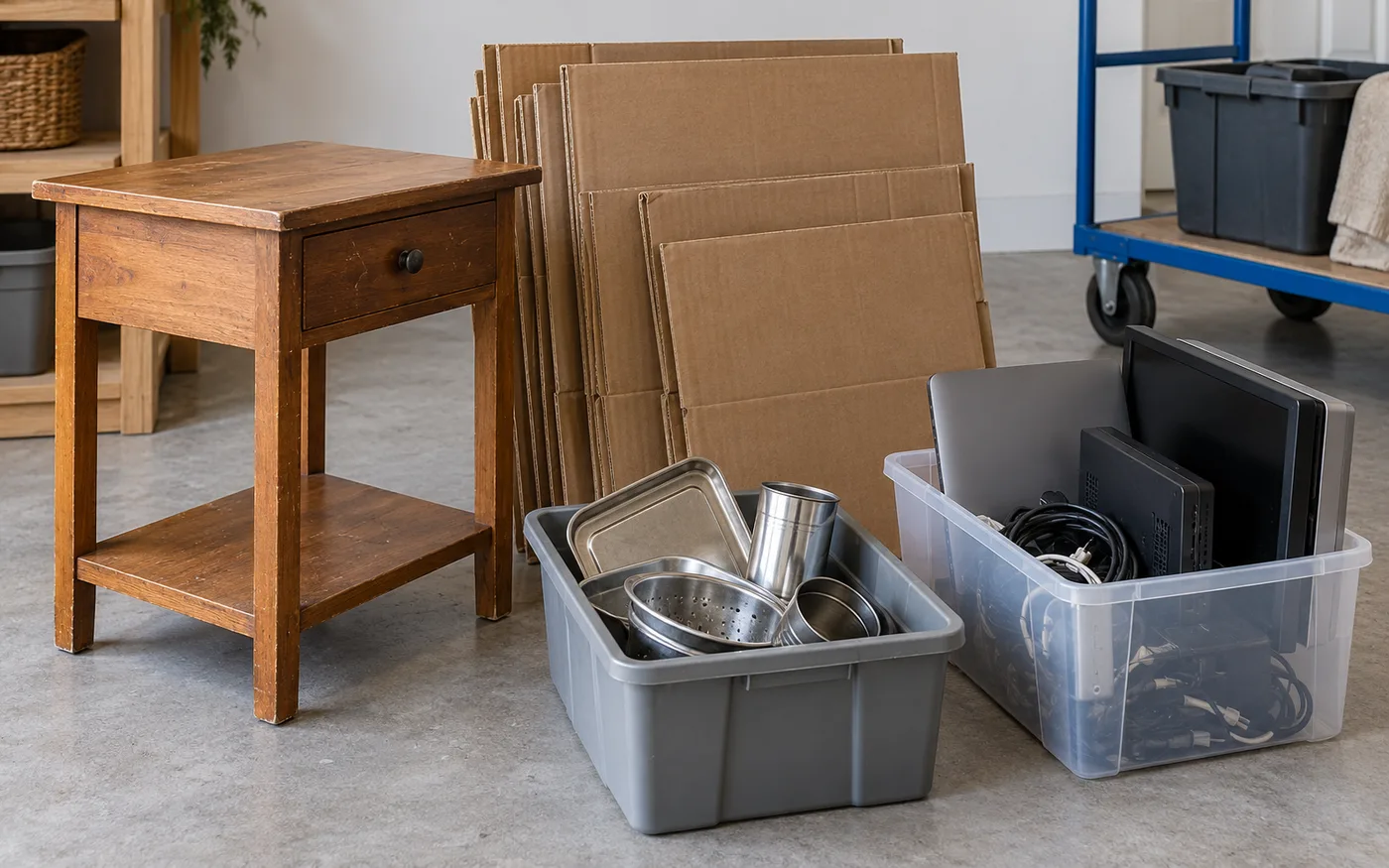
How do you pack heavy crockery so the boxes hold?
Plates and bowls are dense. A large moving carton filled with crockery can weigh more than its base is built to carry. Use small or medium boxes, tape the base twice across both seams, and stand plates on their edges like files rather than stacking them flat. Put paper, towels, or old linen between each piece and fill gaps so nothing shifts.
Glasses travel best upright with paper inside and around each one. Mark every crockery and glass box on two sides as heavy and fragile so the crew lifts it from underneath and keeps it upright in the vehicle.
Broken pieces need a different box. Wrap shards in newspaper, seal them in a rigid carton, and write "broken glass" or "broken ceramic" on top. The broken glass disposal guide explains why fragments never go loose in a bag.
What stays out of a kitchenware collection?
- Cooking gas cylinders. Return them to the gas supplier for collection or exchange.
- Used cooking oil. Follow your building's or community's arrangement for oil, never pour it into a box or bag.
- Food and leftover pantry stock. Clear food through the building's routine waste or give sealed, in-date items away.
- Fitted kitchen units. Cabinets, worktops, and sinks are a different job; the kitchen cabinet disposal guide covers what is required.
Restaurant and cafe kitchens bring commercial cookware in larger volumes, often with stainless equipment attached. Those are booked as a commercial restaurant clearance rather than a household kitchenware pickup.
When does a kitchenware collection make sense?
Most households book one when the whole kitchen changes at once: a move out of the UAE, an end of tenancy in a furnished flat, a renovation, or a full clear-out of a deceased relative's home. A few boxes of crockery often leave alongside furniture or appliances in the same visit, which avoids booking a pickup for kitchenware alone.
Send the number of boxes, a photo of the stack, any loose large items, the appliances leaving with them, your floor and lift details, and the Dubai location through WhatsApp for a quote.
Frequently asked questions
Fill it, but keep it liftable by one person. Plates stacked to the brim of a large carton can tear the base. Use smaller, double-taped boxes for crockery, stand plates on edge with paper between them, and mark the box as heavy.
Yes. Wash and dry everything, including the inside of lids and roasting trays. Food residue and grease left in a closed box smells within a day in a warm Dubai apartment and draws insects to the collection point.
Sheathe each blade, or wrap it in cardboard and tape it shut so no point or edge is exposed. Pack knives in a separate small box marked as sharp, never loose among pots, cutlery trays, or crockery.
Cooking gas cylinders, used cooking oil, and food waste are not part of a kitchenware pickup. Return cylinders to the gas supplier, follow your building's routine for oil and food, and list any small electrical appliances separately.
Related articles
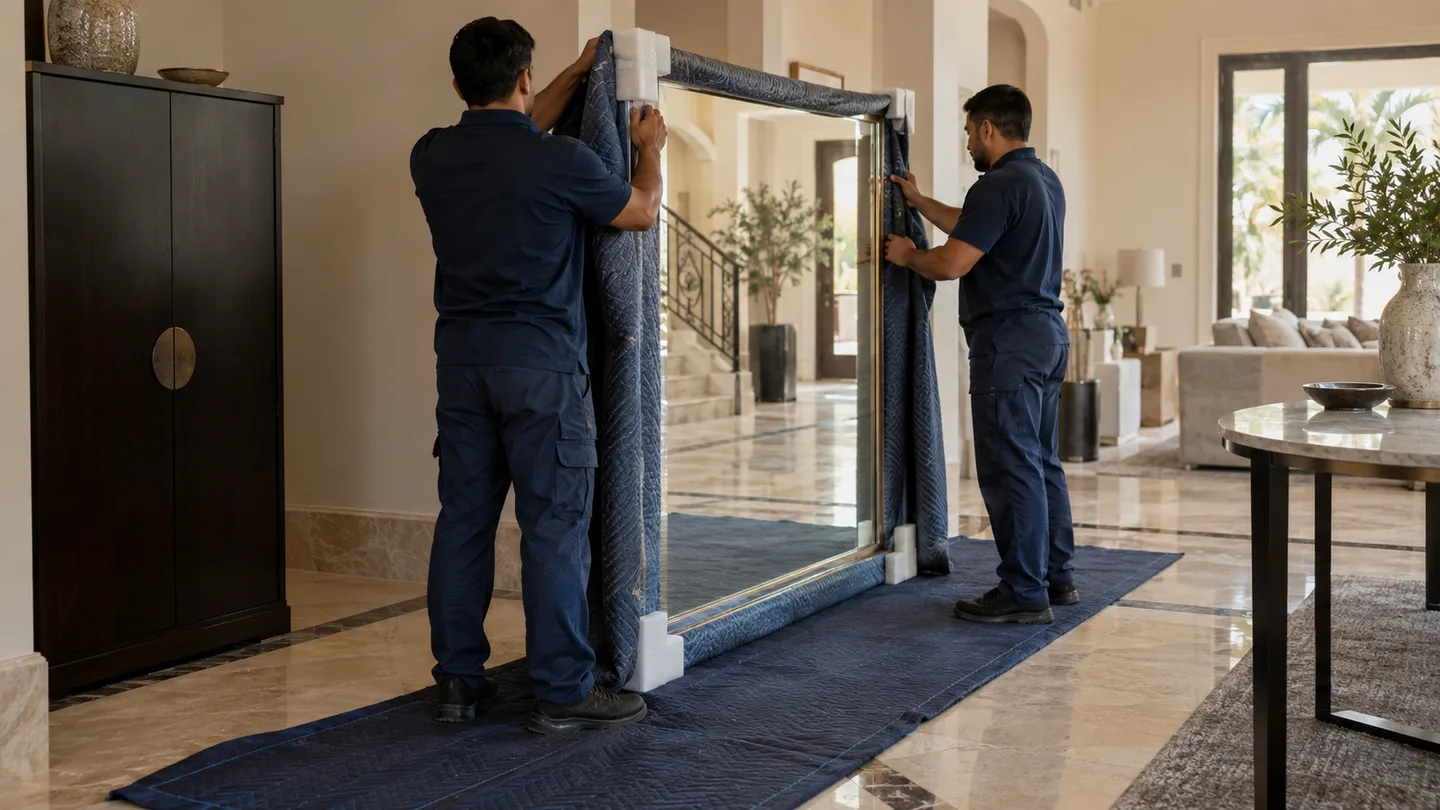
Large Mirror Removal & Disposal in Dubai
Book removal of an intact floor, wall, or framed mirror in Dubai: what to measure, how it is carried on edge, and which fixed mirrors must be released first.

Children's Furniture & Toy Disposal in Dubai
How Dubai families can sort outgrown toys, cots, desks and child-sized furniture by condition, ownership, missing parts and safe collection needs.
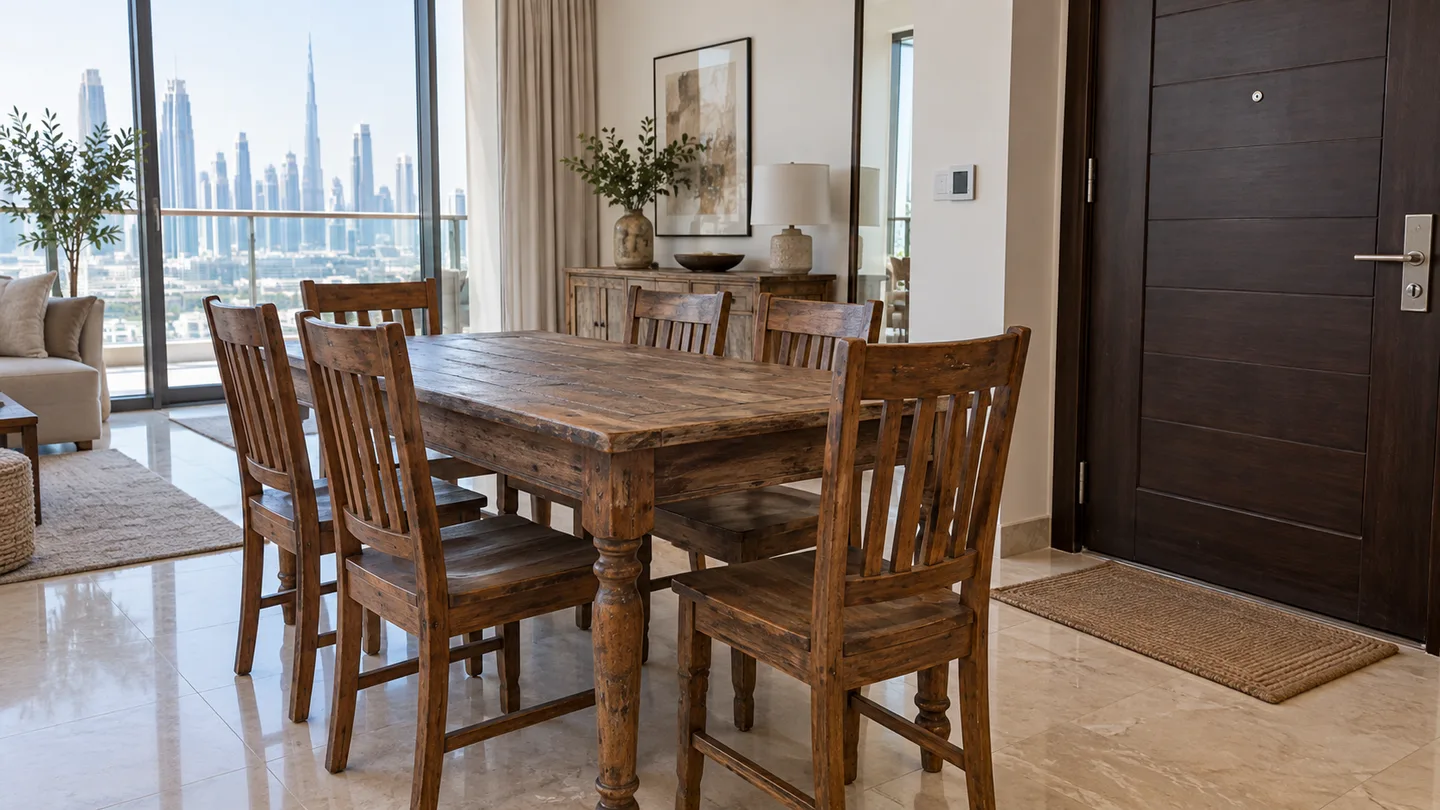
How to Dispose of an Old Dining Table in Dubai
Learn how to prepare an old dining table for disposal in Dubai, including access, dismantling, and pickup tips for 19/09/2026.