What Happens After We Haul Your Junk Away
After junk is hauled away in Dubai, the load is checked, kept separated, sorted and routed. Here is what happens at each stage and what you can still ask for.
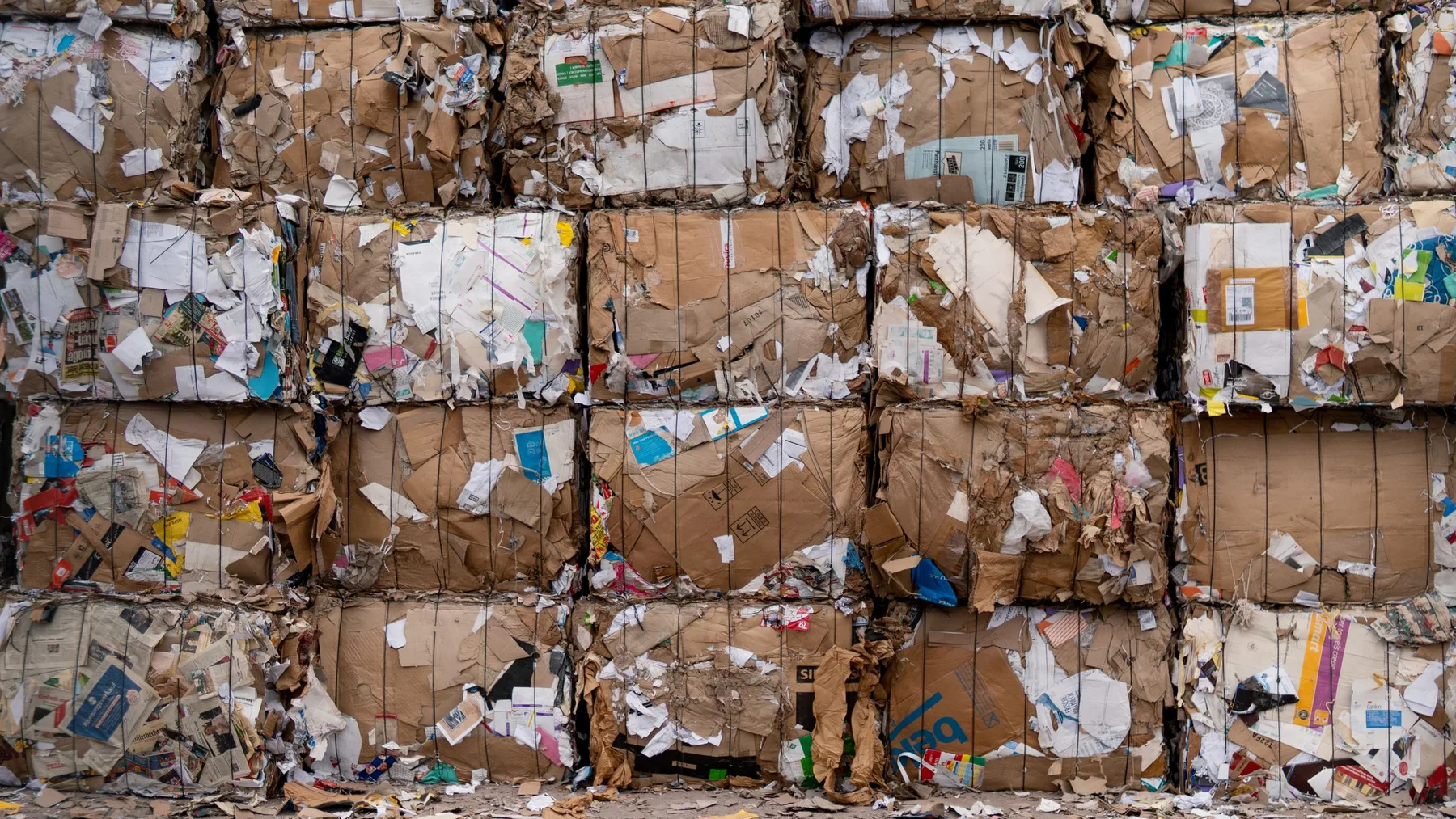
What happens to your junk after it leaves your property?
After the last item leaves your home, three things happen. At your door, the crew walks the route with you and confirms the job is finished. On the road, the load stays in separated groups. At sorting, each item or material is directed toward reuse, authorised recycling or licensed disposal. Junk Removals Dubai follows that sequence on every junk removal in Dubai booking, whether it is one sofa or a full apartment.
For mixed household rubbish, bagged waste and loose material, the same principle applies through waste removal in Dubai: nothing is described as recycled unless it can go to an authorised recycling route.
The three stages after the last item leaves
| Stage | What happens | What you can ask for |
|---|---|---|
| At your property | Final walk, sweep of the pickup area, confirmation that keep items are untouched, payment at the agreed price | A check of the lift, corridor and loading bay before the crew leaves |
| In transit | Loaded groups stay apart: reusable furniture, recyclable material, electronics and residual waste | That electronics and items you described as reusable are kept visible |
| At sorting | Each item is assessed by condition, material, contamination and special handling | An honest answer on which routes are realistic for your items |
The stages are short to describe but they decide the outcome. A sofa that was dry and complete at your door can lose its reuse option if it is crushed under broken panels on the way. Loading order is part of disposal, not only transport.
At your property: the job ends with a walk, not a wave
The crew does not leave when the truck is full. It sweeps the pickup area and walks the carry route with you: the rooms that were cleared, the corridor, the service lift and the loading bay. That is the moment to point out a scuff, a forgotten bag or a keep item that ended up in the wrong place.
The price is the one agreed from your photos. If items were added or removed on the day, that change should have been discussed before loading, not presented after. Our article on fair junk removal pricing explains how those changes are handled.
In transit and at sorting: separation decides the route
Loaded groups are kept identifiable so the next decision is still possible. Electronics stay visible because batteries, screens and stored data need their own route. Clean cardboard is kept away from wet waste. Complete furniture is not used as a base for broken pieces.
At sorting, each group is assessed on four checks: condition, material, contamination and special handling. The detail of those decisions is covered in how we sort reusable, recyclable and landfill items, and the full chain from quote to final routing is in our responsible disposal process. This article stays with the part customers ask about most: what happens once the truck turns out of their street.
What you will not receive, and why
Being clear about limits is part of handling a load responsibly.
- No item-by-item tracking. A household load is sorted by group and condition. Individual items are not tagged or reported back.
- No guaranteed reuse. A complete, clean item may be suitable for donation, but recipient acceptance and condition still decide. Reuse is a possible route, not a promise.
- No data wiping. Phones, laptops and drives should be backed up and cleared by you before collection. A standard pickup does not include data destruction.
- No universal recycling figure. Mixed loads contain composite furniture, contaminated textiles and inseparable materials that end in licensed disposal. A single percentage for every collection would not be honest.
Need written confirmation?
If a landlord, building management or employer needs written confirmation that a collection took place, mention it at booking. It is easier to agree what can be provided before the job than to request it afterwards.
If something left that should have stayed
Message us straight away with a photo or a description of the item and where it was. Speed matters: the sooner it is reported, the more likely it can be identified before the load is sorted and routed. Once material has moved to processing or disposal, it cannot be recovered.
The better protection is before loading. Put every keep item in one closed room, and remove papers, photos and cards from drawers. In an assisted clearance for an older relative, this step matters most, because valuables are often stored in places nobody else knows about.
What is left for you to do
The crew's part ends at your door, but yours may not. Release the service-lift booking, tell building management the corridor and loading bay are clear, and take a photo of the empty space for any handover or deposit inspection. If the collection was part of a move-out, check the walls and floors where large furniture stood: marks hidden behind a wardrobe are easier to deal with before the landlord's walk-through than during it.
For the planning side of the same journey, our guide to same-day junk removal dispatch explains how a booking becomes an assigned crew. To arrange a collection, send photos on WhatsApp or call +971 50 759 9311.
Frequently asked questions
The load travels with its groups kept apart, then each item or material is assessed. Suitable reusable items may go toward donation, recyclable material toward authorised processing, and the rest to licensed disposal. Electronics are handled as their own stream.
Report it as soon as you notice, with a photo or description. The earlier the message, the better the chance it can be identified before the load is sorted and routed. Recovery cannot be promised once material has moved on, so confirm keep items before loading starts.
A standard household collection does not come with item-by-item tracking or a disposal certificate. If a landlord, building or employer needs written confirmation that a collection took place, say so when booking and ask what can be provided.
Walk the rooms, corridor and lift route with the crew. Confirm every keep item is still in place, the pickup area has been swept, nothing was left in the lobby or loading bay, and the price matches what was agreed.
They leave with the furniture. Drawers and cupboards are not searched or shredded after collection, so personal papers, photos and cards should be removed before the crew arrives.
Yes. Close or release the service-lift booking, report that the corridor and loading area are clear, and keep a photo of the cleared space. It helps if a handover inspection or deposit check follows.
Related articles
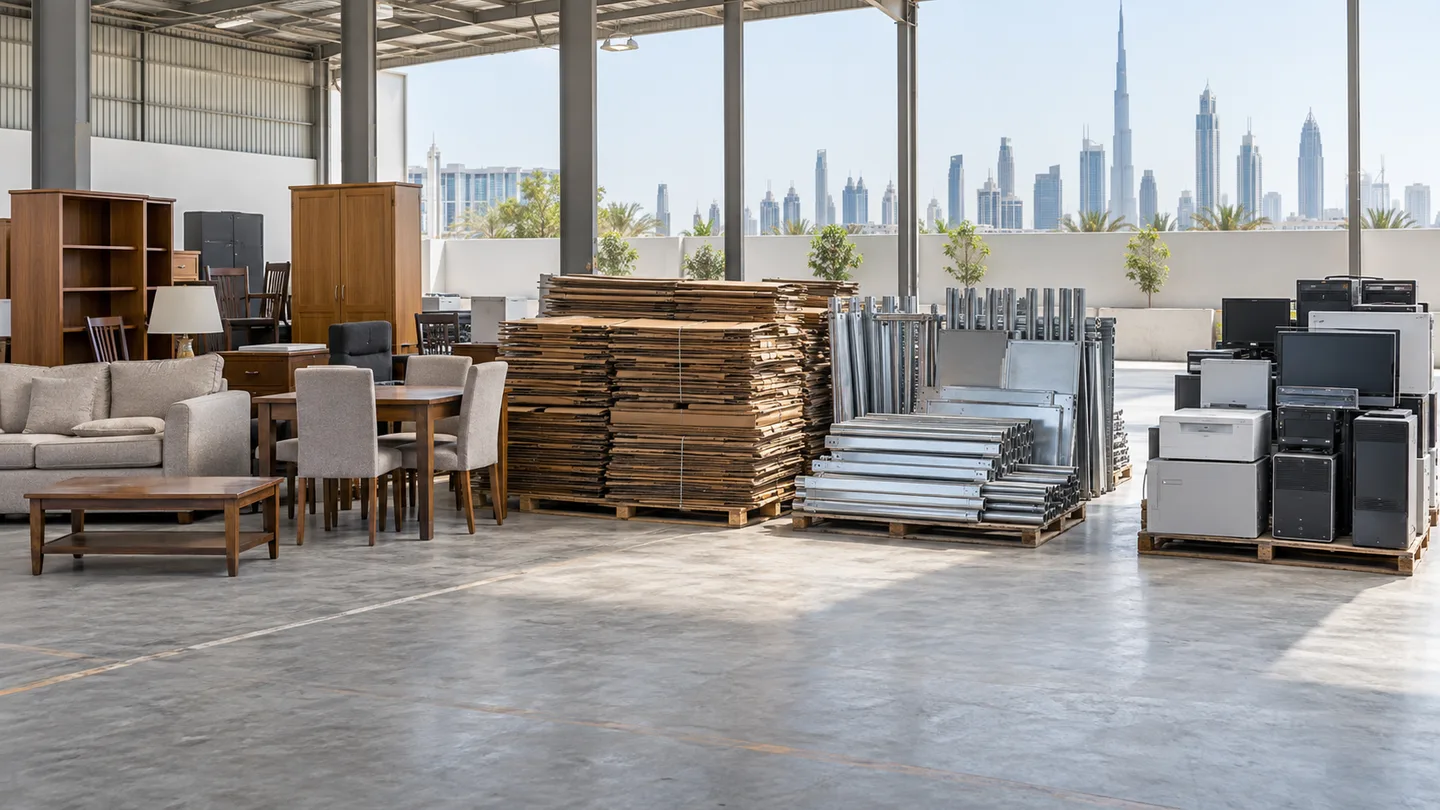
How We Sort Reusable, Recyclable & Landfill Items
See how junk is sorted in Dubai by condition, material, contamination and data risk before items follow reuse, authorised recycling or licensed disposal routes.
Our Responsible Disposal Process, Step by Step
How Junk Removals Dubai separates reusable items, recyclable material, electronics and residual waste without making unsupported recycling promises.
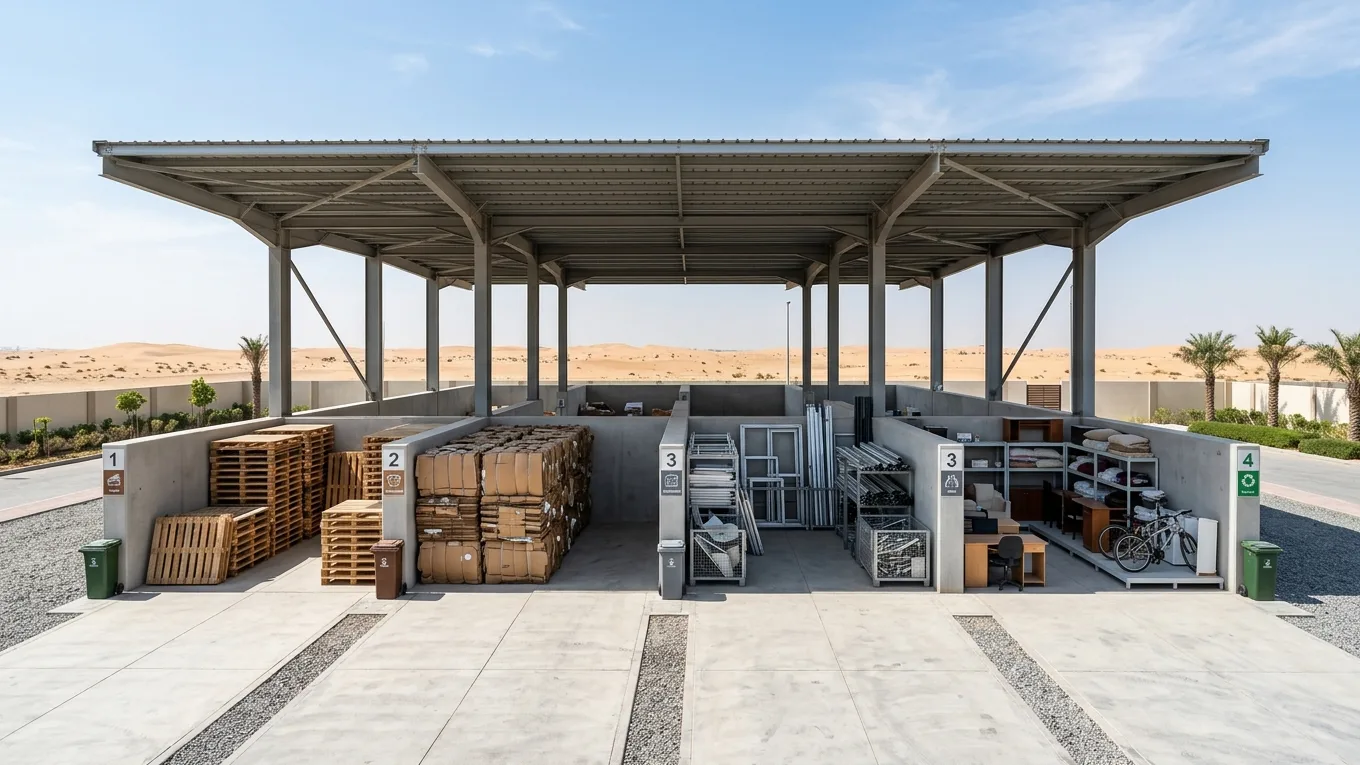
Our Eco Commitment: Diverting Junk From Landfill in Dubai
How Junk Removals Dubai reduces landfill waste: practical sorting, local donation routing, material recycling streams, and honest environmental limits.