Commercial IT & Electronics Disposal in Dubai: Enterprise Guide
Expert guide to commercial IT and electronics disposal in Dubai. Data center decommissioning, server rack removal, ITAD, and certified data wiping.
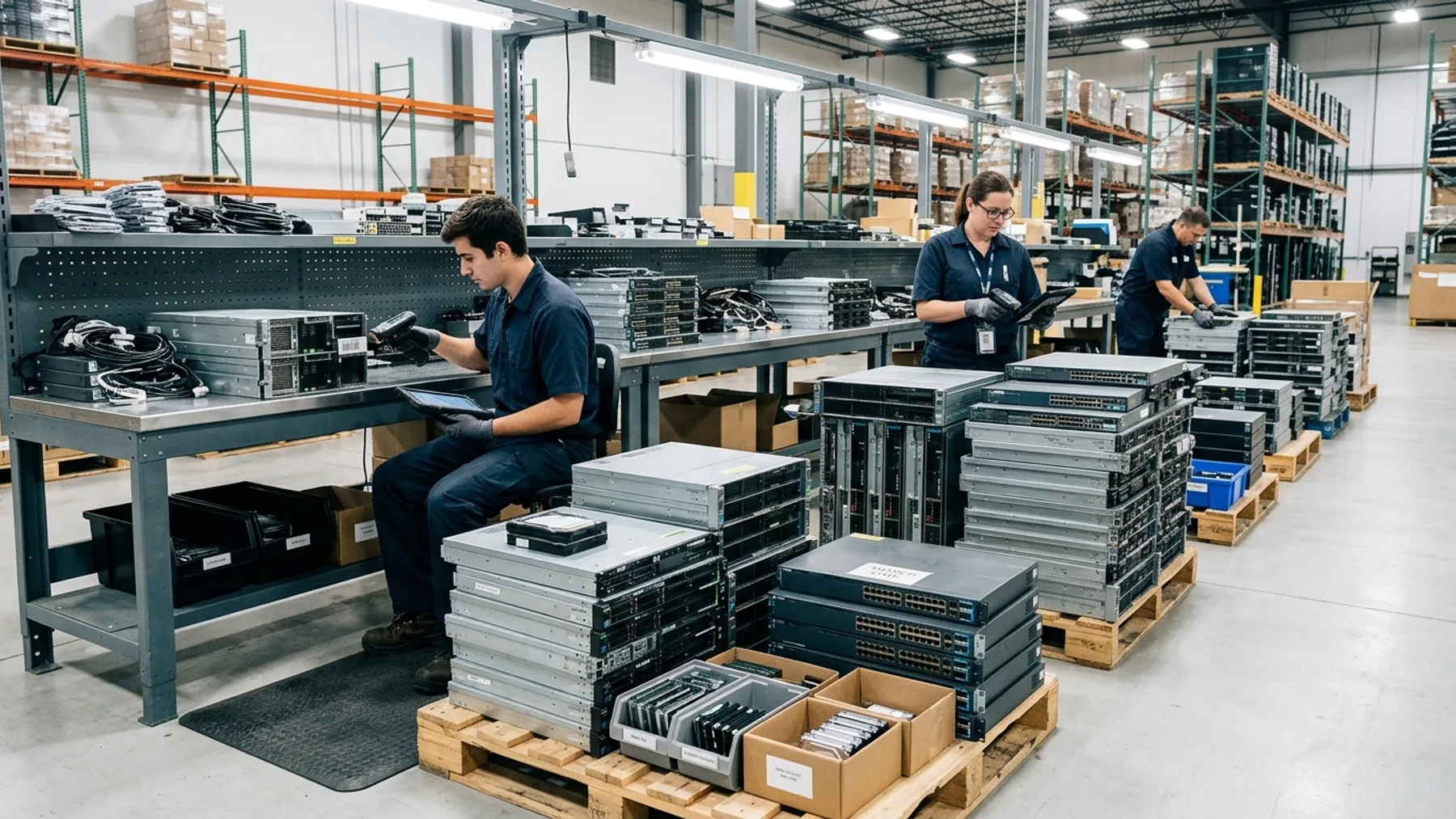
The pace of technological modernization across Dubai is relentless. From financial institutions in Dubai International Financial Centre (DIFC) and tech regional headquarters in Dubai Internet City to enterprise headquarters in Business Bay and Downtown Dubai, businesses regularly refresh their digital infrastructure every three to four years. Upgrading compute capacity, migrating workloads to hybrid cloud platforms, and consolidating branch operations inevitably leaves facilities directors and chief information officers with rooms full of decommissioned servers, obsolete network switches, and racks of depreciated hardware.
Commercial IT and electronics disposal in Dubai is not a simple matter of calling a standard rubbish hauler. Enterprise electronics disposal demands rigorous adherence to corporate data security, chain-of-custody tracking, environmental compliance under Dubai Municipality guidelines, and adherence to strict building access protocols in commercial high-rises.
Enterprise ITAD vs Household Electronics
This guide addresses large-scale corporate IT asset disposition (ITAD), data centers, and multi-workstation corporate networks. For individual laptops, home TVs, or domestic appliances, refer to our consumer guide on how to dispose of electronics in Dubai and our review of common electronics disposal mistakes.
The Critical Pillars of Enterprise IT Asset Disposition (ITAD)
Corporate asset disposal teams must balance technical efficiency, legal liability, and environmental stewardship across four primary pillars:
1. Certified Data Sanitization and Destruction
Corporate hard drives, solid-state drives (SSDs), and tape backup cartridges carry confidential financial data, proprietary algorithms, and sensitive client information governed by UAE Federal data protection laws. Discarding a drive without certified erasure exposes an organization to severe legal liabilities and reputational harm.
Enterprise disposal employs two primary methods:
- Cryptographic Overwrite: High-level sanitization using automated multi-pass erasure software compliant with international standards such as NIST SP 800-88 Rev. 1.
- Physical Destruction: On-site mechanical crushing, degaussing of magnetic media, or rotary knife shredding that fragments drives into tiny particles smaller than 20 millimeters.
2. Serialized Chain of Custody
Before any computer chassis or network appliance leaves an enterprise office floor, technicians scan asset barcodes and manufacturer serial numbers. A formal chain-of-custody manifest records the asset tag, serial number, equipment type, and physical location from uninstallation through transport to final processing.
3. Power and Facility Decoupling
Data centers and corporate IT comms rooms operate on heavy three-phase power feeds, redundant uninterruptible power supply (UPS) battery banks, and raised access flooring. Unracking equipment requires certified electrical technicians to lock out breakers, discharge capacitors, and uncouple high-amp power whips safely.
4. Regulatory Waste Permitting
Dubai Municipality strictly regulates electronic waste to prevent toxic heavy metals from contaminating local soil and groundwater. Commercial IT removals require environmental manifests and transfer approvals to ensure non-working assets reach authorized recovery plants rather than general domestic landfills.
| Equipment Category | Included Assets | Primary Security Risk | Sustainable Disposition Route |
|---|---|---|---|
| Server Infrastructure | 1U-4U rackmount servers, blade chassis, SAN storage | High (onboard NVMe/SAS drives) | Serialized wiping, aluminum casing reclamation, board shredding |
| Network Hardware | Core switches, enterprise routers, firewalls, patch bays | Medium (stored configuration files) | Factory reset to NVRAM, copper port recovery, PCB gold extraction |
| Power Infrastructure | 42U rack enclosures, modular PDUs, industrial UPS units | Low (electrical discharge / acid hazard) | Steel enclosure recycling, lead-acid and lithium battery chemical refining |
| End-User Devices | Desktop towers, commercial monitors, docking stations | High (local boot drives) | Drive shredding, plastic housing granulate, glass panel processing |
| Structured Cabling | Cat6/Cat6A plenum copper cables, optical fiber runs | None (physical obstruction) | Copper wire stripping, optical glass recycling, PVC jacket recovery |

Step-by-Step Data Center and Comms Room Decommissioning
Clearing an enterprise server room or telecom closet requires disciplined execution to protect surrounding building infrastructure:
How to
How to Execute Commercial IT and Server Decommissioning in Dubai
- 1
Asset Audit and Serial Registration
Perform a physical audit of all racks, scanning asset tags and matching hardware serial numbers against corporate Fixed Asset Registers and IT configuration databases.
- 2
Data Sanitization or Storage Extraction
Remove hot-swap storage drives for on-site physical destruction, or execute certified network-based data wiping with serialized destruction certificates.
- 3
Electrical Isolation and PDU Removal
Engage qualified electricians to switch off redundant feeds, verify zero voltage on distribution blocks, and detach overhead or under-floor busways.
- 4
Systematic Unracking and Heavy Equipment Extraction
Unfasten mounting ears, slide chassis onto mechanical server lifts, and lower heavy units onto padded transport dollies to avoid manual lifting injuries.
- 5
Cabling and Rack Enclosure Teardown
Cut and coil data cables from cable trays, unbolt 42U server cabinet floor brackets, and flat-pack structural framework for transport.
- 6
Secure Logistics Transfer and ESG Manifest Issuance
Load equipment into GPS-tracked commercial haulage trucks, transport to certified recycling facilities, and generate environmental diversion certificates.
On-Premises Hard Drive Crushing vs Off-Site Certified Shredding
Financial institutions in DIFC and multinational corporate offices often mandate that digital storage devices never leave their physical custody in readable form. Enterprise ITAD service providers offer two primary approaches for data media elimination:
1. Mobile On-Site Mechanical Crushing
For organizations requiring visual verification before assets leave the loading dock, technicians deploy mobile hydraulic drive crushers directly inside the server room or loading bay. The operator logs the drive serial number using a handheld optical scanner, positions the magnetic hard disk or solid-state drive into the hardened steel chamber, and drives a high-pressure conical steel wedge through the center spindle and platter stack. The shattered drive chassis and deformed magnetic platters guarantee zero data recovery capability, allowing external compliance auditors to sign off immediately.
2. Off-Site High-Capacity Rotary Shredding
When decommissioning thousands of client storage units, desktop workstations, and retired corporate laptops, drives are placed in serialized tamper-evident security containers locked with numbered steel cable ties. Transport occurs via secure GPS-tracked commercial box trucks delivering directly to specialized electronic shredding plants in Dubai. High-torque dual-shaft industrial shredders grind drives into small aluminum and steel confetti, which undergoes automated eddy-current and magnetic separation to separate pure ferrous metals from high-grade circuit board copper.
Decommissioning Enterprise Telephony and Video Conferencing Systems
Modern corporate workspaces rely on unified communications infrastructure that extends far beyond individual desktop towers:
- Boardroom Display and Video Bars: Large 85-inch touchscreens, motorized ceiling microphones, and telepresence codec boxes must be demounted without damaging architectural acoustic wall paneling. Professional technicians isolate low-voltage power units, unscrew heavy VESA wall brackets, and wrap screens in padded anti-static transport blankets.
- Enterprise VoIP Telephony: Decommissioning hundreds of IP desk phones involves batch collection, resetting flash firmware to wipe corporate extension directories, and packing units into reusable plastic totes for secondary corporate resale or material recycling.
- Server Room Patch Panels and Cable Looms: Dense telecom distribution frames contain hundreds of punch-down patch blocks. Technicians snip cabling looms at termination points, pulling bundles through raised flooring channels to leave plenums clear for commercial lease handovers.
Handling Hazardous Battery Backup Systems (UPS)
One of the greatest operational hazards during enterprise comms room decommissioning involves the removal of large uninterruptible power supply (UPS) installations. High-capacity commercial UPS systems rely on heavy strings of sealed lead-acid (VRLA) or modern lithium-ion battery modules:
- Direct Current Electrical Shock: Large battery banks maintain lethal direct current voltages even when disconnected from mains power. Only trained personnel equipped with insulated hand tools, arc-flash protection, and insulated rubber gloves may disconnect battery links.
- Acid Spill Mitigation: Damaged lead-acid batteries pose chemical burn risks. Technicians carry neutralizing agent kits and heavy-duty polyethylene leak trays when moving older battery cells.
- Weight Limitations: A single bank of 40 industrial UPS batteries can weigh upwards of two metric tons. Transport across raised access floors requires spreading loads using heavy marine plywood tracks to prevent floor tile failure.
- Mandatory Hazardous Haulage: Spent UPS batteries must be transported under specialized commercial chemical handling manifests directly to licensed UAE battery recovery plants, where lead plates and sulfuric acid are refined for industrial reuse.
Full Corporate Facility Coordination
If your technology decommissioning coincides with a broader commercial office consolidation, review our detailed guide on corporate office furniture disposal in Dubai and our operational guide for warehouse and logistics storage teardowns.
Material Recovery and Precious Metal Refining
High-grade corporate IT equipment contains substantial concentrations of valuable materials that support circular economy initiatives across the UAE:
- Printed Circuit Boards (PCBs): Server motherboards, memory modules, and switch backplanes contain microscopic layers of gold, silver, palladium, and copper. Authorized e-waste recyclers mechanically shred boards and process them through chemical refining to recover non-renewable precious metals.
- Extruded Aluminum and Sheet Steel: Server chassis, rack mounting rails, and enclosure panels represent high-purity structural alloys. These are crushed and forwarded to local metal smelting plants for transformation into building materials.
- Copper Cable Processing: Enterprise network renovations generate thousands of meters of Category 6 twisted pair cabling. Specialized cable granulators peel the PVC outer jacket and chop copper conductors into high-density bright copper granules ready for new electrical wire fabrication.
Building Access Rules in Dubai Financial and Free Zones
Executing commercial IT disposal in prime commercial developments requires coordinating with commercial tower security teams:
- Fit-Out and Clearance NOCs: Towers in DIFC, Downtown Dubai, and Business Bay demand an approved contractor clearance permit with comprehensive Risk Assessments and Method Statements (RAMS).
- Freight Lift Reservations: Heavy server racks and battery pallets cannot travel in passenger elevators. Loading dock managers require 48 hours advance notice to reserve dedicated service lifts and basement loading bays during approved after-hours hauling windows.
- Floor Protection Standards: Facility managers mandate heavy floor protection (such as 3mm correx sheeting or masonite boards) across all carpeted corridors and marble elevator lobbies between the server room and the service dock.
By partnering with an experienced, fully insured commercial removal team, your organization eliminates data security risks, fulfills municipal environmental regulations, and executes an efficient technology transition.
Frequently asked questions
Commercial IT disposal addresses high-density corporate data infrastructure including server blade enclosures, SAN arrays, network switches, and raised-floor cabling. It demands serialized chain-of-custody logging, data sanitization certificates, and building management loading dock permits.
Dubai enterprises adhere to NIST SP 800-88 standards for data sanitization. Storage media undergo three-pass cryptographic wiping or on-site mechanical degaussing and shredding before the residual metal frames enter scrap reclamation streams.
Yes. Specialist technicians disconnect redundant power distribution units, unrack heavy blade chassis using mechanical server lifts, and unbolt floor anchor plates from raised computer flooring without disrupting adjacent active network cabinets.
Hauling large volumes of electronic waste requires Dubai Municipality environmental approvals, manifest logs through the municipality waste tracking portal, and pre-cleared contractor gate passes for business parks such as DIFC and Dubai Internet City.
Heavy lead-acid and lithium UPS battery banks are classified as hazardous materials. Specialist hazardous waste teams isolate the direct-current circuits, disconnect terminals, pack cells in acid-resistant containment crates, and route them to licensed chemical recyclers.
Licensed ITAD partners issue comprehensive Certificates of Disposal detailing equipment serial numbers, asset tags, total weight diverted, and material breakdown reports for corporate ESG and sustainability compliance filings.
Related articles

Cafe & Coffee Shop Clearance in Dubai
Plan cafe clearance in Dubai with an ownership inventory, separate appliance preparation and a confirmed loading route for unwanted furniture and equipment.

Clinic & Medical Office Furniture Removal in Dubai
Plan clinic furniture removal in Dubai with an approved inventory, empty storage units, clear access, and complete separation from medical waste.

Recurring Commercial Junk Removal Contracts in Dubai
Compare recurring commercial junk removal contracts in Dubai. Review pickup frequencies, service level agreements, bin rotation, and waste manifests.