Construction Site Cleanup Support in Dubai: Fit-Out Guide
Professional guide to construction site cleanup and interior fit-out waste removal in Dubai. Non-structural debris, skip logistics, and handover cleaning.
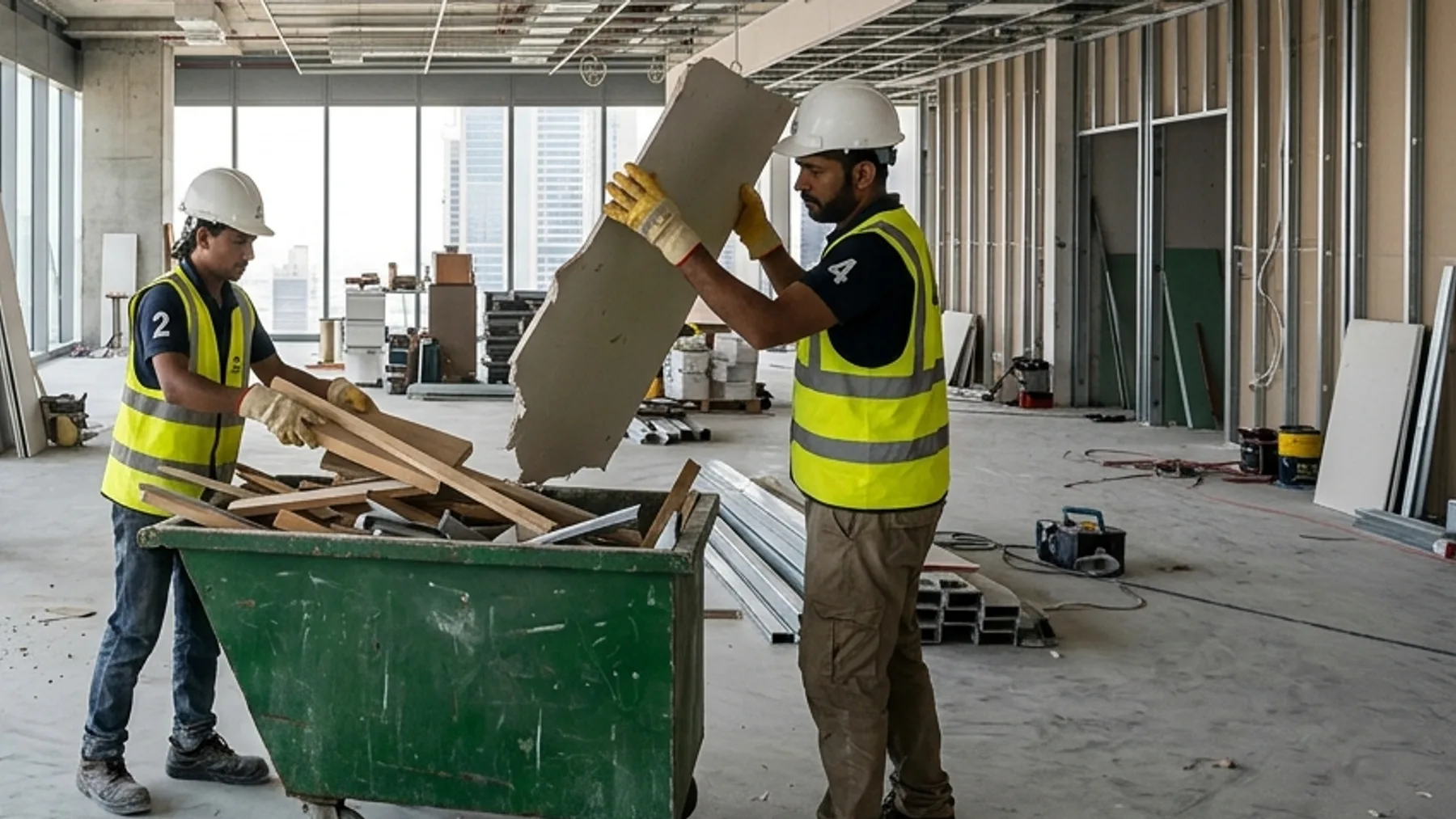
The interior architecture and commercial fit-out market in Dubai is among the fastest-growing in the world. Across high-profile commercial districts including Downtown Dubai, DIFC, Business Bay, Dubai Internet City, and Dubai Hills Estate, corporate offices, luxury retail stores, and dining venues undergo constant interior fit-outs and space reconfigurations. Whether turning shell-and-core space into an agile modern office or refreshing a flagship retail boutique, main contractors and fit-out specialists generate massive quantities of non-structural debris every single day.
Maintaining an active fit-out project on schedule requires disciplined construction site cleanup support in Dubai. Allowing drywall cutoffs, metal framing scraps, packaging pallets, and chemical dust to accumulate creates severe trip hazards, violates Dubai Municipality occupational health codes, and delays crucial milestone inspections.
Commercial Fit-Out Debris Coordination
Keep your commercial renovation project compliant and organized by booking dedicated waste removal in Dubai and scheduling recurring bulk trash pickup for high-volume interior fit-out phases.
The Operational Realities of Dubai Fit-Out Waste Management
Commercial interior fit-out projects operate under unique constraints that differ significantly from ground-up structural construction:
1. Zero Tolerance for Dust in Active Commercial Buildings
Unlike open-air construction sites, interior fit-outs take place in high-rise towers where corporate tenants occupy adjacent floors. Fine gypsum drywall dust and tile-cutting silica dust can infiltrate HVAC return air plenums and trigger smoke alarms. Cleanup teams must implement strict containment protocols, utilizing negative air machines, floor-level dust barriers, and misted wet-sweeping techniques.
2. Strict Service Dock Hauling Windows
Commercial developments in central Dubai do not allow open construction skips to sit permanently on surface aprons. All fit-out debris must be staged internally on the construction floor, containerized into wheeled tipping bins, and transported down service lifts during restricted night-shift hauling windows (typically 8:00 PM to 6:00 AM). Missing a scheduled window halts demolition schedules for subsequent trades.
3. Protection of Common Corridors and Lifts
Before a single bag of masonry plaster or stack of metal studs enters the service corridor, contractors must wrap elevator cabins in heavy protective canvas padding and lay down durable correx floor protection from the tenant entrance to the loading bay. Any scratch to marble foyer floors or dented elevator door architraves results in immediate forfeiture of substantial fit-out security deposits.
4. Continuous Trade Sequencing
Fit-out projects follow tight Gantt chart schedules. MEP (mechanical, electrical, plumbing) contractors cannot lay under-floor trunking while framing offcuts clutter the concrete slab. Drywall tapers cannot finish partitions while floor demolition debris blocks scaffold towers. Daily proactive housekeeping keeps trade pathways clear and maximizes labor productivity.
| Fit-Out Phase | Primary Waste Generated | Physical Characteristics | Recommended Clearance Method |
|---|---|---|---|
| Demolition & Strip-Out | Partition drywall, acoustic ceiling tiles, raised floor tiles | Bulky, dense, heavy dust generation | Wheeled tipping dumpsters, heavy-duty woven sacks |
| First Fix MEP & Framing | Metal stud cutoffs, copper pipe scraps, conduit lengths | Sharp edges, high recycling scrap value | Segregated metal bins, magnetic floor sweeping |
| Drywall & Carpentry | Gypsum board cutoffs, timber stud offcuts, sawdust | High volume, combustible timber debris | Daily bagged removal, misted sweeping |
| Finishing & Tiling | Ceramic tile fragments, grout pails, adhesive residue | Heavy point loads, sharp fragment hazards | Reinforced plastic tubs, palletized cart transport |
| Snagging & Handover | Protective plastic films, cardboard wrap, masking tape | Light volume, static cling, aesthetic clutter | Manual bagging, industrial HEPA vacuum sweep |

Step-by-Step Workflow for Commercial Fit-Out Cleanup
Executing seamless construction cleanup support requires coordinated teamwork between fit-out site supervisors and licensed commercial haulage crews:
How to
How to Manage Interior Construction Fit-Out Cleanup in Dubai
- 1
Daily Work Area Segregation and Sorting
Position color-coded mobile wheeled bins across the active fit-out floor to separate clean timber offcuts, gypsum board trimmings, and metal framing scraps at the source.
- 2
Corridor and Elevator Protection Verification
Inspect protective floor correx sheeting, door frame bumpers, and freight elevator wall blankets before rolling heavy mobile dumpsters into common areas.
- 3
Suppressed Dust Collection and Sweeping
Apply light water misting to concrete slabs before sweeping, using industrial push brooms and HEPA-filtered commercial vacuums to capture fine respirable dust.
- 4
Night-Shift Service Elevator Transfer
Transport sealed wheeled bins down designated service lifts during approved after-hours building windows, transferring materials smoothly to basement docks.
- 5
Commercial Vehicle Loading and Rapid Haulage
Load debris into enclosed commercial box trucks equipped with hydraulic tail lifts, securing cargo nets to eliminate loose debris during urban transport.
- 6
Pre-Inspection Handover Sweeping
Perform a final magnetic sweep of the concrete slab to eliminate loose drywall screws and unseat stubborn plaster droppings before client inspection walk-throughs.
Packaging Waste, Pallets, and Protective Plastics Management
Commercial interior fit-out projects receive continuous deliveries of high-end architectural fixtures, Italian porcelain tiles, glass partition assemblies, and custom architectural joinery. Every single shipment introduces substantial volumes of secondary packaging materials that quickly overwhelm site walkways if left unmanaged:
- Cardboard Honeycomb and Corrugated Boxes: Commercial lighting fixtures, plumbing brassware, and hardware ironmongery arrive packed in multi-wall cardboard cartons. Dedicated cleanup laborers flatten all cardboard boxes immediately upon unpacking, bundling them with tension straps for high-density transport to regional paper recycling mills.
- Timber Shipping Skids and Pallets: Heavy tile crates and marble slabs arrive on heavy-duty timber pallets. Clearance teams stack reusable pallets for return to suppliers or forward damaged timber to certified local woodchipping plants.
- Stretch Film and Polystyrene Foam Blocks: Fragile electronic lighting ballasts and acoustic baffles come cradled in custom molded expanded polystyrene (EPS) and low-density polyethylene (LDPE) shrink wrap. These lightweight, high-volume polymers are baled separately to ensure they enter industrial plastic regranulation streams.
Al Sa'fat and Green Building Construction Waste Compliance
Commercial developments across Dubai must comply with Al Sa'fat (Dubai Green Building System) regulations, which mandate aggressive construction and demolition waste diversion targets:
- Minimum Diversion Quotas: General contractors and interior fit-out firms are required to divert at least 50% of non-hazardous fit-out waste away from municipal landfills through certified salvage, reuse, and recycling channels.
- On-Site Source Separation: Rather than dumping mixed demolition waste into single skips, sites must maintain distinct receptacles for metals, untreated timber, clean cardboard, and clean drywall scrap.
- Audited Waste Manifests: Building authorities demand itemized disposal manifests issued by licensed waste management operators showing weighbridge tickets, receiving facility permits, and calculated diversion percentages before granting Building Completion Certificates (BCC).
Hazardous Dust Suppression and Airborne Particulate Management
Fine particulate control is paramount during interior commercial demolition and fit-out phases:
- Silica Dust Mitigation: Cutting porcelain floor tiles, core drilling masonry blocks, and sanding joint compound release fine respirable crystalline silica. Cleanup teams connect continuous HEPA extraction shrouds directly to power tools, preventing silica clouds from spreading into adjacent office tenancies.
- Negative Air Scrubbing: During intensive partition teardowns, contractors operate industrial air scrubbers fitted with multi-stage pre-filters and certified HEPA filters to cycle room air continuously, protecting labor health and keeping indoor air quality within municipal thresholds.
- Sealed Transport Sacks: Fine masonry plaster droppings and sweepings are double-bagged in heavy 200-micron polypropylene sacks sealed with wire ties before moving through common building service lobbies, eliminating accidental dust trails along carpeted corridors.
Environmental Compliance & Municipal Skip Regulations
Dubai Municipality enforces stringent regulations governing the transport and recovery of commercial fit-out debris:
- Approved Disposal Routes: Commercial fit-out debris cannot be dumped in general municipal household waste skips. Hauling contractors must route materials through authorized waste transfer stations and licensed sorting facilities.
- Scrap Metal Segregation: Aluminum stud offcuts, galvanized steel channels, and scrap electrical copper wiring have high secondary commodity value. Professional cleanup teams extract and bundle these metals on site, diverting them directly to regional smelters.
- Timber Salvage and Chipping: Clean wood framing cutoffs and untreated timber pallets are separated from chemically treated composites, ensuring that timber streams can be processed into woodchips for regional landscaping and agriculture.
- Hazardous Chemical Exclusions: Empty solvent cans, adhesive pails, and wet chemical compounds cannot be mixed with standard dry drywall rubble. Contractors must seal chemical containers in dedicated hazardous bins for specialized chemical waste processing.
Distinguishing Commercial Waste Streams
For deeper insights into how local authorities differentiate between general junk and construction rubble, read our comprehensive comparison on construction debris versus junk in Dubai and our strategic advice on bulk waste removal for property managers.
Protecting Contractor Profitability and Handover Deadlines
In the high-stakes world of Dubai commercial fit-outs, missing a client handover deadline by even 48 hours can trigger punitive liquidated damages clauses. Piled-up debris slows down trade contractors, obscures installation defects, and creates an unprofessional impression during client site visits.
By integrating dedicated, on-demand construction site cleanup support into your project timeline, you ensure safe working conditions, maintain complete compliance with building management regulations, and guarantee a spotless space ready for landlord inspection and client handover.
Frequently asked questions
Commercial cleanup teams clear non-structural renovation and fit-out waste including drywall cutoffs, timber framing offcuts, ceiling tiles, aluminum stud tracks, protective floor plastic, packaging cartons, and broken tiles.
Clearance crews work during designated evening and weekend night shifts. Debris is packed into wheeled heavy-duty bins on the fit-out floor, rolled down freight elevators with floor protection, and loaded directly onto waiting trucks in the basement dock.
Yes. Fit-out contractors must hold an approved building management Fit-Out NOC, a contractor gate pass from master developers (such as Emaar or TECOM), and third-party liability insurance before removing waste.
Primary construction involves heavy structural concrete, core drilling slurries, and structural steel requiring heavy open-top skips. Fit-out cleanup focuses on light architectural debris, interior finishing waste, and final handover snagging clearances.
Crews seal transport corridors, use industrial HEPA vacuums, wet-sweep concrete floors to suppress airborne silica dust, and seal debris in heavy woven polyethylene bags before entering common corridors.
Yes. Professional cleanup teams segregate clean copper electrical offcuts, aluminum track sections, and steel framing components on site, channeling them to certified metal recyclers across the UAE.
Related articles
Cafe & Coffee Shop Clearance in Dubai
Plan cafe clearance in Dubai with an ownership inventory, separate appliance preparation and a confirmed loading route for unwanted furniture and equipment.

Clinic & Medical Office Furniture Removal in Dubai
Plan clinic furniture removal in Dubai with an approved inventory, empty storage units, clear access, and complete separation from medical waste.

Recurring Commercial Junk Removal Contracts in Dubai
Compare recurring commercial junk removal contracts in Dubai. Review pickup frequencies, service level agreements, bin rotation, and waste manifests.