Hotel Waste & Furniture Removal in Dubai: Hospitality Clearance
Expert guide to hotel waste and furniture removal in Dubai. Learn guestroom FF&E strip-out logistics, mattress recycling, and loading dock rules.
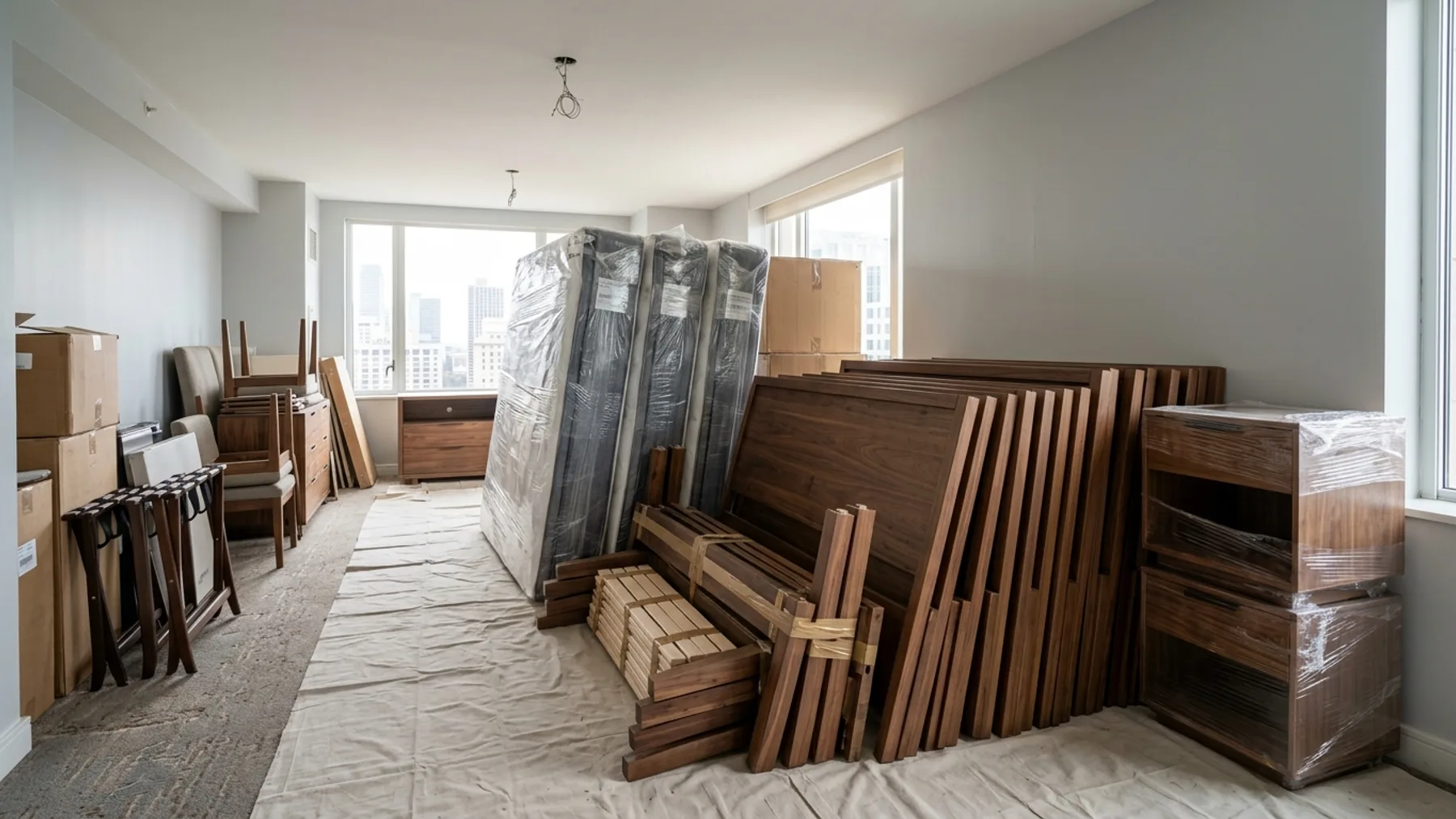
The hospitality industry in Dubai operates under world-class standards of luxury, guest satisfaction, and continuous asset renewal. Five-star resorts on the Palm Jumeirah, corporate business hotels in DIFC and Business Bay, and beachfront properties along Jumeirah Beach Residence routinely undergo major interior refurbishments every five to seven years. When hundreds of guestrooms, suites, ballrooms, and dining venues receive modern upgrades, hotel asset managers face the substantial challenge of clearing massive volumes of furniture, fixtures, and equipment (FF&E).
Executing hotel waste removal in Dubai requires coordinated logistics. Unlike standard residential decluttering, hospitality strip-outs demand strict timing, floor-by-floor segregation, heavy elevator coordination, and protective building measures. Clearing commercial case goods, bulk hospitality mattresses, and banqueting infrastructure must happen seamlessly without interrupting ongoing guest stays or violating municipal environmental regulations.
Hospitality Decommissioning Planning
When planning a phased hotel refurbishment, coordinate dock access schedules with your facility security team at least two weeks in advance. Combine warehouse junk removal for large-scale FF&E logistics with specialized furniture removal in Dubai for delicate case goods and modular suites.
Distinct Challenges of Hotel Clearance in Dubai
Managing hospitality strip-outs presents distinct operational hurdles that set it apart from typical commercial clearances:
1. Phased Floor-by-Floor Renovation Schedules
Hotels rarely shut down completely during renovations. Operations teams seal off two or three floors at a time while guests occupy rooms directly above or below. Clearance teams must operate silently, using designated service routes and avoiding noisy operations during early morning or late evening hours. Maintaining buffer floors between active guest levels and active clearance levels prevents vibration and acoustic disturbances.
2. Strict Service Lift and Loading Dock Windows
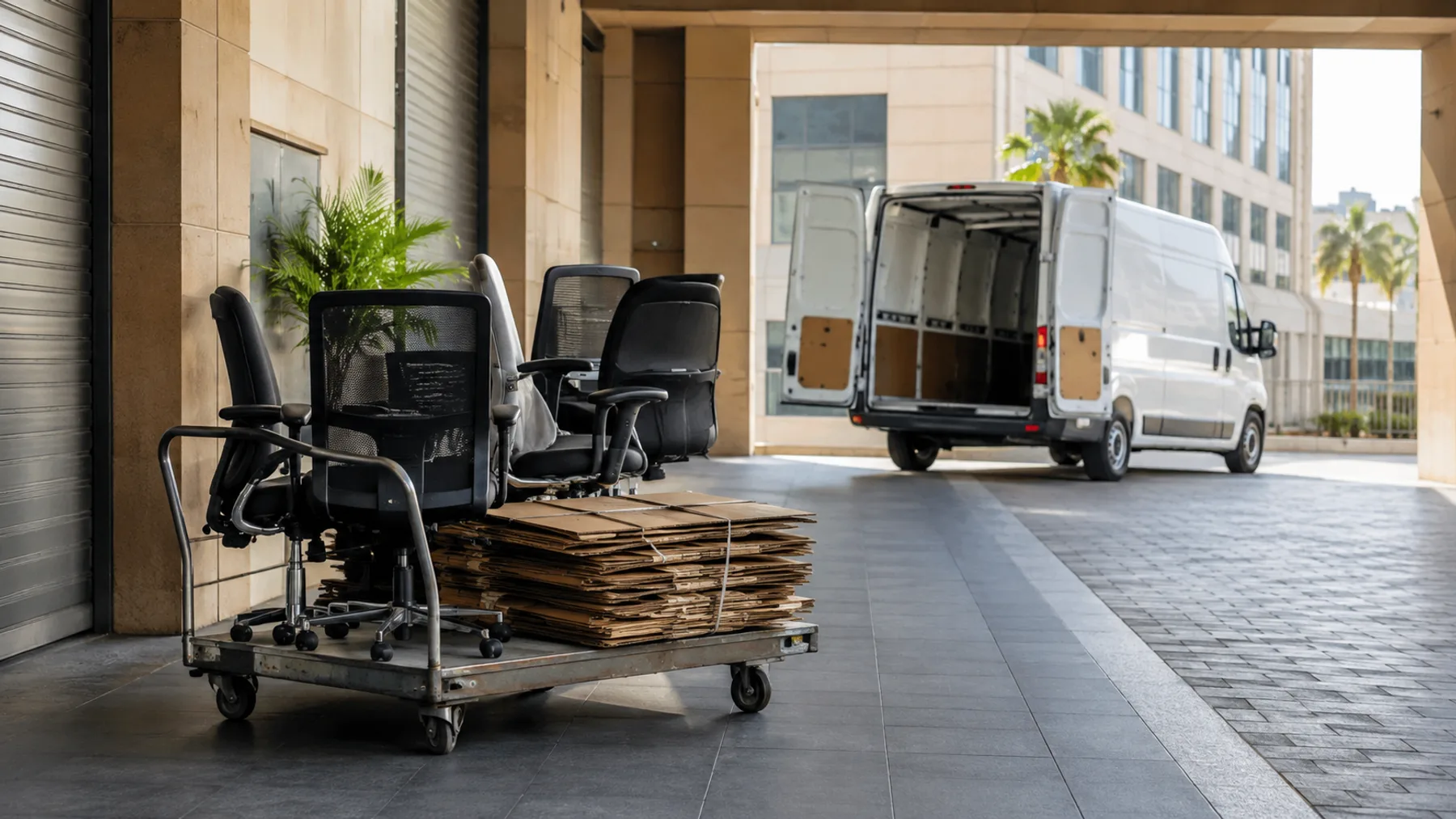
Luxury towers in Downtown Dubai and Dubai Marina have constrained basement docks. Large box trucks and heavy flatbeds have allocated delivery and hauling windows, often limited to two hours per booking. Clearance teams must palletize and stage items rapidly on service corridors to ensure trucks are packed to capacity within their allocated slot. Missing an assigned dock reservation forces trucks to circle congested urban streets or incurs penalty charges from master community management.
3. Protection of Common Corridors and Lifts
Hotel corridors feature expensive wall coverings, custom carpets, and finished timber architraves. Transporting solid oak headboards, marble-topped desks, and heavy armchairs requires installing heavy-duty floor corrugated plastic protection (correx boards), padded door wraps, and corner guards along every transport corridor. Service elevators require full wall-hanging quilted pads and reinforced threshold plates to prevent structural scrapes or hydraulic track damage.
4. High-Volume Mattress and Upholstery Processing
A standard 300-room property renewal generates hundreds of bulky king and queen hospitality mattresses, upholstered armchairs, and blackout curtains. Landfill disposal of whole mattresses is prohibited under municipal waste diversion guidelines, meaning every unit must be processed through certified recovery channels.
| Hotel Area | Primary FF&E Removed | Typical Weight / Volume | Primary Recycling or Disposal Route |
|---|---|---|---|
| Guestrooms | King/twin beds, mattresses, desks, nightstands, armchairs | 250 to 450 kg per room | Timber salvage, foam shredding, steel spring recycling |
| Bathrooms & Closets | Vanity mirrors, stone tops, fitted wardrobes, minibars | 120 to 200 kg per room | Glass recycling, e-waste recovery, chipboard processing |
| Ballrooms & Meeting Rooms | Stacking conference chairs, folding banquet tables, podiums | 5 to 15 metric tons per hall | High-grade aluminum scrap, steel frames, engineered wood salvage |
| Lobbies & Lounges | Leather sectionals, stone coffee tables, reception desks | 3 to 8 metric tons total | Upholstery stripping, metal recovery, stone reclamation |
| Back of House & Offices | Housekeeping carts, linen racks, administrative desks | 2 to 6 metric tons total | High-density polyethylene recycling, scrap metal reprocessing |
Environmental Compliance & Dubai Municipality Rules
Hospitality businesses in Dubai are held to rigorous environmental standards. Corporate sustainability mandates and Dubai Sustainable Tourism guidelines encourage properties to divert fit-out waste from landfills:
Timber and Engineered Wood Salvage
Solid wood credenzas, sideboards, and bed frames from luxury hotel suites have high reclamation value. Reputable clearance contractors separate solid timber from low-grade MDF or particleboard. Solid wood components are forwarded to local carpentry workshops for upcycling, while composite boards are processed into industrial wood mulch for agricultural soil conditioning.
Mattress Component Separation
Commercial mattresses contain high-tensile steel springs, polyurethane foam layers, and mixed fiber quilting. Specialized waste management partners in Dubai operate mechanical mattress shredders that separate these materials:
- Steel Innersprings: Melted down in regional steel mills for structural rebar manufacturing.
- Polyurethane Foam: Washed, shredded, and bonded into carpet underlay padding or acoustic baffles.
- Outer Textiles: Processed into industrial cleaning rags or acoustic insulation batts.
Refrigeration and Electronic Waste
In-room minibars, hospitality LED smart TVs, electronic digital safes, and bedside digital panels cannot be discarded in general waste skips. Minibars contain refrigerants and compressors requiring certified recovery under Dubai Municipality environmental rules. Electronic devices must be routed through authorized e-waste recovery facilities to prevent toxic heavy metals from contaminating local soil.
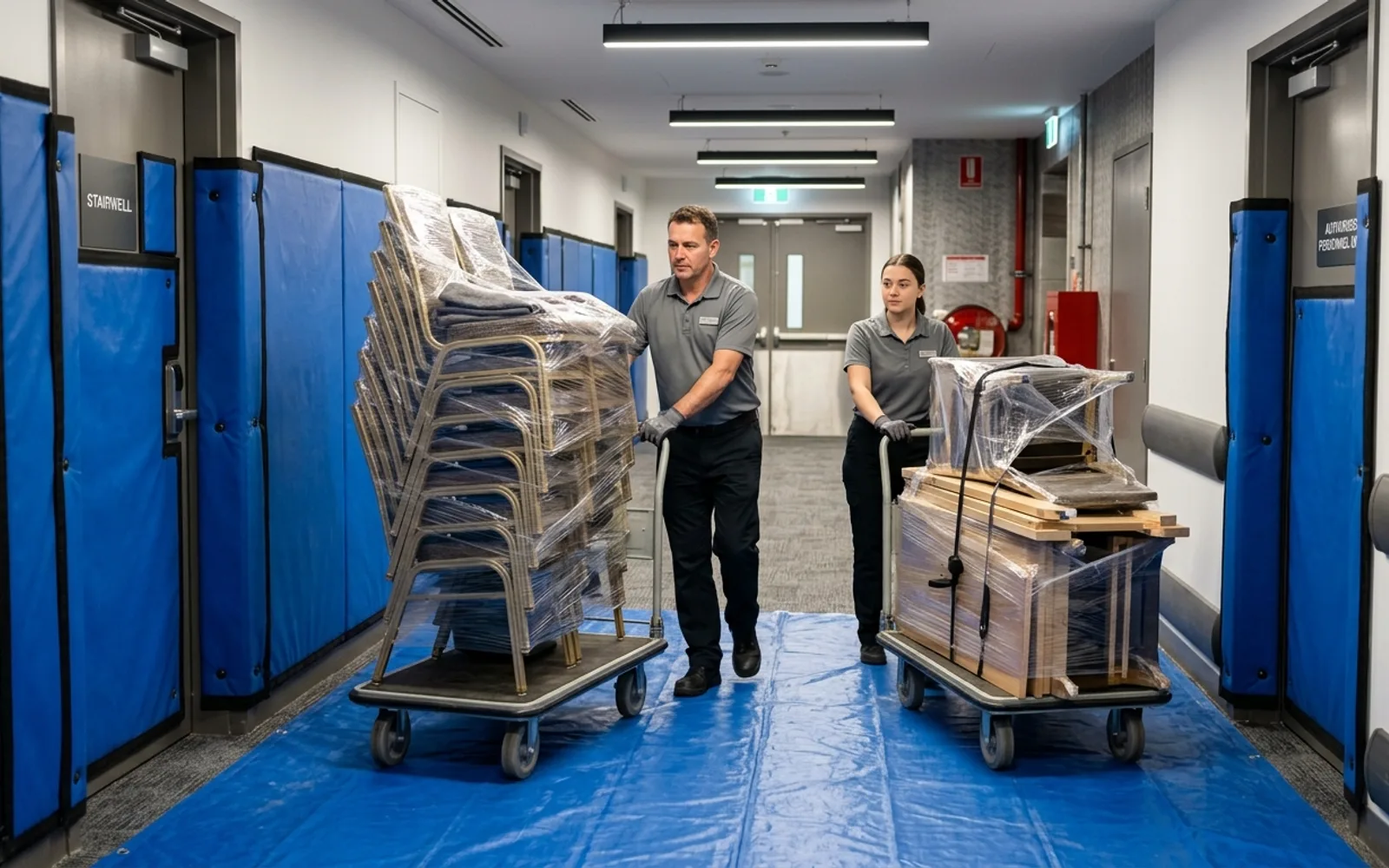
Detailed FF&E Asset Breakdown & Handling Protocols
Hospitality strip-outs encompass diverse material streams requiring custom handling techniques:
Case Goods and Millwork
Case goods comprise wooden desks, television credenzas, luggage benches, and bedside tables. Professional crews inspect these items for modular fastening systems. Cam locks and pocket screws are disassembled using torque-controlled cordless drivers. Preserving surface veneers allows secondary liquidators to market the furniture to budget hospitality chains, residential staff accommodations, or furnished studio developments.
Architectural Glass and Large Vanity Mirrors
Guestroom mirrors and bathroom glass partition walls represent severe laceration risks if broken during removal. Clearance technicians tape glass faces with cross-hatch adhesive film to contain shards in the event of impact fractures. Mirrors glued to plasterboard are freed using piano wire saws to slice through adhesive caulk beads without destroying drywall substrates.
Soft Furnishings and Blackout Drapes
Drapes, sheer curtains, valances, and decorative cushions must be stripped prior to heavy furniture movement. Fabric bundles are packed into heavy-duty clear polythene sacks to protect them from dust and moisture during transport to textile shredding facilities.
Coordinating Dining Venue Clearances
If your hotel refurbishment includes licensed dining venues or executive lounges, review our dedicated guide to restaurant junk removal in Dubai and our operational breakdown of retail clearance across commercial hubs.
Phased Clearance Methodology for Large Hotels
Hospitality projects require military precision to adhere to general contractor schedules. Here is the operational workflow deployed by professional clearance teams:
How to
How to Execute a Phased Hotel FF&E Clearance in Dubai
- 1
Site Survey and Asset Cataloging
Conduct a comprehensive walk-through with the hotel engineering team to inspect room types, measure freight elevator dimensions, and log items designated for liquidation, donation, or recycling.
- 2
Permit and Access Security Approvals
Submit contractor trade licenses, vehicle registration documents, and staff Emirates ID copies to hotel security to secure service dock gate passes and freight elevator reservations.
- 3
Corridor and Surface Protection Installation
Lay down heavy-duty protective floor mats, door frame guards, and elevator wall padding along all transport corridors from guestroom doors to the basement loading bay.
- 4
Systematic Room Deconstruction
Deploy skilled carpenters to unbolt headboards, dismantle fitted desks, disassemble bed frames, and wrap bulky items in stretch film to prevent debris generation.
- 5
Floor Staging and Rapid Dock Transfer
Move palletized loads down freight elevators during approved dock windows, loading heavy items directly into waiting box trucks for immediate haulage to recycling yards.
- 6
Final Sweeping and Handover Documentation
Vacuum all cleared guestrooms and corridors, remove protective wall wraps, and issue an itemized clearance report with municipal waste diversion certificates.
Balancing Guest Experience and Quiet Hours
When working in an operational resort, clearance crews must honor strict hospitality curfews:
- Acoustic Restraints: No power tools, hammer tapping, or heavy wheel carts may operate on guest levels between 10:00 PM and 8:00 AM. Quiet packing, wrapping, and manual staging can proceed in sealed rooms with acoustic draft stoppers installed at door bottoms.
- Elevator Priority: While freight elevators are reserved for contractors, emergency engineering and room service teams occasionally require access. Professional crews maintain clear elevator foyers to allow rapid staff passage.
- Discrete Crew Movement: Uniformed clearance personnel must remain restricted to designated service corridors, staff canteens, and service stairwells, avoiding guest lobbies and guest swimming pools.
Preparing Your Property for a Seamless Strip-Out
To maximize project efficiency and prevent unexpected construction delays, hotel engineering and housekeeping managers should implement these preparation steps:
- Conduct Housekeeping Asset Stripping First: Have internal housekeeping teams strip bed linens, duvets, pillows, towels, and decorative artwork prior to the arrival of the clearance team.
- Isolate Integrated Room Electronics: Ensure the maintenance team unplugs all minibars, dismounts wall televisions, and disconnects hardwired bedside control panels from electrical mains.
- Establish Clear Red and Green Zones: Clearly mark any fixtures or equipment that must remain in place (such as architectural molding, air conditioning grilles, or structural mirrors) using brightly colored adhesive tags.
- Coordinate Night Shifts for Public Spaces: Plan clearances of main lobby lounges, all-day dining furniture, and ballroom seating during night windows (11:00 PM to 6:00 AM) to maintain pristine public spaces during peak guest hours.
Partnering with an experienced, fully insured commercial removal team guarantees that your hospitality property transitions smoothly into its next chapter of elegance and guest satisfaction.
Frequently asked questions
Hotels schedule clearances floor by floor during low occupancy periods. Heavy freight elevators and basement service docks are reserved during night windows to transport stripped case goods without disturbing active guest floors.
Commercial hotel mattresses are inspected on site. Units fit for sanitization are redirected to secondary hospitality channels, while worn units are shredded at industrial facilities to recover steel innersprings, polyurethane foam, and textile fiber.
Yes. Hospitality properties in areas like Palm Jumeirah, Downtown Dubai, and Dubai Marina require pre-approved contractor gate passes, vehicle registration details, and security clearance for all haulage personnel prior to dock access.
Professional commercial crews carry battery-powered tools to unbolt custom upholstered headboards, disassemble modular conference tables, and break down fitted wardrobes without damaging corridor drywall or finishings.
Clearance teams segregate commercial stainless steel kitchen fixtures, refrigeration units, and bar counters from wooden dining sets, coordinating with certified recycling channels for scrap metals and electronic components.
Licensed commercial haulers issue itemized waste transfer logs and recycling certificates confirming tonnage diverted from municipal landfills toward metal, timber, and foam recycling facilities across the UAE.
Related articles
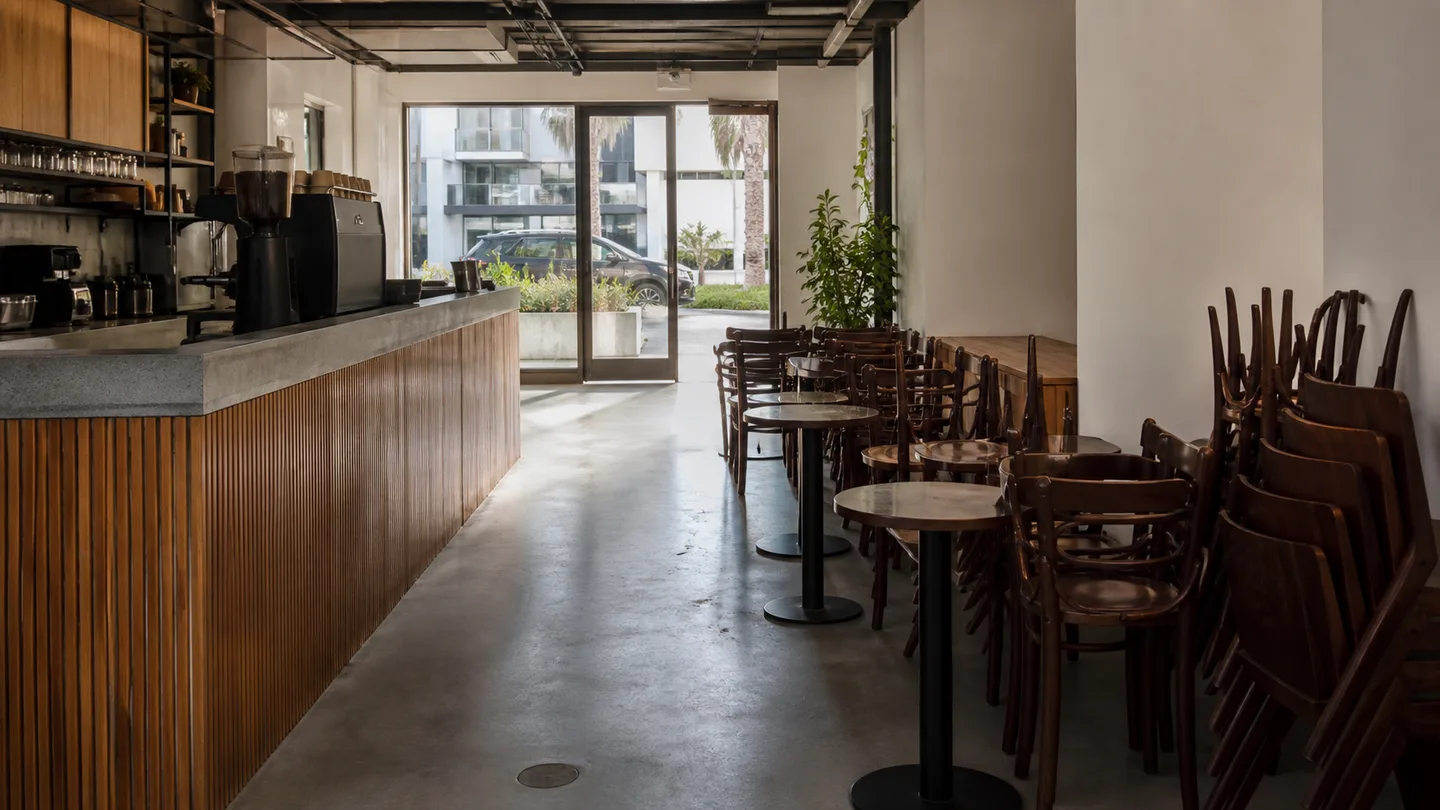
Cafe & Coffee Shop Clearance in Dubai
Plan cafe clearance in Dubai with an ownership inventory, separate appliance preparation and a confirmed loading route for unwanted furniture and equipment.
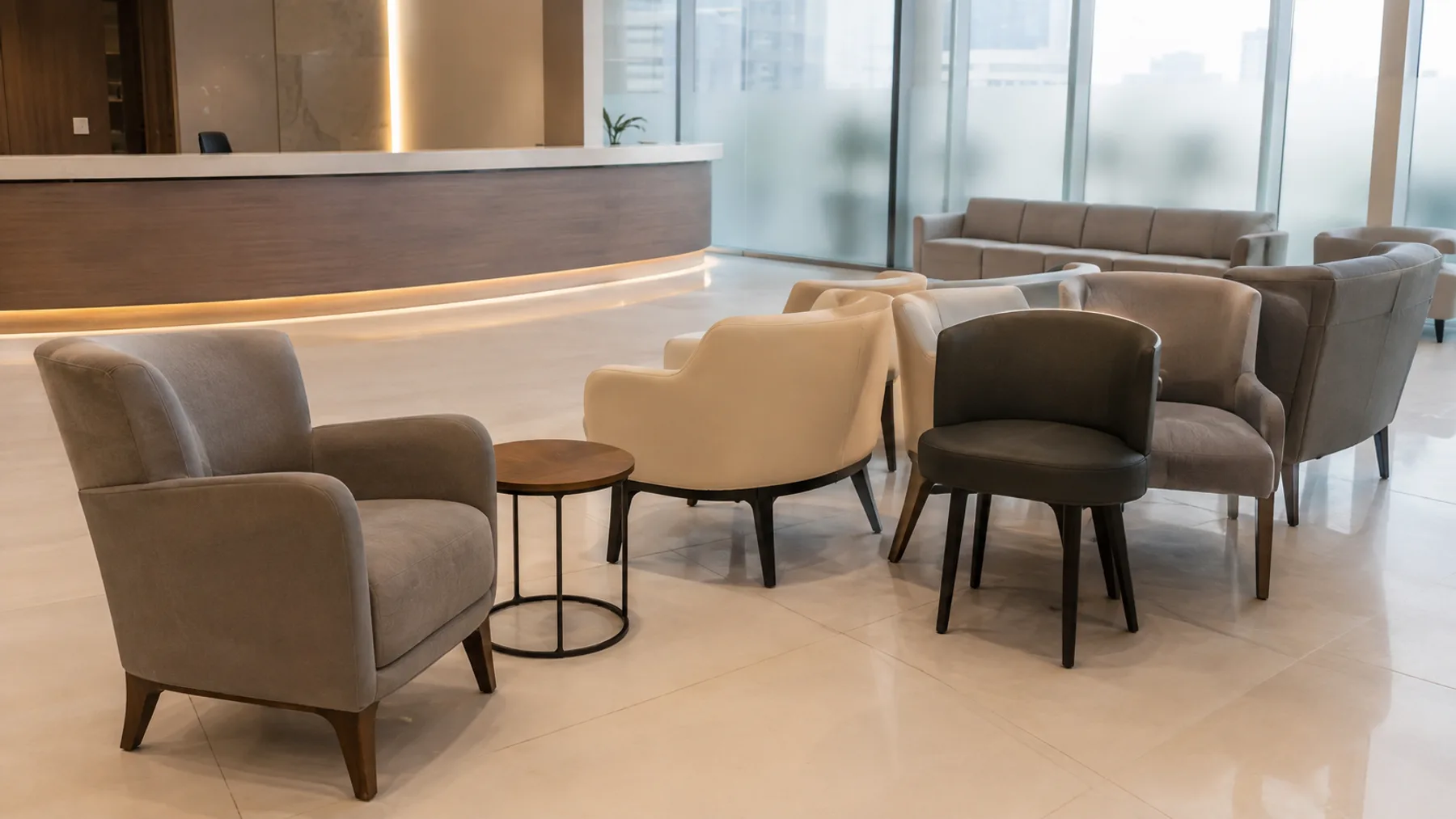
Clinic & Medical Office Furniture Removal in Dubai
Plan clinic furniture removal in Dubai with an approved inventory, empty storage units, clear access, and complete separation from medical waste.
Recurring Commercial Junk Removal Contracts in Dubai
Compare recurring commercial junk removal contracts in Dubai. Review pickup frequencies, service level agreements, bin rotation, and waste manifests.