How to Recycle Old Mattresses Responsibly in Dubai
A mattress is built to resist coming apart, which is the opposite of what recycling needs. What a household controls is whether that option survives to collection.
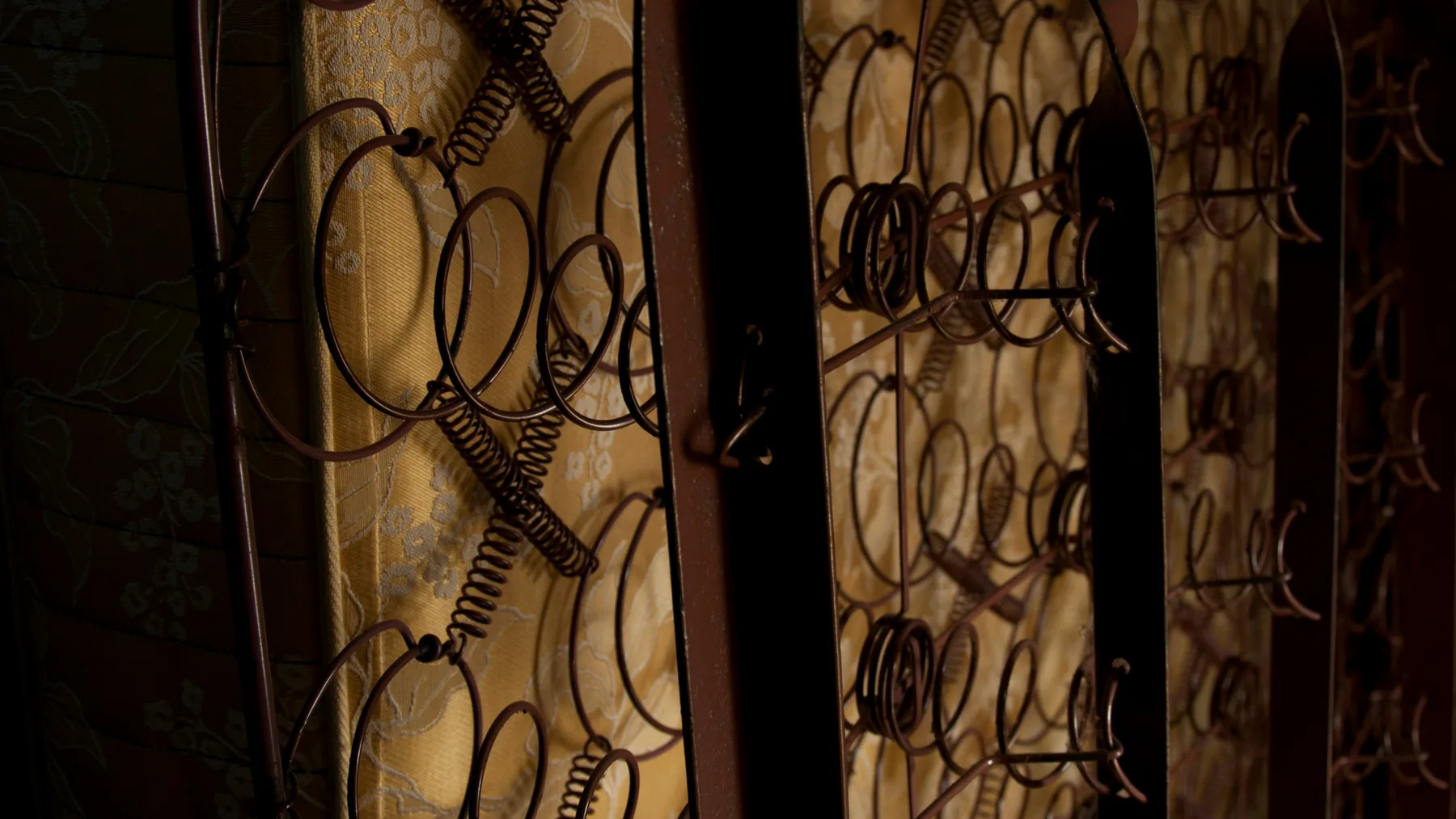
A mattress is one of the hardest household items in Dubai to recycle, and the reason is built into it. Steel springs, foam, textile and fibre are all recoverable materials on their own, and a mattress bonds them into a single sealed unit that is deliberately engineered never to come apart. Recycling asks for exactly what a mattress is designed to resist. What a household controls is narrower than the question suggests: whether the mattress arrives dry, whole and uncontaminated, which decides whether the materials inside it are still reachable.
Quick answer
The materials in a mattress are recoverable and the mattress itself is difficult to separate into them, so condition on arrival decides the outcome. Keep the mattress dry, keep it whole, and do not cut it open to help. Moisture is what most often ends the recovery route in Dubai, and it arrives from humidity and condensation rather than from rain. Book a mattress removal and say what condition the mattress is in, so it is handled as material rather than assumed to be waste.
What a Mattress Is Made Of, in Recycling Terms
| Component | What it separates into | What blocks the separation |
|---|---|---|
| Quilted cover | Textile, and fibre fill stitched into it | Quilting stitches through several layers at once, so the cover is not a skin that peels off |
| Fire-barrier layer | A thin non-woven sheet under the cover | Bonded or sewn into the cover assembly rather than sitting loose |
| Comfort foam | Polyurethane, latex or memory foam | Layers are laminated to each other with adhesive, so foam types cannot be sorted by grade |
| Spring unit | Clean recoverable steel, the best material in the object | Sits inside a foam encasement and a stitched pocket fabric in a pocket-sprung design |
| Border rod | Stiff perimeter wire holding the unit's shape | Sewn inside the edge, under tension, and the part that injures anyone cutting a mattress open |
| Base felt or backing | Non-woven textile on the underside | Glued rather than fixed, and the first layer to hold moisture from a floor |
Reading the middle column on its own, a mattress looks like a good recycling candidate. Reading the right-hand column explains why it rarely behaves like one. Every layer is joined to the one next to it by a method chosen for durability in use, and durability in use is the same property that defeats separation afterwards.
The comfort foam row is the one that decides most outcomes. Foam laminated to foam cannot be sorted by grade once it is glued, and a mattress that has three foam types bonded into one slab is a single composite rather than three recoverable materials.
Moisture Is the Deciding Variable, and in Dubai It Arrives Without Rain
The condition that most often removes a mattress's recovery route is dampness, and almost nobody who owns the mattress saw it happen. Foam and quilting absorb moisture out of the air and hold it, and Dubai supplies that moisture in ways a bedroom never reveals.
Three situations account for most of it. A mattress stored flat against an external wall in an unconditioned store room collects condensation on the face nobody checks. A property left vacant between tenancies has its cooling switched off, so humidity sits in soft furnishings for weeks. And a mattress stood on a balcony or in an open garage while somebody arranges collection takes on moisture overnight, every night, whether or not it rains.
Damp foam then supports mould growth inside the core, where the surface still looks clean. At that point the textile and the foam are contaminated rather than dirty, and contamination is permanent for both. The steel inside a sprung mattress survives all of this and remains recoverable. The material wrapped around it generally does not.
Do not park a mattress outside while it waits for collection
A mattress standing on a balcony, in a carport or beside a villa gate is absorbing moisture from the first night onward, and in Dubai it is also collecting airborne dust that works into the quilting. A few days outdoors can move a mattress from recoverable to disposal without anything visible changing on the top surface. Keep it inside the room it is already in until the crew arrives, since a booked collection takes the mattress from where it stands rather than from a ground-floor point.
Reuse Is Rarely the Answer for Bedding, Which Changes the Rest
For most household furniture the best outcome is that somebody else keeps using the object. Bedding is the exception, because second-hand mattresses are widely declined on hygiene grounds and a used mattress is nearly always a disposal job rather than a resale one. Our guide to disposing of an old mattress in Dubai covers those routes and the preparation for getting the mattress out of the room, including the lift and staircase measurements that decide the carry.
The consequence for this article is that a mattress skips the step that protects most other furniture. A sofa gets assessed as an object first and as material only if that fails. A mattress usually arrives at the material question immediately, which is why the condition of the materials matters more here than for anything else leaving a bedroom.
That also puts more weight on the protector than people expect. A washable protector used throughout a mattress's life is the cheapest thing that keeps its materials in recoverable condition at the end of it.
What Keeps the Options Open
- Keep it dry from the day it comes off the bed. This is the whole game, and it is decided over weeks rather than on collection day.
- Keep it flat or on edge indoors, not outside and not against an external wall in an unconditioned room.
- Leave it whole. No cutting, no removing the cover, no pulling the springs. A mattress in pieces is harder to handle and worth less as material.
- Take a separate topper or protector off and let it be assessed as its own item.
- Say what condition it is in when you book, including any damp, staining or storage history, so the mattress is routed on its real condition rather than on an assumption.
- Do not hold it in storage for a future clearance. Time in an unconditioned Dubai store room is what turns a recoverable mattress into a disposal one.
For what a collection costs and what moves the figure, our guide to mattress disposal cost in Dubai prices the job by size tier and foam density. For how a mixed household load is split between reuse, recycling and licensed disposal once it is collected, see our guide to where your junk goes in Dubai. This article follows the mattress specifically, because it behaves unlike anything else in the load.
Junk Removals Dubai directs recyclable material to authorised processing and the remainder to licensed disposal, and being straight about a mattress means saying that it is one of the items most likely to reach the second of those. The honest version of recycling a mattress responsibly is keeping its materials in a state where recovery is possible at all, rather than assuming it happens by default. Send a photo of the mattress and mention any storage or damp history to our mattress removal team on WhatsApp or through the contact page, and add anything else leaving in the same visit so the wider waste removal side of the load is planned at the same time.
Frequently asked questions
The materials in a mattress are recoverable individually, and the mattress as an object is one of the hardest household items to separate into them. Steel springs are clean metal, foam and textile have routes when they are dry and uncontaminated, and the difficulty is that all of it arrives bonded, stitched and glued into one sealed unit. Whether a specific mattress is recovered as material or goes to licensed disposal depends on its condition on arrival, which is the part a Dubai household influences before collection day.
Because a mattress is built to never come apart, and a wardrobe is built to be assembled. A flat-pack wardrobe has fittings designed to be undone, and a sofa can be cut down to a timber frame, foam and fabric with hand tools. A mattress has foam laminated to foam with adhesive, textile quilted through several layers at once, and in a sprung unit a steel border rod sewn inside the perimeter. Every construction decision in a mattress works against separation, because a mattress that came apart in use would have failed as a product.
Yes, in one respect and not in others. A sprung mattress contains a large quantity of clean steel, which is the most reliably recoverable material in any household load, and the steel is worth reaching. Getting to it still means cutting through a quilted cover, a fire-barrier layer and bonded comfort foam first. An all-foam mattress has no metal to recover and is a simpler object, and its foam layers are usually glued to each other in a way that makes even that single material difficult to separate cleanly by type.
It is the single most common reason a mattress arrives with no recovery route left. Foam and quilting absorb moisture and hold it, and damp foam supports mould growth in the core where nothing is visible from the surface. Once that has happened the textile and foam are contaminated rather than merely dirty, and neither has a material route. The steel in a sprung unit survives moisture and is still recoverable. Everything wrapped around it usually is not.
No. Cutting a mattress apart with a household knife produces loose foam crumb, released fibre and exposed spring ends, and it makes the object more difficult and more hazardous to carry rather than easier to process. The steel border rod running around the perimeter of a sprung unit is stiff wire under tension and it is the part that injures people attempting this. Hand the mattress over whole, and let separation happen where there is equipment for it.
A waterproof film bonded to the cover fabric is one of the small design choices that closes a recovery route, because it turns two separable materials into a single composite that cannot be split at sensible cost. A loose washable protector does the opposite. It sits above the mattress as a distinct item, comes away cleanly, and keeps moisture and staining out of the foam underneath while the mattress is in use. The bonded version protects the mattress and costs it its material route; the loose one protects the mattress and keeps that route open.
Less than people expect for the steel and more than expected for everything else. A spring unit from a twelve-year-old mattress is the same recoverable metal as a spring unit from a two-year-old one. Foam is the component that ages, losing structure and breaking down into a crumbling state that no longer holds together as a separable layer. An older mattress in a dry Dubai bedroom is usually in better recoverable condition than a newer one that spent a year in an unconditioned store room.
Related articles
Sustainable Decluttering: Reduce Junk Before It Piles Up
Most of what a Dubai household eventually clears was settled long before the clearance. Reducing that volume is a timing decision, not a sorting one.
Battery & Electronics Disposal Rules in Dubai
Whether a battery leaves with a device or needs its own route is decided by how it is attached, not by what it powers. Here is how to sort them before a clearance.
Landfill vs Recycling: Where Dubai's Junk Ends Up
Recycling delays landfill for most household materials rather than replacing it. What decides the gap is how many useful cycles a material has left in it.