Do You Need a Permit to Dispose of Bulk Waste in Dubai?
No permit is issued to a Dubai household for disposing of bulk waste. The permissions that do apply belong to your building and to whoever transports the load.
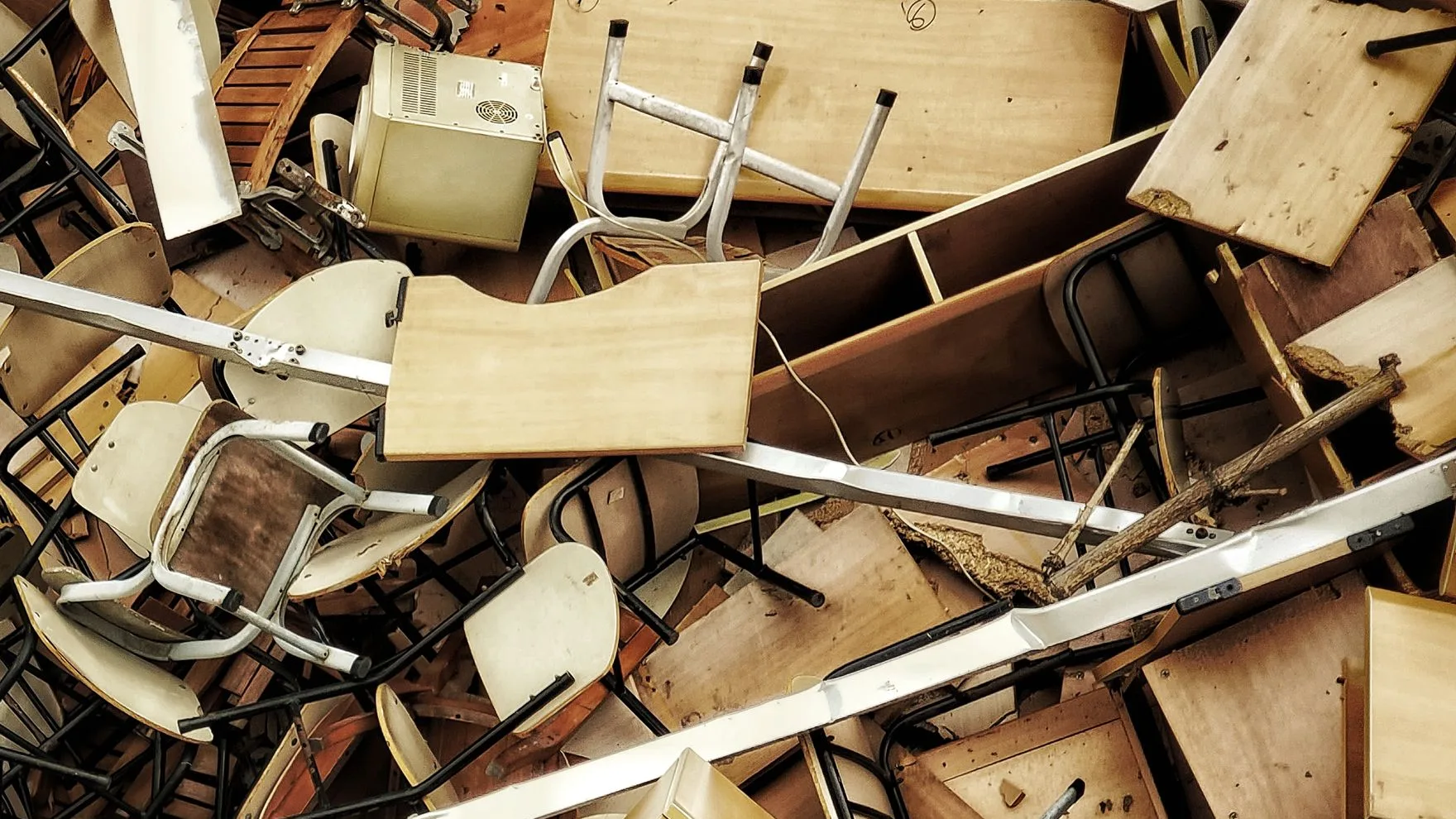
No permit is issued to a Dubai household for disposing of bulk waste. A resident clearing furniture, appliances or a full property does not apply to anybody for permission to dispose of their own possessions, and there is no document to obtain before booking a collection. The permissions that genuinely apply are two different things that get called the same word: approval from your building or community for the movement itself, and the licence held by whoever transports the load away.
Quick answer
A Dubai resident does not need a personal permit to dispose of household bulk waste. What is needed is your building or community management's approval for a crew and a vehicle to work on site, which covers timing, lift access and where the vehicle may stand. The licensing that applies to the waste itself belongs to the company transporting it, not to you. If you move a bulk load yourself, in your own vehicle, you take on the transporter's side of that question, which is where most of the real difficulty sits.
The Word Permit Is Covering Several Different Things
Almost every version of this question turns out to be one of five separate questions, and separating them is what makes the answer usable.
| What people are asking about | What it is in practice | Who obtains it |
|---|---|---|
| Permission to throw away a sofa | Nothing. Disposing of your own property needs no authorisation | Nobody. This permission does not exist |
| Permission for the crew and truck to work at the building | Building or community access approval, covering hours, entrances and vehicle standing | You, from your management or owners association |
| Permission to use the service lift | A booked access slot issued to the resident or unit owner | You, several days ahead in most Dubai towers |
| Permission to carry the waste away | The removal company's trade licence covering that activity | The removal company |
| Permission for a container standing on shared ground | Approval from whoever controls that ground | Whoever places the container, arranged in advance |
Rows two and three are the ones that stop a clearance happening on the planned day, and neither is about waste at all. Our guide to bulky waste collection rules in Dubai covers what a bulky item may and may not do once that access is in place, including where an item may wait. This article covers the permission question that comes before it.
What a Household Genuinely Has to Arrange
Two things, and only two. The first is your building's or community's approval for the work to happen: what hours a contractor may work, which entrance and lift they use, and where the vehicle stands while it loads. The second is the collection itself.
Neither is a waste permit. Both are access arrangements, and both come from the layer closest to your door rather than from a city authority. For how those layers sit on top of each other at a Dubai address, and how to get your own building's rules in writing, our guide to Dubai waste disposal regulations for homeowners maps all four of them.
This article deliberately does not quote a bylaw number, a fee or a penalty, because those vary between communities and change over time, and a confidently stated figure that has since changed is worse than no figure at all. What is stated here is the practice, which is stable.
The Licence That Matters Is Not Yours
The licensing question in a bulk disposal attaches to the party moving the waste. A company operating in Dubai holds a trade licence listing the activities it may carry out, and for a removal operator that licence is what makes the work it does legitimate. A household booking that company is not required to hold anything of its own.
That reframes the useful version of the question. Instead of asking whether you need a permit, ask whether the company you are about to book has one, because that is the check with something behind it. Ask for the trade licence, confirm that removal or waste transport appears among the listed activities, and note whether the company can tell you where a load goes after it leaves. An operator that answers all three without hesitation is an operator whose paperwork exists.
A dumped load identifies the home it came from
The strongest practical reason to care who carries your waste has nothing to do with paperwork. A cleared Dubai property produces delivery labels, utility letters, packaging with a name on it, prescription boxes, school papers and furniture carrying a building's fit-out marks, and all of it travels in the load. If that load is tipped somewhere it should not be, working out which address it came from takes no investigation at all. The saving on an unusually cheap collection is small next to that outcome, and the household that paid for it is the one the trail reaches.
Moving It Yourself Changes the Question Entirely
The permit question bites in exactly one situation, which is the one nobody asks about. Loading a mattress and a broken wardrobe into your own vehicle to take somewhere makes you the transporter, and every consideration that sat with the removal company now sits with you.
| Booking a collection | Moving the load yourself | |
|---|---|---|
| Who transports the waste | The company, under its own licence | You, personally |
| What you have to establish first | Building access, and that the company is legitimate | Whether a site will accept a private household load at all |
| Where the load can go | Wherever the company's arrangements allow | Only somewhere that agrees to receive it from you |
| The realistic failure | A collection rescheduled around a lift slot | A refused load returning to the property in your vehicle |
| Who deals with what is refused | The company, as part of the job | You, on the same day, with the items still loaded |
The fourth row is what makes a self-managed bulk disposal in Dubai harder than it looks. A refused load does not disappear. It comes back to the villa driveway or the apartment corridor it left from, usually in the evening, and it stands there until something else is arranged. A booked bulk trash pickup exists to avoid exactly that sequence, and the reason it is priced as a service is that the carrying, the vehicle and the destination are all part of it.
This article covers the permissions and the destination side of moving a load yourself. For the labour and cost side of the same decision, including how volume and vertical distance change the answer, see our comparison of hiring a junk removal company against doing it yourself in Dubai.
What to Settle Before a Large Clearance
- Ask your building what a resident must arrange for contractor access. Hours, lift booking, vehicle standing and any notice period, all in one question.
- Ask for the removal company's trade licence. Confirm the activity it lists matches the work you are booking.
- Ask what the company does not take. Paint, chemicals, fuels, tyres and loose batteries sit outside a standard load and need their own handler.
- Ask what the quote covers. Whether the crew carries items down from the property, or whether the load has to be at ground level already, is the single largest difference between two quotes for the same pile.
- Ask where the load goes. A specific answer about routing is a sign of a real process; an unwillingness to answer is also information.
- Get the answers in a message rather than a phone call. A written confirmation settles a dispute on the day; a remembered conversation does not.
For a mixed household load rather than a few large pieces, a standard waste removal booking covers the same ground with the same arrangements behind it. Send the item list and your deadline to our team on WhatsApp or through the contact page and the access constraints get planned around rather than discovered.
The Question Behind the Question
Most people asking about a bulk waste permit in Dubai have already been told no by somebody. A security guard has stopped a sofa going through a lobby, or management has refused a Friday morning slot, and the refusal gets read as a rule about disposal.
It rarely is. The no is almost always about placement or timing: not through that entrance, not during those hours, not standing there while you wait for a truck. Those are scheduling problems with scheduling answers, and treating them as such gets a clearance moving far faster than hunting for a permit that was never going to exist.
Frequently asked questions
Your building's permission covers the movement, not the disposal, and the difference decides what you are asking for. No management body in Dubai grants or withholds permission for a resident to dispose of their own furniture. What management does control is when a crew may work in the building, which lift they may use, where a vehicle may stand and how long shared space may be occupied. Put the request in those terms when you ask, because a question phrased as permission to throw something away invites a confused answer, while a question about contractor access hours gets a precise one.
A company operating in Dubai holds a trade licence listing the activities it is permitted to carry out, and a legitimate removal operator's licence covers the work it is doing. This is the licensing that genuinely applies to a household bulk disposal, and it sits with the company rather than with the resident. Before booking a large load, ask for the company's trade licence and confirm that removal or waste transport appears among its listed activities. An operator that cannot produce one is the risk the permit question should be pointed at.
Loading bulk waste into your own vehicle makes you the transporter, and that is the point at which the question stops being about permits and starts being about whether a site will accept you at the gate. Disposal sites accept material from specific sources under specific arrangements, and a private car or a borrowed pickup arriving with a household load is frequently turned away. Confirm before you load rather than after, because a refused load returns to the property it came from and usually to a corridor or a driveway it should not stand in.
It gets traced back, and the reason is that household waste identifies its own origin. A cleared property produces delivery labels, utility letters, prescription boxes, school paperwork, packaging with a name on it and furniture with a building's fit-out marks. Anyone examining a dumped load in Dubai does not need a witness to work out which address it came from. This is the practical argument for booking a company you can identify, since a cheap collection that ends badly leads back to the household that paid for it.
It depends entirely on whose ground the container will stand on, which is the question to settle before anything is delivered. A container standing wholly inside your own villa plot is a private arrangement. A container standing on a community road, a shared parking bay, a verge or any other ground your community or building controls needs the permission of whoever controls it, arranged in advance. Master-planned communities in Dubai are particularly firm about this, because a container on a shared road affects every household using it. Junk Removals Dubai does not supply skips, so this is a question for the container supplier and your community management.
Four things, and all of them before the date rather than on it. Confirm the company's trade licence covers this work. Confirm what the quote includes, specifically whether carrying items down from the property is part of it or whether the load must already be at ground level. Confirm what the company will not take, since paint, chemicals, tyres and loose batteries sit outside a standard load. Confirm where the load goes afterwards, and treat a vague answer as an answer. Getting these settled in writing takes one message and prevents the disputes that surface with a truck already in the driveway.
Keep the booking confirmation and the invoice, not because any authority asks for them, but because a tenancy handover sometimes does. The dispute that surfaces at the end of a Dubai lease is whether the property was cleared and by whom, and a dated document naming the items and the address settles it in one message. This matters most where a landlord or agent inspects days after the clearance rather than on the day. It costs nothing to save the confirmation to the folder holding your tenancy paperwork, and it is the only record of a bulk disposal a household ever benefits from having.
Related articles
Bulky Waste Collection Rules in Dubai (Municipality Guide)
A bulky item is anything the normal waste stream cannot take, and that one fact changes where it may wait, who moves it, and how it has to leave a Dubai property.

Dubai Waste Disposal Regulations Homeowners Should Know
The waste rules reaching a Dubai household come from four layers. Here is which layer answers which question, and how to get the answer for your own address.

Fines for Illegal Dumping in Dubai (and How to Avoid Them)
We do not publish a penalty figure for illegal dumping in Dubai. Here is what decides a household's exposure, who holds the real number, and how to avoid it.