Hazardous Household Waste Disposal in Dubai
A short list of ordinary household items cannot travel in a junk removal load. Knowing which ones, and where they hide in a Dubai home, prevents a wasted visit.
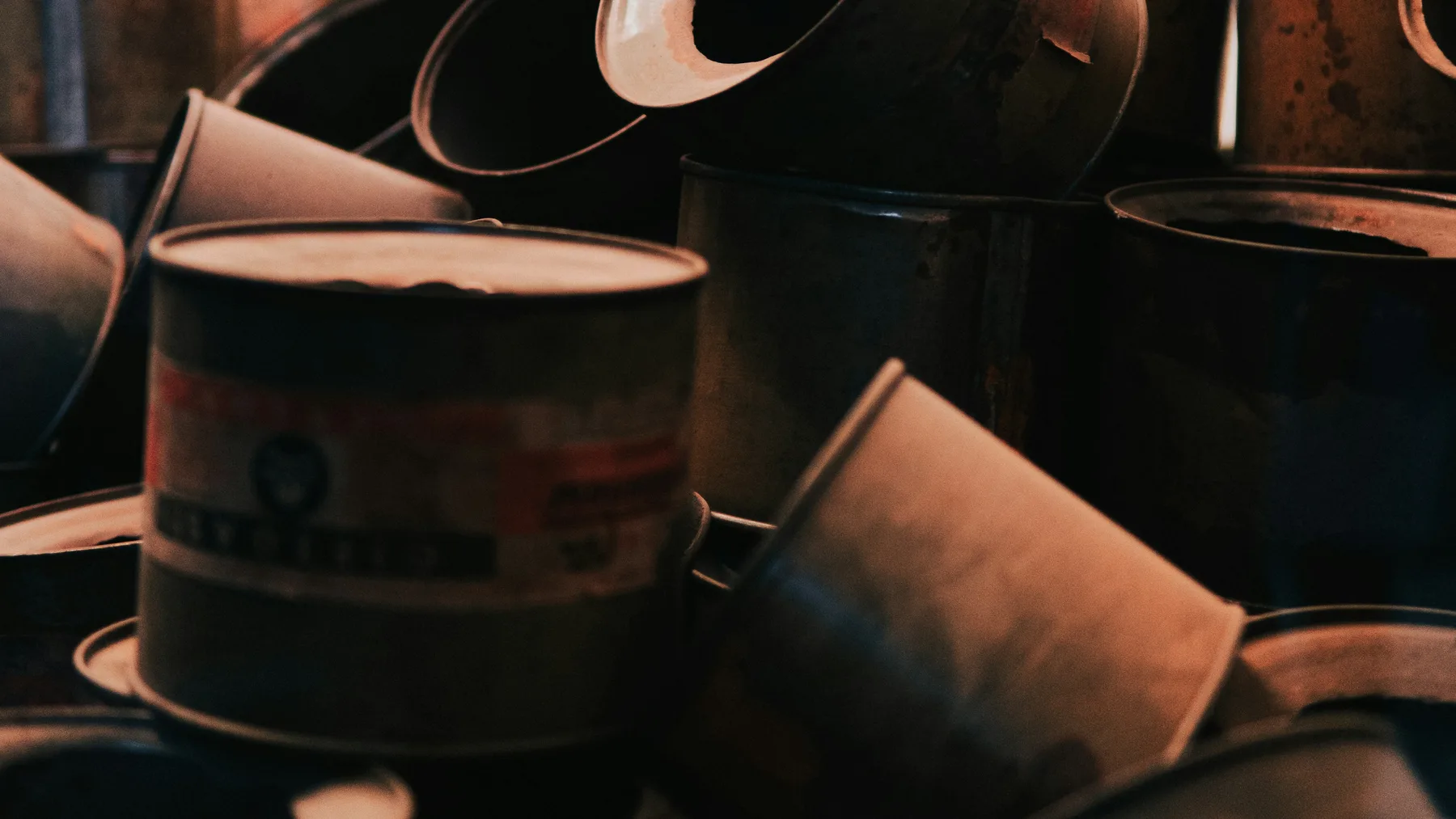
A small group of ordinary household items cannot travel in a junk removal load in Dubai: paint, solvents, fuels, automotive fluids, pool chemicals, gas cylinders, loose batteries and tyres. They are common, they live in the same store rooms as everything else being cleared, and they need a handler equipped for them rather than a general collection crew. Identifying them before a clearance is booked is what keeps one visit from becoming two.
Quick answer
Household hazardous waste in Dubai is the group of items that are flammable, pressurised, corrosive, toxic or already leaking. Paint, thinners, solvents, engine oil, brake fluid, fuel, gas cylinders, pool chemicals, car batteries, loose batteries and tyres all sit outside a standard junk removal load and need a specialist handler. Keep them in their original sealed containers, store them shaded and upright rather than in a hot closed garage, never mix or decant them, and set them aside as their own group before a collection is booked so the rest of the property can be cleared normally.
What Makes a Household Item Hazardous
Five behaviours account for the whole list, and knowing the behaviour is more useful than memorising products, because it lets you classify something the list does not name.
| Behaviour | Common Dubai household examples | Why it rules out a general load |
|---|---|---|
| Flammable | Thinners, white spirit, petrol in a garden-equipment can, lighter fluid, some adhesives | A sealed truck in Dubai summer heat is the wrong environment for vapour to build up in |
| Pressurised | Aerosols of any kind, barbecue gas cylinders, refrigerant canisters, fire extinguishers | The container fails under heat or crushing, and crushing is what happens in a loaded truck |
| Corrosive | Drain cleaner, oven cleaner, descaler, pool acid, battery acid | Damages whatever it contacts and injures whoever handles the load next |
| Toxic | Pesticides, weedkiller, wood preservative, some pool chemicals, mercury thermometers | Harmful in small quantities and difficult to contain once a container has opened |
| Reactive or already failing | Swollen batteries, rusted or bulging tins, unlabelled containers, anything visibly leaking | The state of the container is the hazard, whatever is inside it |
The last row is the one that catches people out. An item can be entirely ordinary and still belong in this group because of the condition it is in. A sealed tin of household paint is a routine item to set aside. The same tin, rusted through at the base after several summers on a garage floor, is a different problem.
Where These Items Hide in a Dubai Home
They are rarely stored together, which is why a clearance turns them up gradually rather than all at once. Walking the property with this list is a ten-minute job that prevents the most common collection-day surprise:
- The garage or store room. Part-used paint from the last repaint, thinners, engine oil, brake fluid, a car battery, screenwash, a spare tyre, weedkiller and garden chemicals.
- Under the kitchen sink. Oven cleaner, drain unblocker, descaler, bleach, and aerosol polishes stored alongside ordinary cleaning products.
- The utility or laundry area. Stain removers, solvent-based cleaners, and shoe or leather care products.
- The bathroom cabinet. Aerosols, nail products, expired medication and old cosmetics.
- The balcony or outdoor store. Barbecue gas cylinders, charcoal lighter fluid, insect sprays and pool chemicals in villas with their own pool.
- The maid's room or spare store. Whatever the previous occupant left, which is frequently unlabelled and frequently the hardest case in the property.
Pool chemicals deserve a specific mention because Dubai has a lot of private pools and the products are stronger than they look. Chlorine granules, acid and shock treatment are stored in ordinary-looking tubs, and several of them react badly with each other. They belong in their own group, kept apart, not stacked together in one box for convenience.
Dubai heat is the reason not to stockpile this group
A closed garage or an unshaded store room in a Dubai summer reaches temperatures that aerosols, solvents and fuel containers were not designed to sit in for months at a time. Pressure rises inside sealed containers, seals degrade, and a tin that was sound in March can be bulging or weeping by August. Setting these items aside for a clearance you plan to book later is the practice that produces leaking containers. Deal with the group on its own timetable rather than holding it until everything else is ready.
The Items People Guess Wrong On
Everything above is reasonably intuitive. This group is not, and these are the items that show up in a general pile because somebody reasoned their way to the wrong answer:
- An "empty" paint tin. Empty means nothing runs out when it is turned over. A film of wet paint in the base is still wet paint.
- An "empty" aerosol. A can that no longer sprays still holds propellant under pressure, which is the part that matters.
- A gas cylinder that feels light. Residual gas remains under pressure in a cylinder that reads as empty.
- Batteries in a device being thrown away. Sealed inside a working item they go out with it through electronics disposal. Removable ones should come out and go with the loose batteries. Our guide to battery and electronics disposal rules in Dubai covers that split in full, including which battery types turn up where in a home and how to store the loose group safely; this article places batteries within the wider hazardous group.
- Printer and toner cartridges. Fine powder that disperses if the cartridge is crushed. Keep them boxed rather than loose in a bag.
- Compact fluorescent and tube lighting. Thin glass with a small mercury content, and the glass is what fails in a load.
- Half a bag of cement or tile adhesive. Not hazardous in the same sense, and still outside a household junk load, since it is construction material rather than household waste.
How to Handle the Group Until It Is Collected
Six rules cover it, and none of them require equipment:
- Leave everything in its original container. The label is the only reliable record of what is inside.
- Never decant into a food or drink container. An unlabelled bottle is dangerous to everyone who handles it afterwards, including you in six months.
- Never mix two products together, even two that look similar. Mixing is how a stable item becomes a reactive one.
- Keep containers upright and off the floor, in shade and with some air movement.
- Keep the group physically apart from the clearance pile, in a different corner or a different room, so nothing is loaded by mistake.
- Photograph the group before you book anything. It is faster than describing it, and it lets the route be arranged before the day rather than during it.
What We Take, and What We Say No To
Junk Removals Dubai runs household, office, retail, storage and warehouse clearances: furniture, appliances, electronics, general junk and green waste. Our waste removal service covers mixed household and commercial loads across Dubai, and a standard junk removal job clears a property of everything ordinary in it.
Licensed hazardous-material handling is not work this business does or arranges. That is a deliberate boundary rather than a limitation we are working around, because the items on this page need carriers, containment and handling that a general clearance crew is not equipped for. Arrange those items with a specialist carrier for that material, and where a container is unlabelled or already leaking, raise it with your building management before anybody moves it.
Telling us about the group at booking is what matters operationally. A load quoted with the knowledge that six paint tins and a car battery are staying behind is a load that gets cleared in one visit. The same job discovered mid-collection stops the crew, changes the quote and usually needs a second appointment. For the wider set of items that fall outside a standard collection for reasons other than hazard, our guide to bulky waste collection rules in Dubai covers the exclusions that apply to size and type rather than to material.
The Container Nobody Can Identify
The hardest item in any Dubai clearance is not the one with a warning symbol on it. It is the unlabelled plastic bottle at the back of a shelf holding two inches of something amber, left by an occupant nobody can contact. Do not open it to find out, do not smell it, and do not pour it anywhere to make space. Photograph it where it stands, keep it upright and apart from everything else, and treat it as the most restrictive category on this page until somebody who can identify it says otherwise. If you are working through a clearance and want to know what can go in a standard collection and what cannot, send photos on WhatsApp or get in touch before the booking rather than after it.
Frequently asked questions
It depends on what empty means, and the everyday meaning and the practical one are different. A tin scraped out and left open until the residue has dried solid is ordinary metal. A tin with liquid paint pooled in the base, however little, is still a container of wet paint and behaves like one when a truck moves. The test is whether anything would run out if the tin were turned over. If the answer is yes, keep it with the specialist group in your Dubai home rather than with the general load.
Somewhere shaded, ventilated and off the floor, and for as short a time as possible. Dubai's real constraint here is temperature: a closed villa garage or an unshaded store room reaches temperatures in summer that pressurised aerosols and solvent containers were never designed to sit in for months. Keep items upright, in their original containers, out of direct sun, and away from anything that could tip onto them. Stockpiling this group for a future clearance is the practice worth avoiding.
No, and the difference matters when you are sorting a Dubai household. A battery sealed inside a working appliance, a laptop or a remote control travels as part of that item and goes out through electronics disposal with it. Loose batteries, car batteries and any battery that is swollen, leaking or damaged are their own group and need a handler equipped for them. Take removable batteries out of anything being thrown away and keep them separate rather than leaving them in a device destined for a general load.
No, and the reasoning is worth understanding because it is not only about the item itself. Liquids poured into a drain reach a water system that was not designed to receive them, and a container tipped into a household bin in Dubai leaks into everything around it and reaches whoever handles that bag next. Chemicals also react with each other, so two products that were stable separately can become dangerous once mixed in a bin liner. Keep the container sealed and arrange the right route for it instead.
No. A gas cylinder is a pressure vessel, and it stays one whether it feels full, part-used or empty, because a cylinder that reads as empty still holds residual gas under pressure. Cylinders fall outside a standard junk removal load for that reason and need to go back through a supplier or a handler set up for them. This comes up frequently in Dubai villa clearances, where a cylinder from a barbecue or an old water heater installation is often found at the back of a store room.
Keep them out of the general load and handle them as their own small group. Medicines are formulated to be biologically active and they do not stop being active on the expiry date, which is why they are not suited to an ordinary bin bag alongside furniture and packaging. Pharmacies are the normal route for returning unused medication. Aerosol cosmetics such as hairspray and dry shampoo belong with the pressurised items rather than with the rest of a bathroom cabinet being cleared.
Whoever is clearing the property, which in most cases is the incoming tenant or the owner rather than the person who left them. Part-used tins, unlabelled containers and old pool chemicals turn up constantly in Dubai villas and garages at handover, and an unlabelled container is the hardest case because there is no way to know what route it needs. Photograph anything unlabelled, do not open it to check, and raise it with the building management or the landlord before a clearance is booked.
Related articles
Sustainable Decluttering: Reduce Junk Before It Piles Up
Most of what a Dubai household eventually clears was settled long before the clearance. Reducing that volume is a timing decision, not a sorting one.
Battery & Electronics Disposal Rules in Dubai
Whether a battery leaves with a device or needs its own route is decided by how it is attached, not by what it powers. Here is how to sort them before a clearance.

Landfill vs Recycling: Where Dubai's Junk Ends Up
Recycling delays landfill for most household materials rather than replacing it. What decides the gap is how many useful cycles a material has left in it.