How Furniture Gets Recycled or Donated in Dubai
A piece of furniture's route is decided by two things: whether somebody can still use it as it stands, and how it was built. Construction type explains the rest.
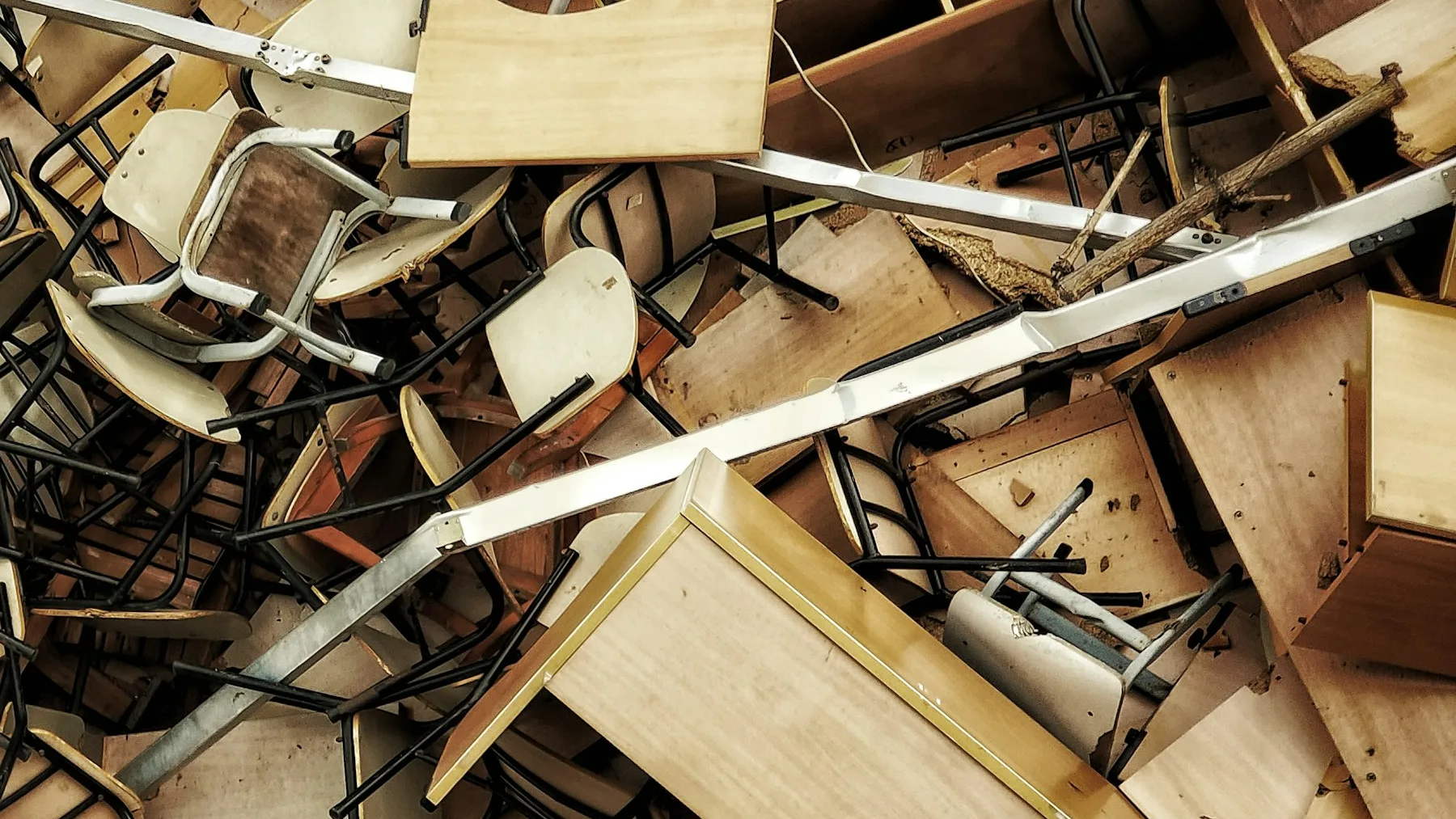
A piece of furniture leaving a Dubai home goes one of two ways, and the branch point is a single question: can somebody use this exactly as it stands? If the answer is yes, the piece is directed to donation and stays whole. If the answer is no, it is assessed on what it was built from, and how it was built decides how much of it comes back as material.
Quick answer
Furniture collected in Dubai is assessed for reuse first and for material second. Solid timber and metal-framed pieces recover reliably as material, upholstered pieces recover partially, and laminated chipboard recovers poorly because it is several materials glued into one board. Condition outranks construction: a sound, complete, clean piece has a donation route whatever it is made of, which is why the state a piece is in when it leaves your property matters more than the label on the back of it.
The Two Questions, in Order
Reuse is tested first because it is the better outcome by a wide margin. Recovering material from a wardrobe returns a fraction of what went into building it. Somebody continuing to use that wardrobe returns all of it, and returns it immediately rather than after a processing cycle.
Only when reuse is genuinely ruled out does construction become the question. That order explains something that catches people out: a tired but sound bookcase has a better outcome ahead of it than a pristine one with a snapped shelf support, because the first is still an object and the second is now only ever going to be material.
For how that assessment fits into a whole mixed load, including the materials that arrive from every other part of a house, our guide to where your junk goes after collection in Dubai covers the routing across all household junk. This article stays with furniture, where the answer depends far more on construction than it does anywhere else in a load.
What Happens to Each Kind of Furniture
| Construction | Donation prospects | Material recovery | What usually decides it |
|---|---|---|---|
| Solid timber (dining tables, bed frames, older wardrobes) | Strong, because solid wood survives use and shows wear rather than failing | Good. One material, straightforward to process | Joint integrity. A sound frame is reusable, a racked one is timber |
| Engineered board with laminate or melamine facing (most flat-pack) | Moderate when assembled and undamaged, poor once moved twice | Poor. Glued board with a plastic face, steel fittings and a hardboard back | Whether it has ever been dismantled, and whether it has met water |
| Upholstered (sofas, armchairs, headboards, ottomans) | Strong when clean, intact and odour-free | Partial. Frame timber and metal recover, foam and fabric usually do not | Fabric condition, and whether the piece has taken on any moisture |
| Metal-framed (office chairs, shelving, bed bases, outdoor sets) | Good, and the frame outlasts the fabric or cushions on it | Strong. Steel and aluminium are the most reliably recovered materials in a load | Whether the non-metal parts can be separated cleanly |
| Glass-topped or mirrored (tables, display units, dressing tables) | Good when the glass is undamaged and the piece is complete | Split. Glass is its own stream, the base follows its own material | Whether the glass survives the journey off the property |
| Rattan, cane and plastic garden furniture | Moderate, and heat-dependent in Dubai | Weak. Cane goes brittle, most garden plastic is mixed polymer | How many summers it spent outdoors or on an unshaded balcony |
Reading down the third column, one pattern accounts for most of it. Furniture built from one material has a route. Furniture built from several materials bonded together has a much worse one, and almost every piece bought new and flat-packed in the last twenty years falls into the second group.
Why Flat-Pack Is the Hard Case in Dubai
Dubai furnishes fast. Tenancies turn over, apartments get fitted out in a weekend, and a large share of what fills them is engineered board: chipboard or MDF, faced with melamine or laminate, edged in plastic strip, held together with cam fittings and dowels, and backed with a sheet of hardboard pinned on.
That construction is genuinely good at being furniture and genuinely poor at being recycled. The board is wood fibre and glue pressed together, so it is not clean timber. The face is plastic bonded to the board, so it is not clean plastic. Separating the two costs more than what comes out of it is worth.
It is also the construction least tolerant of a second life. Cam fittings and dowel holes hold once. A wardrobe unscrewed in a Dubai apartment and rebuilt in the next one is measurably looser than it was, and a third move is usually the end of it. That is the practical reason to leave a flat-pack piece assembled if there is any chance of it being reused, and it is the opposite of what most people assume helps.
Dismantling is what most often removes the reuse option
A wardrobe taken apart in advance to make the carry easier stops being a wardrobe and becomes a stack of panels, a bag of fittings and a hardboard sheet. Nobody assesses that for reuse, and the panels are worth less as material than the assembled piece was worth as an object. Leave furniture assembled unless it physically will not pass a doorway, a stair turn or a lift opening, which is a measurement rather than a guess. Send a photo of the piece next to its doorway when you book and we will tell you which case it is.
What Makes a Piece Donatable
The test used at collection is deliberately short, because it has to be applied in seconds while an item is being lifted:
- Structurally sound. No wobble, no racking, no shelf or seat carrying a load it was not built for.
- Complete. Every drawer, shelf, cushion, fixing and key that belongs with the piece is present.
- Clean. Fabric and surfaces in a state somebody would accept without cleaning first.
- Dry. No water damage anywhere, and no history of standing damp. Water permanently destroys chipboard and MDF and it contaminates upholstery.
- Free of infestation. Anything with evidence of pests is a disposal item regardless of everything else.
- Usable as it stands. Not repairable, not restorable, usable today.
A piece failing any one of those is not a failure of the piece. It only means the assessment moves on to what it is made of, which is where the table above takes over.
Where to take a piece that passes all six is a separate question with its own answer, and our guide to where to donate used furniture in Dubai covers the routes, the lead times and the access questions a recipient will ask. This guide covers what happens to furniture once a removal crew has it. For the household routes available before you get to that point, including selling, giving directly and arranging a collection, see our guide to disposing of old furniture in Dubai.
The Piece That Decides Your Whole Collection
One practical note that changes how a villa or apartment clearance is planned. In almost every house and villa clearance we run, one item is genuinely donatable and it is sitting underneath four that are not. Whatever is loaded on top of it decides its outcome, because a sound armchair with a wardrobe carcass across it arrives as material no matter what condition it was in when the crew walked in.
The fix takes about two minutes. Walk the rooms before collection day, put the pieces you believe are still usable together in one place, and tell the crew that is what they are. Send photos with your furniture removal booking on WhatsApp or through the contact page, and the loading order is planned around the pieces worth keeping whole rather than around whatever stands nearest the door.
Frequently asked questions
No, but it does have to be usable exactly as it stands, which is a lower bar than perfect and a higher one than repairable. Scuffs, faded fabric and small marks do not disqualify a piece. Missing fixings, a wobbling frame, a drawer that no longer runs, or anything needing work before somebody could live with it does. The practical test is whether you would accept the piece into your own Dubai home in its current state without planning to fix anything first.
It usually removes them. A dismantled wardrobe is a stack of panels, a bag of cam fittings and a hardboard back, and nobody assesses that as a wardrobe. Assembled furniture is what a crew handles every day and what a reuse assessment can be made against. The single exception is a piece that physically will not pass a doorway, a stair turn or a lift opening in one piece, which is a measurement question rather than a judgement call. Describe the item and the route out when you book and we will tell you which case yours is.
It is separated into the materials it was built from rather than kept whole. A sofa is a timber or engineered-board frame, foam, webbing or springs, fabric and a set of steel fixings, and those leave along different routes once the piece is broken down under controlled conditions. The frame timber and the metal are the reliable recoveries. Foam and fabric are the parts most often left with no processing route, particularly once either has taken on moisture, which is why a damp sofa and a dry one of the same age are two different jobs.
Yes, and the glass is the reason. A glass top travels flat and protected rather than loose or leaning, because a panel that breaks in transit turns one clean recovery into a hazard for everyone handling the load afterwards. The base is assessed on what it is made of in the ordinary way, so a steel or solid timber base recovers well and a laminated board base usually does not. Say that a table has a glass top when you book a collection in Dubai so it is loaded for that rather than discovered on the day.
Frequently, and faster than people expect. A garage or outdoor store is an unconditioned space, and furniture kept there goes through summer after summer at temperatures indoor pieces never see. Foam breaks down, glued joints in engineered board loosen, veneers lift and fabric takes on the smell of the space. The piece has not been damaged by anything you did, and it is still often no longer donatable after two or three years in that environment. Anything you already know is going has its best outcome available now.
Condition decides it, and the assessment is made when the piece is collected rather than at a facility afterwards. A structurally sound, complete, clean item that somebody could use as it stands has a reuse route. Anything short of that is assessed on what it is made of instead. This is why the same model of dining table can go two different ways from two Dubai villas on the same day, and why the frame material matters far less than most people assume until reuse has already been ruled out.
It is worth it when the repair returns the piece to genuinely usable, and not when the piece needs work to become sellable or givable rather than to become usable. A loose screw in a dining chair, a replacement drawer runner or a re-glued joint on solid timber are all worth doing before deciding the piece is finished. Reupholstering a worn sofa or rebuilding a swollen chipboard carcass rarely is. Junk Removals Dubai collects and disposes of furniture and does not carry out repairs, so this decision sits with you before a collection is booked.
Related articles
Where to Donate Used Furniture in Dubai
A usable piece has four possible destinations in Dubai, and which one is open to you is decided by lead time and by who carries the item down, not by goodwill.
Sustainable Decluttering: Reduce Junk Before It Piles Up
Most of what a Dubai household eventually clears was settled long before the clearance. Reducing that volume is a timing decision, not a sorting one.
Battery & Electronics Disposal Rules in Dubai
Whether a battery leaves with a device or needs its own route is decided by how it is attached, not by what it powers. Here is how to sort them before a clearance.